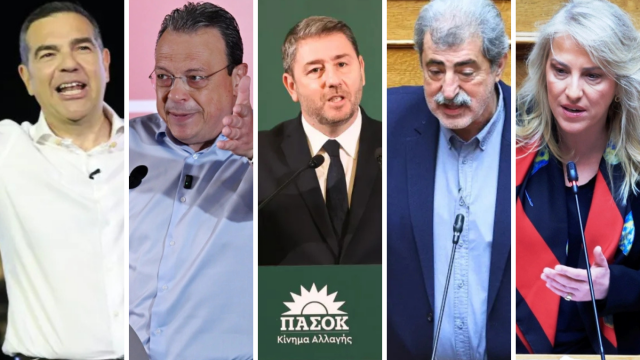
If polls are a snapshot of the moment, as analysts commonly say, the current picture of the center-left shows Tsipras gaining momentum, PASOK retreating to third place, and two parties – SYRIZA and New Left – struggling to survive. However, since this is indeed just a momentary snapshot, all reputable analysts agree that clear conclusions will emerge initially from July polling waves and with greater certainty in the first polls after the summer break in September.
Nevertheless, what the polls have managed to do is create a climate that works favorably for ELAS (Tsipras’ new party) while causing introspection within PASOK. For a long period, PASOK essentially played alone on the progressive opposition field, but now it not only has gained a competitor but is being displaced from second place, and in some polls even from third.
Androulakis’ plan for counterattack against Tsipras’ rising momentum
Nikos Androulakis is in his fifth year leading PASOK and this is the first time he has given real responsibilities to party officials. On Friday, he announced the creation of eight political coordination circles, where notable appointments include George Papandreou in Foreign Policy, Anna Diamantopoulou in Development, Agricultural Development, Tourism and Shipping, and Pavlos Geroulanos in Economics. Central roles are also assigned to Pavlos Christidis (Social Policy), Manolis Christodoulakis (Environment), Stefanos Parastatidis (Education), Litsa Liakoulis (Justice), Michalis Katrinis (Defense), Yannis Maniatis, Milena Apostolaki, Filippos Sachinidis, Nadia Giannakopoulou, Dimitris Mantzos, Yannis Panousis, Panagiotis Doudonis, Nikolas Farantouris, Thanasis Glavinas, Lefteris Karchimakis, and others.
Through this tactic, Androulakis distributes the political game, as almost all of PASOK’s leadership will have positions of responsibility. The goal is to pressure government ministers following the models that PASOK and New Democracy used when they were major opposition parties creating “shadow governments.” According to sources, beyond all the aforementioned activations, other figures are being engaged who will have greater involvement in daily work, organizational issues, and strategic planning.
The voices of experienced officials like Kostas Laliotis, Kostas Skandalidis, and Christos Protopapas are increasingly heard at Charilaou Trikoupi headquarters. Continuous meetings are being held under new secretary Yannis Vardakastanakis, Iraklis Droulias, Nikos Daskalakis, Kostas Papadimitriou and other officials to prepare Androulakis’ tour program and design the plan for Attica, which is a top priority for the PASOK president’s staff. The framework includes local government officials and trade unionists with social grounding to increase party influence in several Attica municipalities where the main opposition party maintains low percentages. In this logic, candidate announcements, especially for Attica constituencies, are likely to be made within the coming weeks to begin organized tours of the capital’s 66 municipalities.
The polls create a climate that works favorably for ELAS and causes introspection at Charilaou Trikoupi
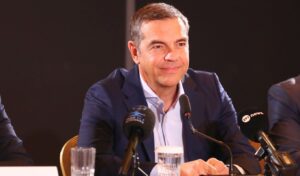
Meanwhile, at Amalias (Tsipras’ headquarters), they are watching with particular satisfaction the first wave of polls that comfortably place ELAS in second place. Their only concern is the media appearances of new officials, which represent a major bet for Tsipras. The spotlight has fallen on five officials who have taken over party representation, who will gradually be flanked by other figures slowly receiving their baptism of fire. Conversely, what causes no anxiety for Tsipras is what’s happening in SYRIZA and New Left.
SYRIZA and New Left in turmoil – Developments monitored by Tsipras’ side
According to absolutely reliable sources, what has been happening since Friday at Koumoundourou, with successive Political Secretariat and Central Committee meetings, as well as what occurred in New Left with the resignation of seven MPs, is in no way connected to the former prime minister’s intentions. This has been better understood than anyone at Koumoundourou by Rena Dourou, Nikos Pappas and Pavlos Polakis, who have raised the banner of preserving SYRIZA rather than dissolving the party, while party president Sokratis Famellos remains in a difficult position.
The paradox, therefore, is that the dissolving phenomena recorded in both parties are happening without his involvement and without him sending the slightest (positive) signal. Sources from Amalias insist that close to election time, decisions will be made regarding MPs who meet the criteria set by Tsipras, in the spirit of inclusion, without this automatically meaning they will be included on ballots. Initially, besides new faces, Tsipras will focus on policy platforms as working committees handling specific sectors will operate. Simultaneously, some initial bodies will be formed-appointed, such as an expanded Central Committee.
Published in Sunday Afternoon Edition