Despite high growth rates, reduced public debt, regained investment grade status and clear improvement in the Greek economy’s image, the European Commission makes clear that “post-memorandum normalcy” for Greece should not be taken for granted.
The European Commission, in its report with recommendations for 2026, recognizes that Athens is no longer under a regime of macroeconomic imbalances and that the exit from enhanced surveillance has now been formally completed. However, behind the praise, Brussels records an extensive list of “yellow cards”: from taxation and energy subsidies to public spending, public administration, justice system, housing crisis and chronic weaknesses in the country’s productive base.
Why Brussels targets diesel fuel and tax exemptions
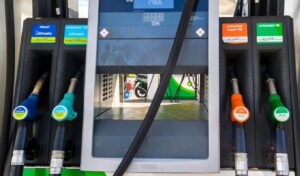
The Commission’s first “yellow card” concerns fuel taxation, specifically diesel. The Commission clearly notes that Greece continues to apply a particularly low Special Consumption Tax on diesel compared to gasoline, despite diesel being more environmentally harmful. Through this formulation, Brussels essentially encourages the Greek government to proceed with diesel tax adjustments as part of the “green” tax transition and gradual independence from fossil fuels.
At the same time, the Commission scrutinizes all tax exemptions and special exceptions in the Greek tax system. The report emphasizes that 1,236 different tax expenditures were applied in 2025 with significant fiscal cost. Brussels believes that the large number of exceptions makes the tax system complex, reduces revenue efficiency and undermines fiscal sustainability, proposing a review of all tax deductions.
The message on spending, defense and fiscal discipline
Meanwhile, the Commission emphatically reintroduces fiscal discipline. While recognizing that Greece achieved a fiscal surplus of 1.7% of GDP in 2025 and that public debt is steadily decreasing, it makes clear that the country must continue to strictly observe maximum spending limits until 2028. Moreover, Brussels directly links the possibility of increased defense spending with the need to maintain “prudent fiscal policies,” sending a message that even geopolitical pressures cannot serve as a pretext for fiscal relaxation.
The note on energy subsidies is also significant. The Commission demands that support measures for households be temporary and absolutely targeted. It essentially warns Athens not to repeat horizontal subsidy policies like those during the 2022-2023 energy crisis.
Housing, justice system and non-performing loans: Greece’s open fronts
In the field of reforms, the report records delays and chronic weaknesses. The justice system remains among the slowest in Europe, with serious delays in civil, administrative and commercial cases. Brussels points out that this discourages investment and even complicates non-performing loan management.
Special reference is made to non-performing loans in servicers’ portfolios. While banks have significantly improved their balance sheets, the process of clearing problematic loans is characterized as slow, mainly due to judicial obstacles and delays in auctions and liquidations.
In energy, Brussels notes that Greece remains excessively dependent on natural gas, while electricity prices remain high. They call for accelerated investments in renewable energy, energy storage, smart meters and island interconnections.
The Commission includes housing in the list of basic structural challenges, noting that housing prices and rents have been rising at an intense pace since 2019, much faster than income increases. This development is attributed to the combination of strong demand and limited housing supply, resulting from low construction activity in Greece for an extended period.
The Commission notes that policy interventions that have been launched, such as the national housing strategy and programs for utilizing properties for social housing, are still in early implementation stages and have not yielded substantial results.
Hospitals and overdue debts: Commission’s new warning bell
The Commission’s report also sounds a “warning bell” regarding hospitals’ overdue debts to suppliers, which instead of decreasing, remain at high levels and continue to be a major source of concern.
The Commission notes that the Greek public sector’s delayed payments declined in the second half of 2025 – from €626 million in July to €453 million in December, a reduction of approximately 28% – however, overall annual progress remains limited at just 3%.
Of particular interest is the European technocrats’ observation that the picture differs significantly by sector. Social security funds show some improvement, mainly due to reduced pension payment backlogs, while debts from central administration, municipalities, and pending tax refunds remain generally stable.