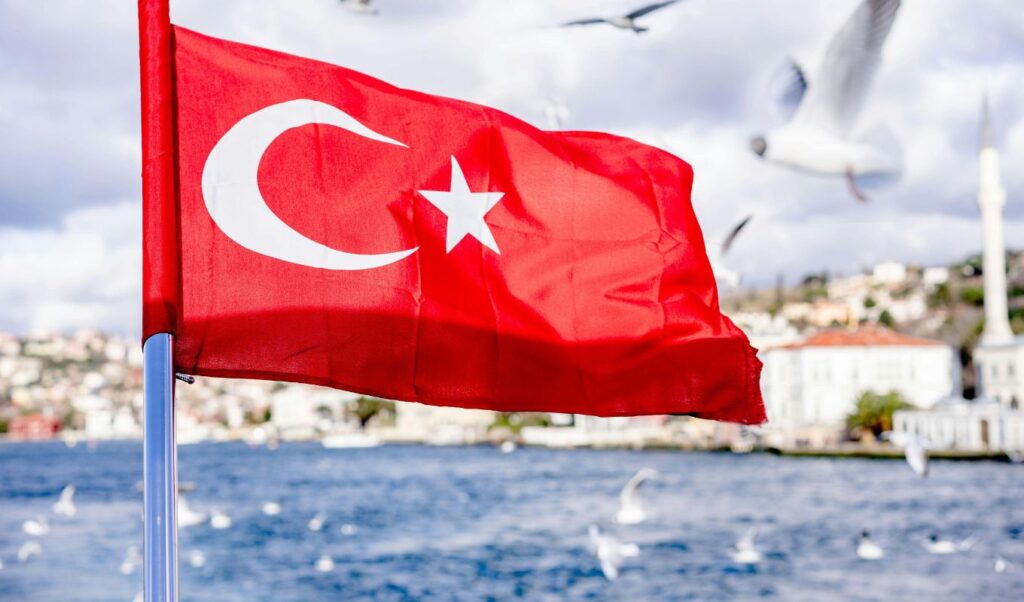
The “Blue Homeland” bill is unfolding like a shadow play, as everyone talks about it but no one has actually seen it. The Turkish government, through press leaks, releases information one day and retracts it the next.
As diplomatic sources astutely observed to parapolitika.gr, “four days ago the leak systems claimed that the legal text would include the supposedly disputed sovereignty islands as Turkish. Two days later, the same leak sources reported that the law would include the islands, but not as Turkish, rather as disputed sovereignty, and yesterday they claimed that no islands would be included in the law at all.” In this way, the Turkish side provokes Athens while observing its reactions. However, time is running short and in about a week, Turkey is expected to reveal its cards. Until then, the communication channels between Greece and Turkey – which remain open, as declared by Foreign Ministry spokesperson Lana Zochios – appear to be functioning. The tense rhetoric has subsided. This is clearly evident in Turkish press publications, which now lack references to the contentious issue.
Athens keeps open the possibility of new potential tension
Athens, meanwhile, continues to maintain low tones, despite keeping all options open, including the possibility of new potential tension. Speaking to the Financial Times, Prime Minister Kyriakos Mitsotakis, after calling on European allies to share Greece’s concerns about the region, advocated for building a functional relationship with Turkey, while noting that “Turkey has used intensely revisionist rhetoric in the past.” Defense Minister Nikos Dendias appeared more pointed in his remarks, referring to Turkey’s “machinations” from Corfu.
With only days remaining before the Turkish government brings the contentious bill to Parliament, diplomatic authorities are preparing Greece’s defense against the worst-case scenarios, which are based on claims the neighboring country has made through letters and diplomatic notes to the UN. As international relations expert Theodoros Tsikas tells parapolitika.gr, Turkey’s official positions on continental shelf and Exclusive Economic Zone are known, either through announcements on the Foreign Ministry’s official website or through letters to the UN. “It’s very likely these will be included in their draft bill,” he argues. As he characteristically states, “I don’t believe this will lead to a conflict. This requires rational thinking, because when we refer to international waters, maritime zones, EEZ or continental shelf, we’re referring to international waters, for which any agreement requires approval from coastal states.”
Worth noting is Mr. Tsikas’ observation that Greece has also taken provocative actions against Turkey. Referring to the extension of Maritime Spatial Planning to the furthest potential limits, implementing a European directive, Mr. Tsikas argues that “the European directive doesn’t specify how far you should extend Maritime Spatial Planning. Greece should normally conduct MSP only for its territorial waters and for the Mediterranean and Ionian sections where it has made continental shelf and EEZ agreements with Egypt and Italy. So Greece is taking unilateral action. Just as it did in Crete with Chevron, where you cannot exploit an undemarcated continental shelf. Just as we react to things Turkey does, Turkey also reacts to things we do.” According to Mr. Tsikas, “Greece can do and regulate whatever it wants in its territorial waters, and Turkey can do the same in its territorial waters. In international waters, whether Turkey or Greece does it, all regulations that are unilateral and don’t result from agreement with the country on the opposite shores have no legal effect under International Law and Law of the Sea.”
What is certain is that both sides of the Aegean present arguments regarding the open issue of maritime zone delimitation in the Aegean. Whether we are at a crossroads in Greek-Turkish relations, as Giorgos Gerapetritis mentioned, remains to be seen, as Turkey is expected to reveal its cards in early June, showing whether they lead to escalation or de-escalation.