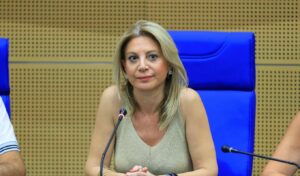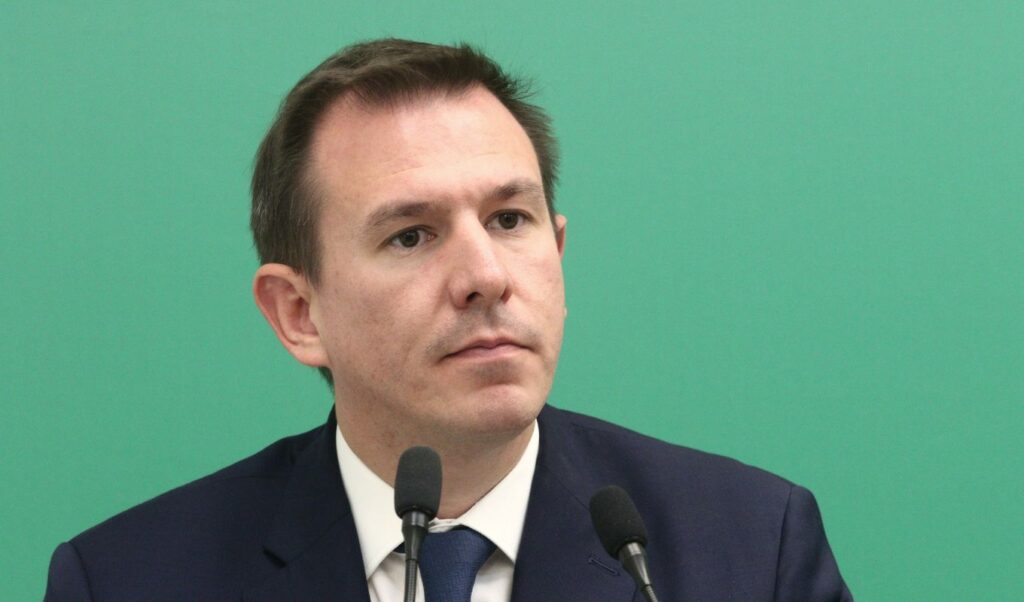
PASOK MP Panagiotis Doudonis spoke on Parapolitika 90.1 radio station during the “On Air” show with journalist Niki Lyberaki. As he stated: “Mr. Tzavellas shows contempt for parliament.” He should have been present at today’s Institutions and Transparency committee session, he added.
Doudonis: The parliamentary summons should have been respected
Regarding Mr. Tzavellas’s refusal to appear before the Institutions and Transparency committee, Mr. Doudonis noted that the summons should have been respected. “Mr. Tzavellas talks about separation of powers, but separation of powers presupposes respect for the powers, and respect for the powers means that when summoned by the competent parliamentary committee to appear before it, he should respect this summons and be present,” he emphasized characteristically.
Panagiotis Doudonis added that Mr. Tzavellas shows contempt for parliament. “The committee requests their presence there and, respecting parliament, they should appear. They must appear. This means I serve my role as Supreme Court Prosecutor. Moreover, parliament through the conference of presidents also expresses an opinion on who they consider most suitable for the position of Prosecutor.
Mr. Tzavellas had appeared at the conference of presidents during this process. I had asked him about his involvement in the wiretapping issue and he had signed 11 surveillance orders. The essence is that he had answered then and said everything was done properly, but suddenly a year later he shows contempt for parliament and considers that separation of powers means ignoring summons from the Institutions and Transparency committee,” he said.
“The Supreme Court prosecutor should not have taken on the case”
When asked if PASOK considers Mr. Tzavellas a “cover-up instrument,” he emphasized that the prosecutor should not have taken on the case. “The Supreme Court prosecutor, according to the criminal procedure code, should not have taken on the case himself given that he was involved in the wiretapping case,” he underlined.
“When you have signed surveillance orders, you cannot later come to judge what you yourself have signed. Indeed, the criminal procedure code refers even to suspicions of bias, so even just the suspicion of bias or involvement in the case should have led him to self-exclusion.
But it’s not just this part of the unjustified course of this case, there’s also the cover-up regarding the investigative committee. I was at the conference of presidents and mentioned that when the investigative committee for wiretapping was formed with 120 MPs, and suddenly for the same issue, a matter of foreign policy and defense policy emerges and they will come the day after tomorrow to talk to us about 151 MPs to reject the investigative committee! That’s what you call a cover-up.
What logic justifies having two different judgments for the same issue regarding which article falls under parliamentary regulations and the constitution… I think we’ve reached the most extreme episodes of covering up this scandal. I think the most extreme are also the most clumsy, and I think all this is set in a framework of institutional decline, and ironically, the discussion on constitutional revision is simultaneously opening,” he added.
Regarding the motion of censure, he mentioned that the government “expresses pious wishes for such a thing.” “It’s obvious that right now the New Democracy parliamentary majority, due to various internal party tensions, finds itself in a very strange situation,” he concluded.