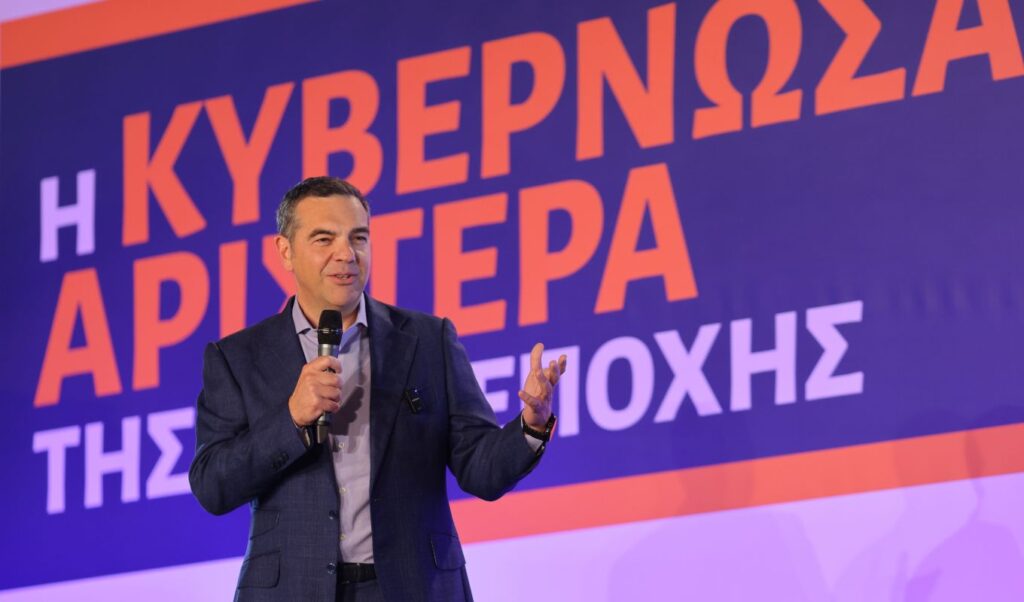
On May 26, Alexis Tsipras is expected to announce his new political formation, as he appears to be searching for the party name that will define his own political stamp. According to sources, officials at Amalia are looking for an acronym from the words Social Democracy, Radical Left and Political Ecology that will resonate with voters, while one of the names being considered is “Progressive Alliance”.
Optimism at Amalia after Alexis Tsipras’ first appearance in Attica
While there is optimism at Amalia following Tsipras’ first appearance in Attica, as well as from opinion polls showing the former prime minister’s party in second place, some have begun to worry about his absolute stance on the issue of cooperation. As these same people claim, it is obviously important for the former prime minister to show that he has changed everything, from people to perceptions, but no one can say with certainty that his complete distancing from SYRIZA will work in his favor. There are many who say that this absolute stance may ultimately cost him second place. The truth is that Alexis Tsipras doesn’t even want to hear about cooperation with SYRIZA and New Left, as he believes that this way he would again become captive to factions, groups and generally officials who traditionally sought to manipulate him.
“Distant but beloved” with former comrades
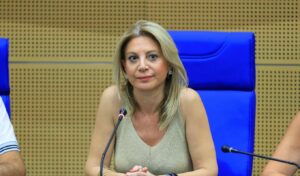
In short, Tsipras has made it clear that under no circumstances does he wish to find himself again with comrades who in the past created problems for him and placed him under their guardianship. He doesn’t want bodies that will dictate the decisions he makes, nor officials whose opinion should carry special weight. This choice may initially sound good for him, but some point out that SYRIZA’s autonomous descent into elections could create problems for him. Whether, after what happens in the next two months at Koumoundourou, anyone can say with certainty that Tsipras won’t lose three percentage points. Given that – at least for now – Tsipras and PASOK are struggling for second place, with their difference recorded at one and a half percentage points – and as Maria Karystianou also shows significant momentum – no one can know where the ball will land. Sources report that in the last twenty-four hours there was intense discussion at Amalia about this issue, with Alexis Tsipras remaining unmoved in his original decision.
What SYRIZA officials estimate
At the same time, no one can say with certainty what will happen in SYRIZA and where Socrates Famellos will end up. Koumoundourou officials who believe a solution must be found said that under normal circumstances, the SYRIZA president, based on the Political Secretariat’s decision, should have extended an official invitation for cooperation to Alexis Tsipras. Others say that if the former prime minister’s answer was negative, then things would become even worse and there would be no opening for contact between the two sides. Whatever the case, the situation in SYRIZA is particularly difficult, as Pavlos Polakis and Nikos Pappas are pressuring the SYRIZA president to convene the Political Secretariat to see how they will move forward. The fear of these officials is that the prime minister might implement his indirect threat and set up ballot boxes in autumn. In this case, any officials who don’t join Tsipras’ party will be left out of politics, as they won’t have time to mobilize to run in elections.
Sources say that Pavlos Polakis is ready to claim party leadership, maintaining a more leftist line than Tsipras’ party will have. This, of course, presupposes Socrates Famellos’ resignation from SYRIZA, which doesn’t seem likely for now.
Socrates Famellos’ two choices
The SYRIZA president currently has two choices: to resign in order to open the door to the former prime minister’s new party, or to choose to run in the first electoral contest and conduct any negotiations in the second ballot. Meanwhile, Alexis Charitsis, who resigned as head of New Left to join Tsipras’ party, appears negative about resigning as MP. “A discussion about resignation from parliamentary seat has opened, which takes on characteristics of devaluing parliamentary function. This logic is foreign to me. Parliament is a battleground, a field of substantial political confrontation, even more so under current conditions, with all these attempts at institutional deviation by the Mitsotakis government. You cannot be absent from this. It’s important to express society’s voice on a series of issues. There’s a great need for social expression at institutional level. So there’s no question of my resignation,” he characteristically stated.
Published in Parapolitika