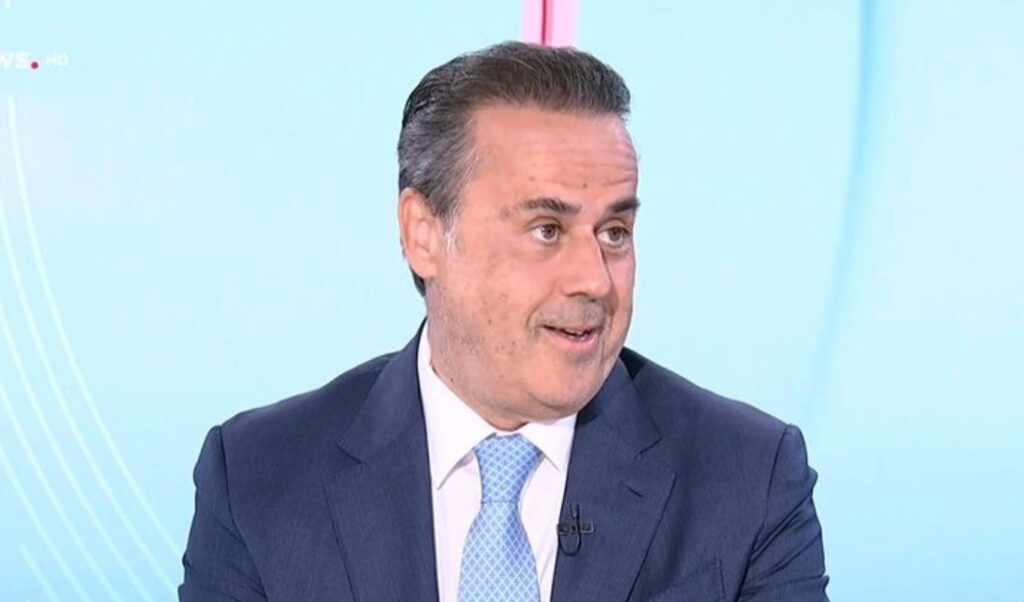
Greece’s Minister of Environment and Energy, Stavros Papastavrou, spoke to ERTnews about the recognition of Kyriakos Mitsotakis’ energy policy by Donald Trump, following the US president’s reposting of his interview on Truth Social.
Read: Donald Trump reposts Energy Minister Stavros Papastavrou’s interview on Truth Social
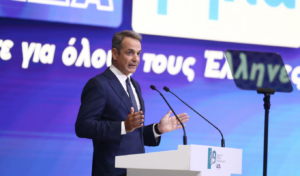
Minister Papastavrou noted that he gave the interview at the Delphi conference, which essentially recognizes that Mitsotakis is the first European prime minister to speak about realism. “He said ‘yes’ to the energy transition, but not at any cost,” he stated characteristically. He added that we must consider social cohesion and competitiveness, noting that “we are a country with a prime minister who prioritized national interest.” Papastavrou emphasized that in the 21st century, energy is geopolitical power and “whoever controls their energy controls their destiny, otherwise they become hostage to others’ choices.”
Trump’s post about Stavros Papastavrou
This move reflects American interest in Greece’s role. In his interview with Breitbart Washington bureau chief Matthew Boyle, Papastavrou describes “energy diplomacy” as a key feature of Trump’s strategy toward both allies and adversaries, while highlighting Greece’s upgraded role in the new energy planning for the Eastern Mediterranean and Europe.
Papastavrou argues that Greece is evolving into a pivotal hub for transporting American LNG to Southeastern Europe and Ukraine, as Europe seeks to drastically reduce its dependence on Russian natural gas. He also makes special reference to new hydrocarbon explorations involving ExxonMobil and Chevron, characterizing the potential developments as “transformative” for Greece both economically and geopolitically.
“Goal is for first drilling to begin in Q1 2027”
Regarding hydrocarbons, he mentioned that “we are taking all necessary actions so the consortium can proceed and deploy a drilling rig as quickly as possible, in Q1 2027 or earlier.” The consortium speaks of a potential deposit of 270 billion cubic meters. This could yield 10 billion euros for Greece and Greek taxpayers.”