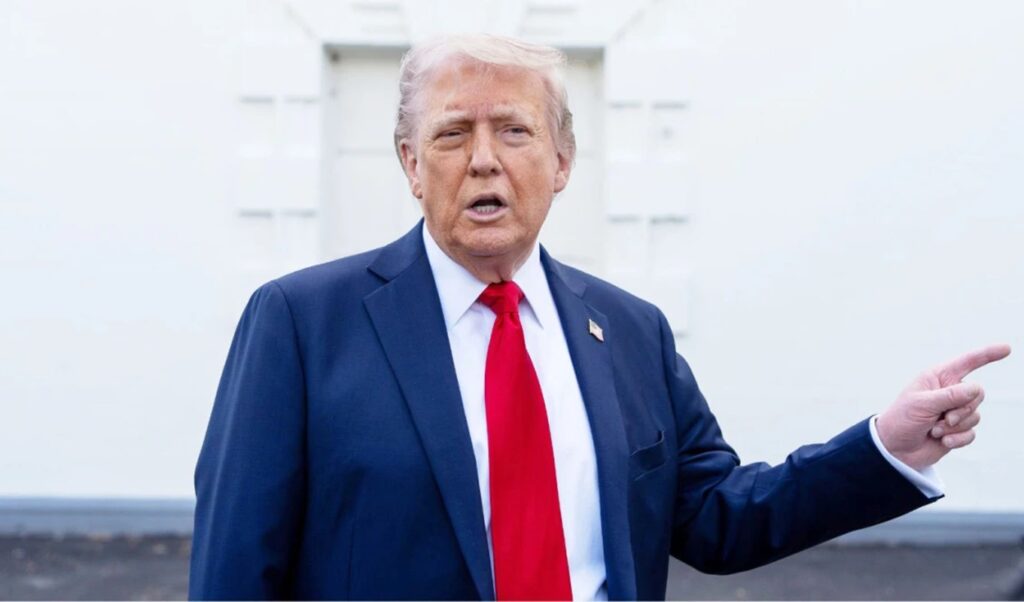
Donald Trump remains determined to reduce American troops from Germany, continuing to express his frustration over the lack of European support in the war with Iran. The situation has escalated following comments by German Chancellor Friedrich Merz that Iran is “humiliating” the US in negotiations to end the war.
Trump: Determined to withdraw troops from Germany amid domestic opposition
Specifically, in yesterday’s statements, he mentioned that 5,000 of the approximately 36,000 troops the military has in the country will be withdrawn, with Republicans reacting by saying it sends the “wrong message” to Putin. Senator Roger Wicker and Congressman Mike Rogers in their joint statement published yesterday commented on the matter: “We are deeply concerned about the decision to withdraw an American brigade from Germany.” A premature troop reduction risks “undermining deterrence and sending the wrong message to Vladimir Putin. Instead of completely withdrawing forces from the continent, it is in America’s interest to maintain a strong deterrent in Europe by moving these 5,000 American forces eastward,” they proposed.
Nevertheless, the American president, unwavering in his position, said from Florida that he has decided to withdraw far more troops than the 5,000 he announced yesterday, sending a message to his domestic audience as well. “We’re going to cut way down, much more than 5,000,” the Republican president told the press in West Palm Beach, Florida. A spokesperson for the US Department of Defense stated that the withdrawal will be completed within the next 12 months, without going into details.
Reporter: Why is the U.S. removing troops from Germany?
Trump: We're going to cut way down, and we're cutting a lot further than 5000.pic.twitter.com/t8qAZCcU0Y
— Clash Report (@clashreport) May 2, 2026
The public confrontation with Merz
Relations between Donald Trump and German Chancellor Friedrich Merz are tense following the latter’s criticism of the US over the Iran war, where he spoke of “humiliation” of the Americans, stating that Iran is “humiliating” the US in negotiations to end the war. Trump’s first angry reaction was to say that Merz “doesn’t know what he’s talking about,” but the German Chancellor insisted on his position.
It should be noted that currently in Europe, according to US armed forces data, approximately 86,000 US military personnel are stationed, of which 36,000 are in Germany. Their numbers change frequently due to unit rotations and exercises.
What this move means for Europe
Washington’s move is part of a broader strategic realignment of forces, with emphasis on other geographical regions, such as the Indo-Pacific. At the same time, it reflects the US’s long-standing dissatisfaction with the level of military spending by European allies.
This is not the first time Trump has accused NATO countries of not contributing adequately to common defense, while he has recently linked the US military presence to Europeans’ stance toward the conflict with Iran and security at strategic points like the Strait of Hormuz. In this context, the threat to extend the withdrawal to other countries, such as Italy and Spain, takes on particular significance. As Trump characteristically stated: “Maybe, I would definitely do it. Why not? Italy offered no help and Spain is terrible, absolutely terrible.”
Several analysts estimate that despite the symbolic and political weight of the decision, the immediate impact on European security will be limited, as the departure concerns part of the reinforcements that had been deployed after Russia’s invasion of Ukraine in 2022 and does not drastically change the overall balance of power.