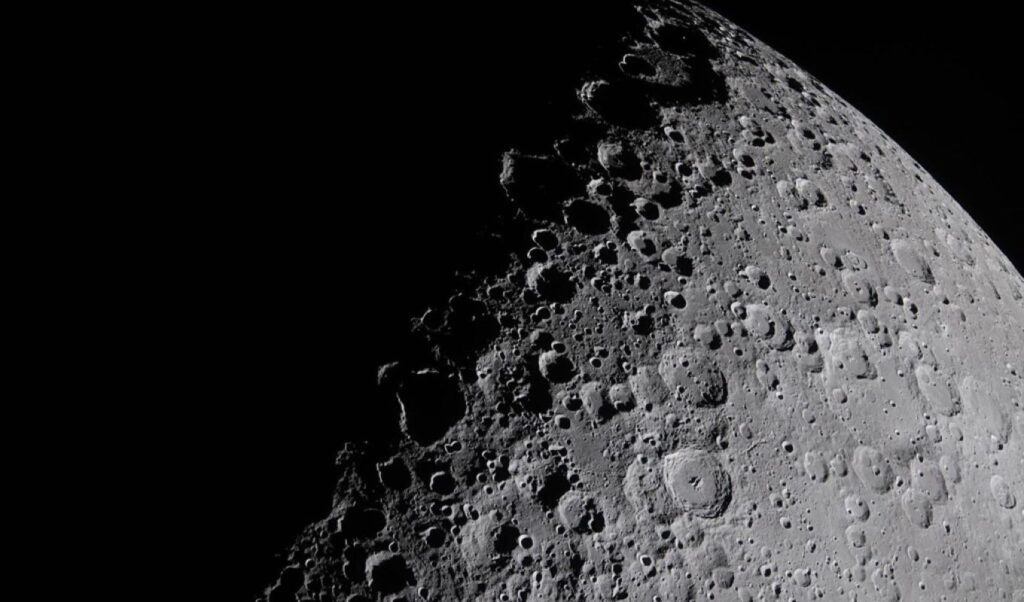
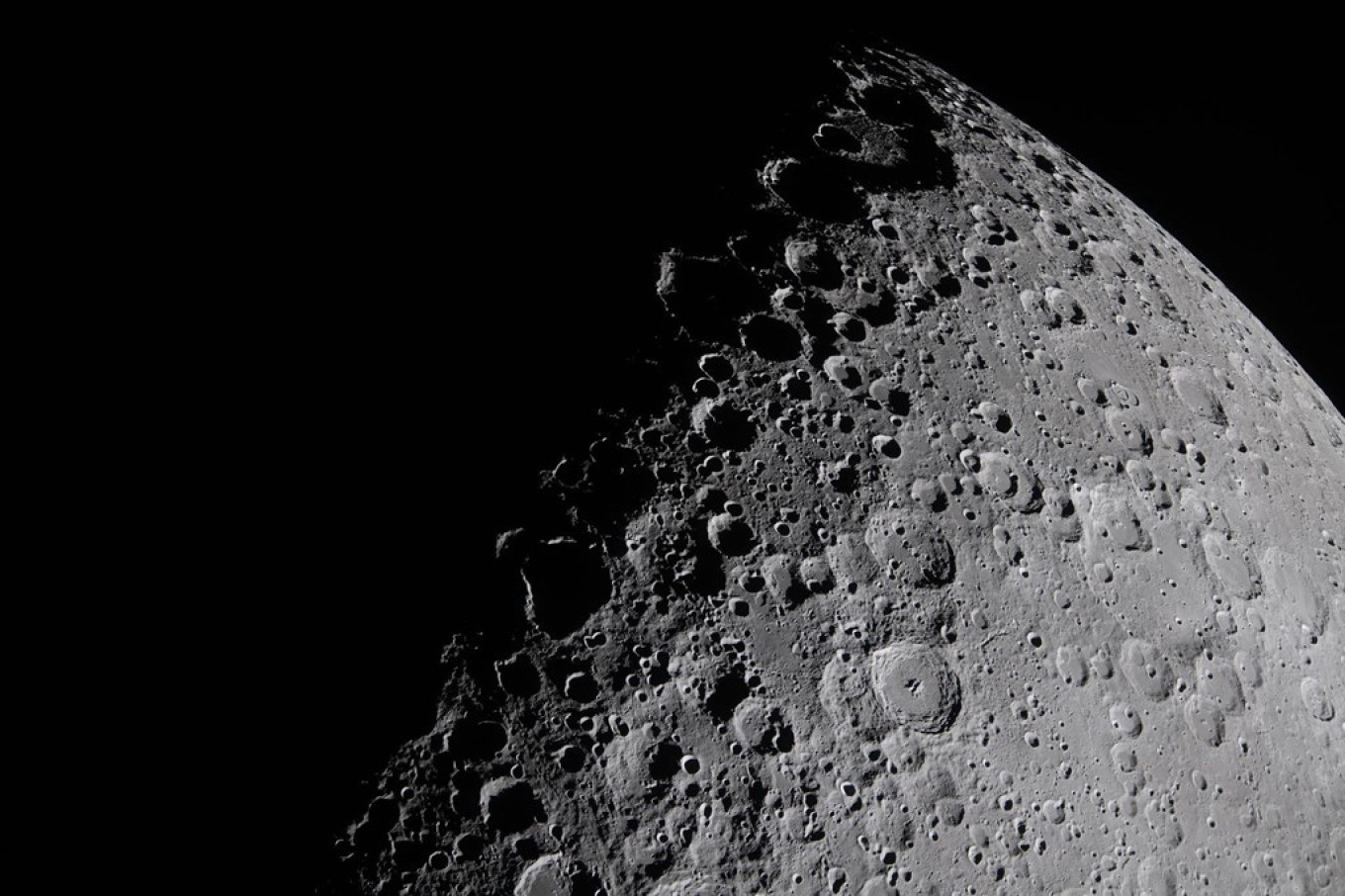
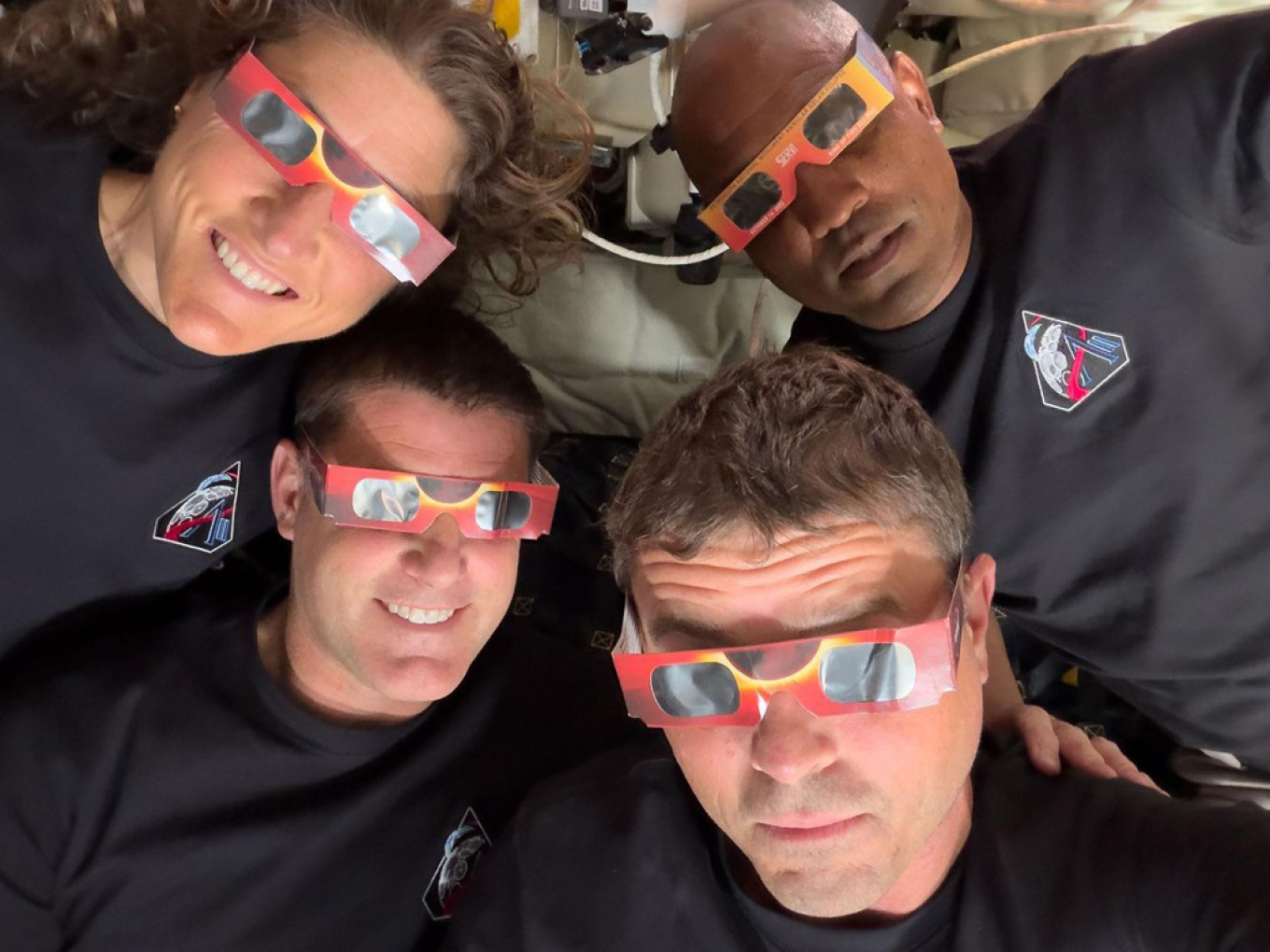
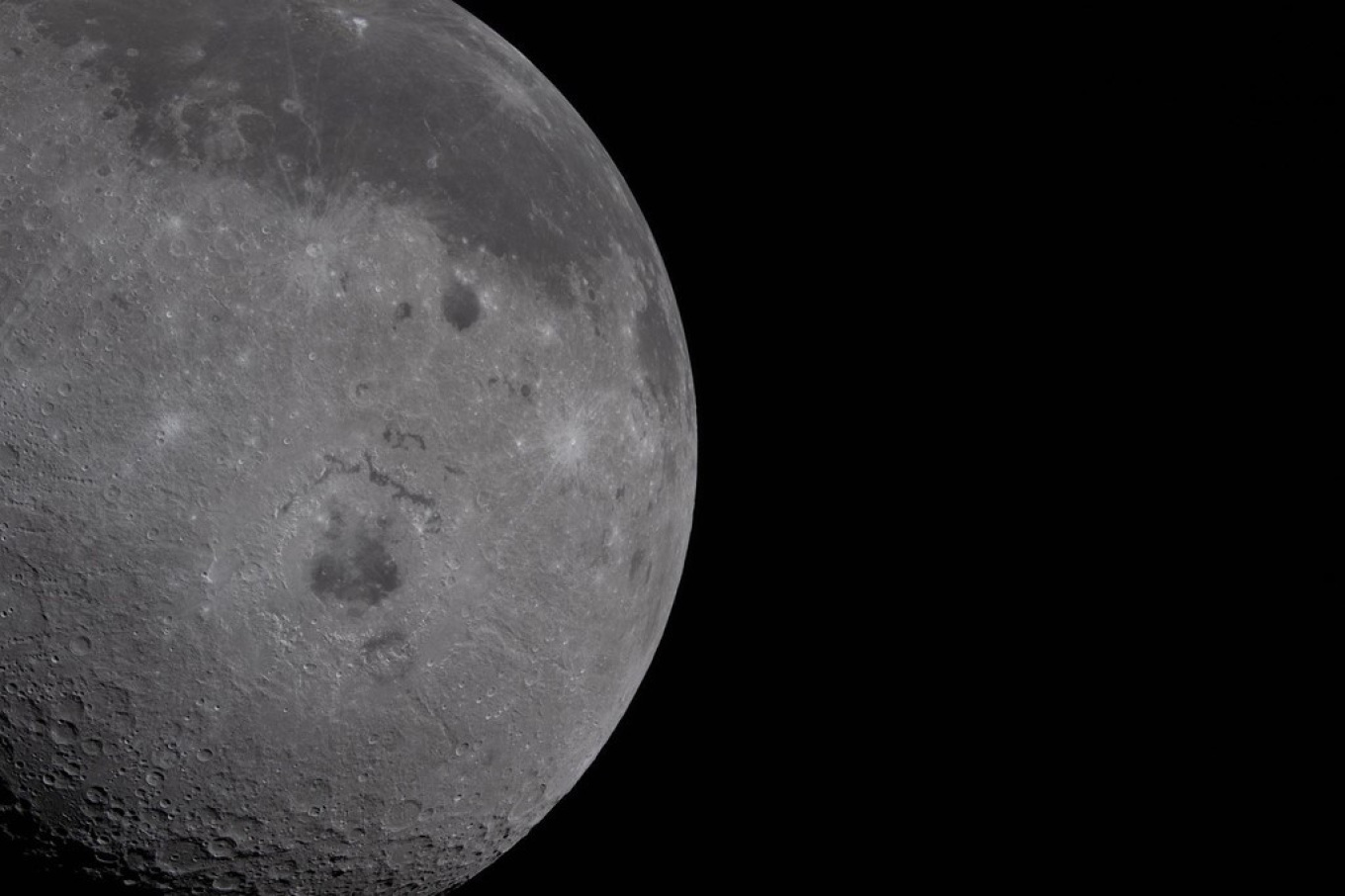
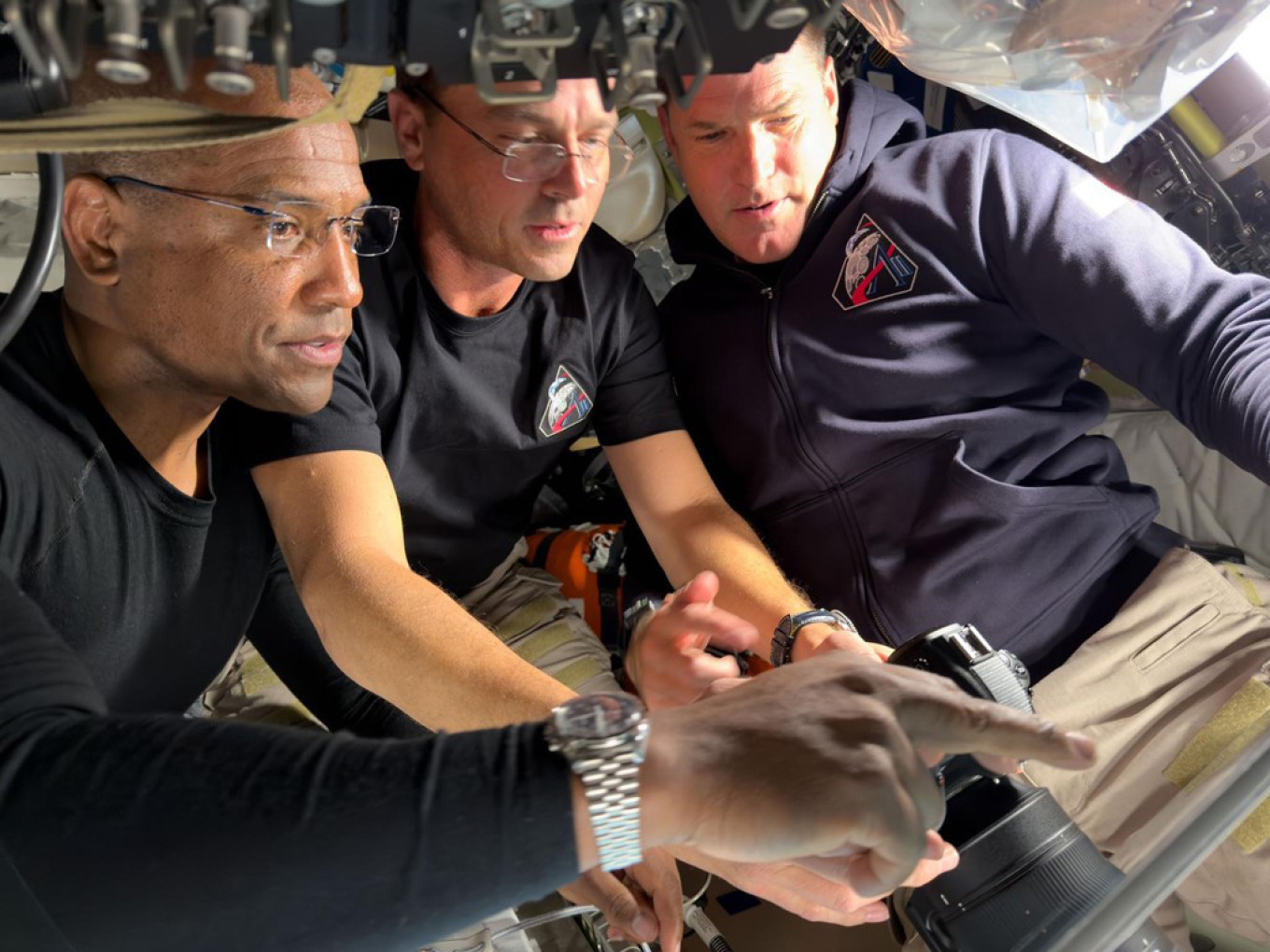
New photographs from the historic lunar approach by the Artemis II mission crew have been released by NASA, offering a unique visual perspective of Earth from space. The new images show portions of the Moon at the day-night boundary, Earth in the distant background, and crew members wearing protective eyewear. The four astronauts spotted relatively recent lunar craters that have not yet been named, and decided to propose names for several of them.
Read: Artemis II: NASA mission astronauts return to Earth – When will they splash down (Video)
One was named “Integrity,” which is the name the crew has given to the Orion spacecraft, and the second “has special significance for the crew” according to Jeremy Hansen and is visible from Earth at specific times – they propose to name it Carol.
“We lost a beloved person, her name was Carol, Reid’s wife, mother of Katie and Ellie… (The crater is) a bright spot on the Moon and we would like to name it Carol,” Hansen said. As he explains the significance of the name, Wiseman, sitting next to Hansen, becomes emotional and wipes his eyes before placing his hand on Hansen’s shoulder. At the end, Reid Wiseman embraces Jeremy Hansen tightly, followed by a group hug with Victor Glover and Christina Koch. Reid Wiseman’s wife, Carol, had passed away in 2020 after a battle with cancer.
Record distance from Earth
The mission broke the record for the farthest distance humans have ever traveled in space, surpassing the previous record by more than 4,000 miles and reaching approximately 252,756 miles from Earth.
The astronauts captured images of the lunar surface, describing craters and geological formations that can help in planning future landing missions.
After the flight around the Moon, Artemis II mission commander Reid Wiseman thanked NASA’s science team for designing a particularly significant observation program, noting that the crew had the opportunity to experience unique human experiences during the mission.
As he reported, the preparation was particularly substantial, emphasizing that success was achieved through collaboration and collective effort of all involved, expressing his gratitude for the opportunity to participate in such a significant mission.
Critical atmospheric re-entry
The final phase of the mission involves re-entering Earth’s atmosphere, a particularly demanding process, as the Orion capsule will develop speeds greater than 30 times the speed of sound, causing temperatures above 2,700 degrees Celsius on its exterior, according to CNN.
The behavior of the heat shield is a key subject of study, as wear had been detected in a previous uncrewed mission. For this reason, NASA has adapted the re-entry procedure to collect critical data for future missions.