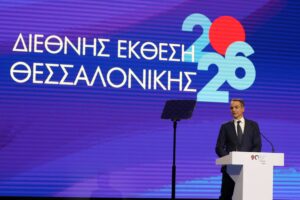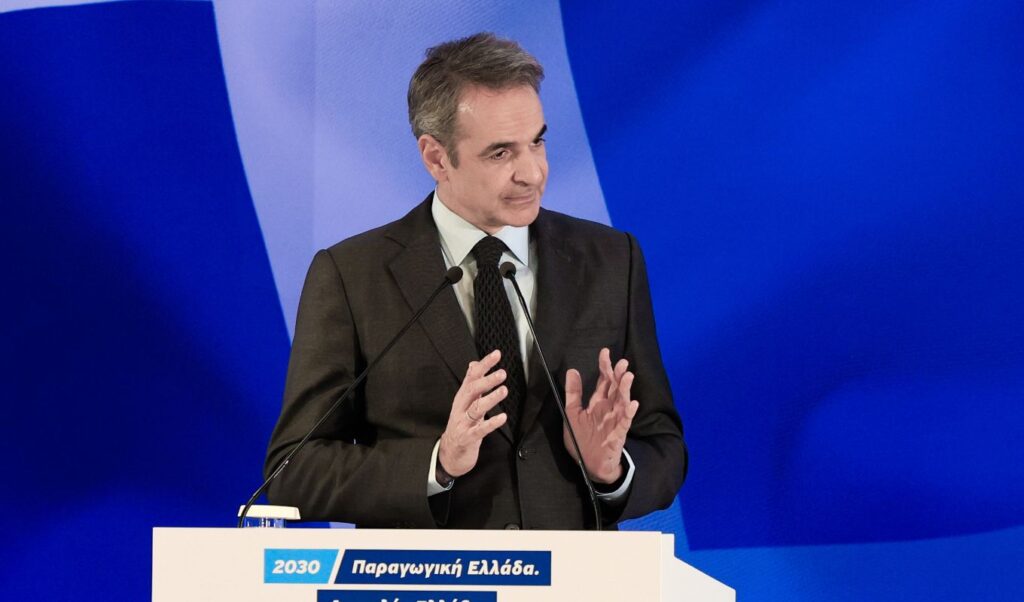
The government is unveiling its economic “cards” amid the ongoing third week of war in the Middle East, with the conflict’s duration clearly concerning the Maximos Mansion. “It is very important for the European Union to be prepared for the possibility – I emphasize, the possibility – that this crisis may last longer and have significant impacts on energy prices and consequently, unfortunately, unpleasant effects on European inflation,” Kyriakos Mitsotakis emphasized while speaking at a Development Ministry event on development law and strategic investments.
In the interim – specifically at the Cabinet meeting scheduled for next Tuesday, March 24 – a new minimum wage increase will be announced, expected to reach €920.
At the same Monday event, competent minister Takis Theodorikakos announced new rounds of development schemes for modern technologies, social entrepreneurship, agri-food, and defense.
This afternoon, Deputy Prime Minister Kostis Hatzidakis, Environment and Energy Minister Stavros Papastavrou, and Deputy Minister of National Economy and Finance Nikos Papathanasis will present projects totaling €5.3 billion included in the Social Climate Fund. This involves European funding (75%) for measures and investments aimed at reducing emissions in road transport and buildings sectors, reducing costs for vulnerable households, very small businesses, and transport users affected by the inclusion of greenhouse gas emissions from buildings and road transport. It also provides temporary direct income support for vulnerable households and transport users.
The 4 measures to be announced by the government today
Indicatively, the main actions to be announced and detailed today are as follows:
– Energy upgrading of buildings and heat pumps, with a new investment implementation model.
– Housing initiatives, creating social housing and renovating student dormitories.
– Public Transport modernization (Athens metro upgrade, new electric buses).
– Direct income support for vulnerable and poor households (heating allowance, rent subsidy).
Simultaneously, actions will proceed for maritime modernization (coastal shipping, tourist vessels, ferries), energy network upgrades (congestion relief for new renewable energy installations), and electrification and competitiveness improvement of energy-intensive businesses, focusing on industry through the European Union’s Modernization Fund. “A fund, as those interested know, very demanding, requiring significant preparation from both state services and private investors to secure the desired funding,” the prime minister noted in his remarks. Particularly regarding industry competitiveness improvement through energy cost reduction, which must pass through Brussels.
Mitsotakis: Announcements within 15 days for industry – The Italian model
Mr. Mitsotakis spoke of difficult negotiations ongoing for months with the Commission. “However, we are now in the pleasant position of having roughly concluded, and relevant announcements will be made by the competent ministry within the next 15 days,” he said. The regulation under discussion reportedly approaches the so-called Italian model: Energy price at €55/MWh – or lower – for three years, as an energy loan that industries will repay over twenty years through production from new renewable energy projects they will construct themselves.
The prime minister also announced institutional reforms to be implemented immediately, making the investment reception system more cohesive through centralizing relevant responsibilities in the Private Investments General Secretariat of the Development Ministry.