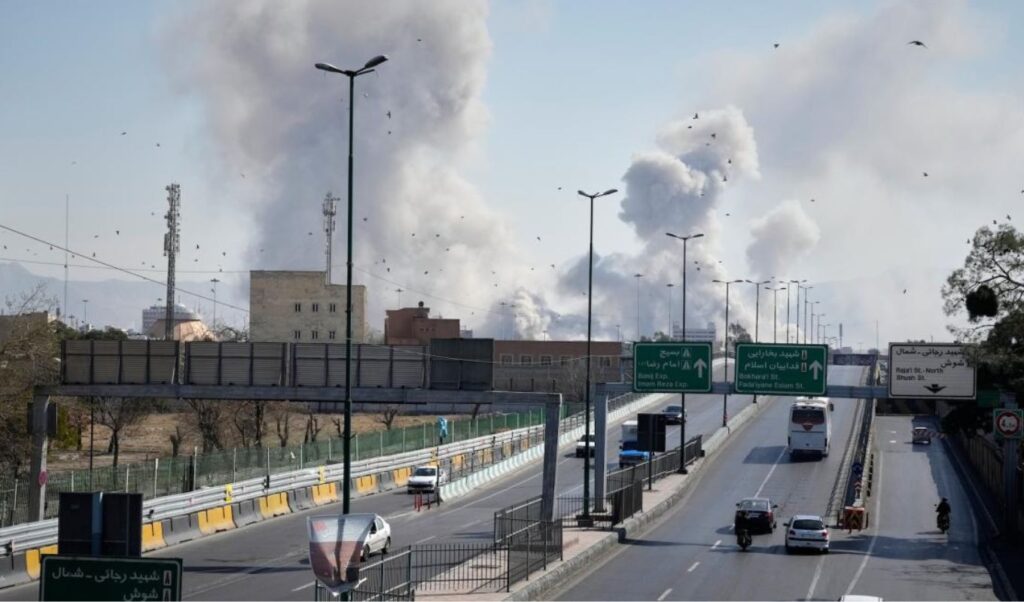
Gulf state governments are expressing dissatisfaction with how the United States and Donald Trump have handled the war, particularly after the attack on Iran on Saturday (28/2). As they complain, there was no timely notification of military operations, resulting in insufficient preparation time to face the storm of Iranian drones and missiles striking their territories as retaliation from Tehran.
Read: Iran analysis: “Tehran has been planning this battle for decades”
They also argued that their countries had not received warning about the US and Israeli attack and expressed complaints that Washington ignored their warnings that the war would have catastrophic consequences for the entire region. One of the officials also emphasized that Gulf countries are angry that the US military has not defended them adequately. According to the same source, there is a belief in the region that the operation focused on defending Israel and American troops, leaving Gulf countries to manage on their own, while their anti-missile system stockpiles are rapidly depleting.
“This is Netanyahu’s war”
In their reports, officials noted that while public reactions from Arab Gulf countries have been limited, public figures with close ties to their governments are openly criticizing the US, arguing that Benjamin Netanyahu dragged President Trump into a pointless war. “This is Netanyahu’s war,” said Prince Turki al-Faisal, former head of Saudi intelligence services, on CNN Wednesday. “Somehow he managed to convince President Trump to support his views.”
Pentagon officials admitted this week in closed briefings with Congress members that they are struggling to stop drone attacks launched by Iran, leaving some US targets in the Gulf region, including troops, vulnerable.
The Gulf region becomes valuable target for Tehran
The Gulf region has evolved into a valuable target for Iran, with short-range missiles easily reaching it and striking strategic targets, such as American troops, commercial and tourist areas, and energy facilities, affecting global oil flow. Since the war began, Iran has launched at least 380 missiles and over 1,480 drones, targeting the five Arab Gulf countries, according to AP tallies. At least 13 people have lost their lives in these countries.
Additionally, six American soldiers were killed in Kuwait on Sunday, when an Iranian drone hit an operations center at a civilian port, more than 10 miles from the main military base.
According to analyses, the US strategy appears inadequately prepared to counter Iran’s drone attacks, as there are no widely available defensive systems in the Gulf region for their effective interception.
US Defense Secretary Pete Hegseth and General Dan Cain, Chairman of the Joint Chiefs of Staff, briefed Congress members that the US will not be able to intercept many of the incoming UAV attacks, especially Shahed drones.