Through secret underground routes starting from Belarus, according to a Telegraph report, Russia is allegedly channeling migrants into Europe. According to the same source, Moscow is utilizing hidden tunnels to transport migrants from Belarus to the European Union, as part of a new phase of the so-called “hybrid warfare” against the West, as Polish officials claim. Polish officials estimate that specialists from the Middle East, with significant experience in underground construction, have undertaken the tunnel construction.
Russia: Migrants to Europe via Belarus
According to Polish authorities, four tunnels were discovered under the Poland-Belarus border in 2025. The largest was found near the village of Narewka in eastern Poland and is estimated to have been used by approximately 180 migrants, mainly from Afghanistan and Pakistan. Most were arrested immediately upon emerging on Polish territory.
This particular tunnel was approximately 1.5 meters high and 60 meters long. Its entrance from the Belarusian side was carefully hidden in a forested area. Videos released by Polish authorities show a narrow underground corridor with concrete supports on the walls to prevent collapses.
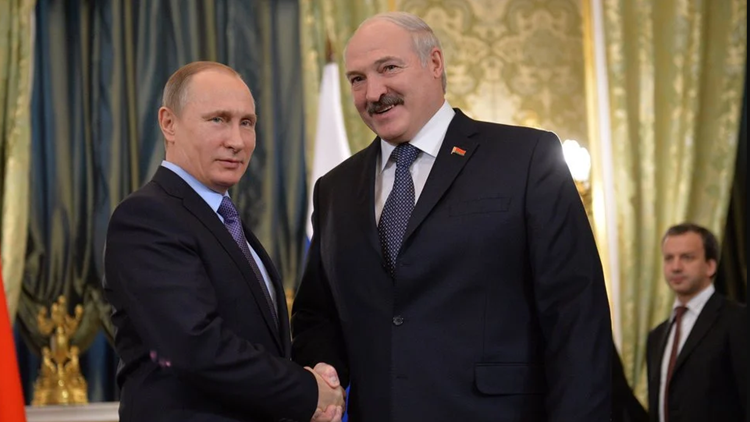
Warsaw maintains that Alexander Lukashenko’s regime acts in full alignment with Moscow, using migration as a pressure lever against Europe. Since 2021, Belarus has been accused of facilitating the movement of thousands of migrants toward the EU’s eastern borders, which led Poland to construct a 200-kilometer fence with surveillance systems and thermal cameras.
The tunnels and hybrid warfare
Defense analysts point out that the expertise required for such underground infrastructure points to Middle Eastern organizations. These include Hamas, Hezbollah, and the Islamic State, which have developed extensive tunnel networks in war zones. However, there is no evidence documenting direct involvement by any specific organization, while Polish officials place ultimate responsibility on Belarus’s regime.
The case fits into the broader climate of tension prevailing after Russia’s invasion of Ukraine in 2022. Poland and other Eastern European states denounce that Russia and Belarus seek to destabilize the EU through migration pressures, sabotage, and other hybrid practices. Additionally, incidents have been reported involving balloons carrying contraband goods to NATO countries, aimed—according to Warsaw—at testing their defensive reflexes.