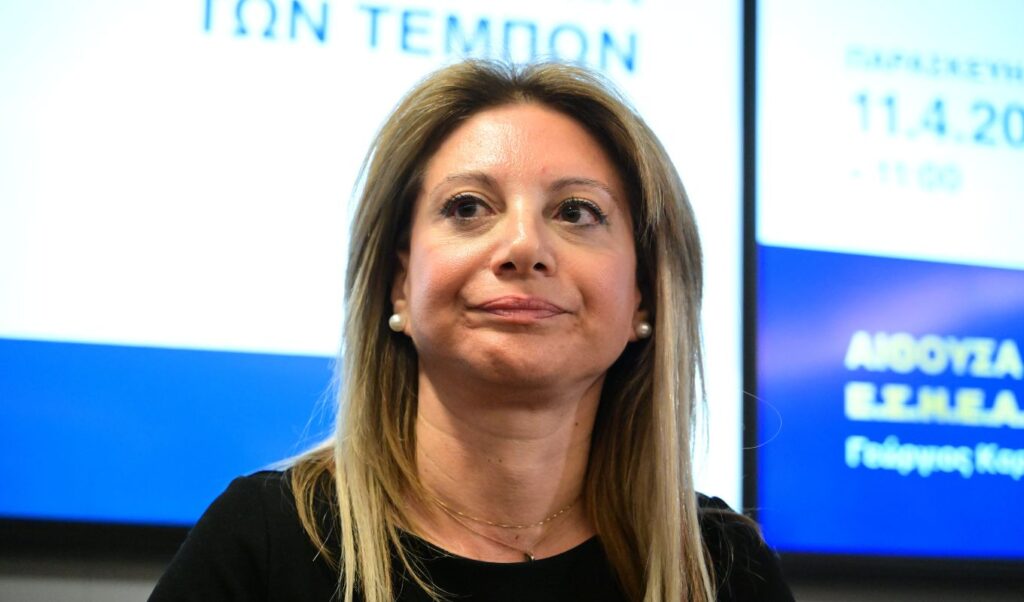
Much is being said about Maria Karystianou’s party, as the former president of the Tempe Victims’ Relatives Association has failed to win over voters in her first appearances as an emerging party leader. On the contrary, all polls show her losing momentum from the strength she had when focusing solely on the Tempe issue rather than Greek-Turkish relations and abortion rights.
Dilemma over the new party from Maria Karystianou
Those who know her well suggest she may already be having second thoughts and might not proceed with her next move, as she doesn’t like taking uncertain steps. Regardless of whether this assessment has merit, people close to her argue she should move forward with a single-issue agenda, speaking exclusively about Tempe-related matters, which she knows well and the public has directly associated her with.
Information suggests that after her statements on immigration and criticism she received from all progressive parties, her team decided not to make other television appearances for now, unless they can guarantee she’ll be operating in “safe waters.” This is also why her criticism of the Prime Minister regarding his meeting with Tayyip Erdogan came through a written statement.
At the same time, however, there’s another view suggesting that Maria Karystianou should gradually and slowly deepen her engagement with other issues to win voters, as she’ll need to take positions on a series of citizen concerns before elections.
The announcement of her party has been scheduled within the next quarter, if and when the former president of the Tempe Victims’ Relatives Association persists in her decision to create a party.
Karystianou’s polling numbers decline
Maria Karystianou’s close associate, Maria Gratsia, recently mentioned that the party’s basic principles are ready, while the question remains which personalities will take on the communication component to function as “promoters” for the new venture. However, recent polls showed Maria Karystianou’s percentages declining, as she loses support from the left and center-left following views she expressed on abortion and immigration.
In Metron Analysis, certain voters who would support her dropped from 16% in January to 13%. However, we should note that simultaneously her popularity is strengthening among right-wing audiences. Meanwhile, Maria Karystianou appears to have momentum in the regions and among younger ages (18-24), where anti-establishment sentiment is stronger. Notably, among voters considering supporting her is a percentage of former New Democracy voters who identified with her on the Tempe issue, while generally favoring a conservative agenda.