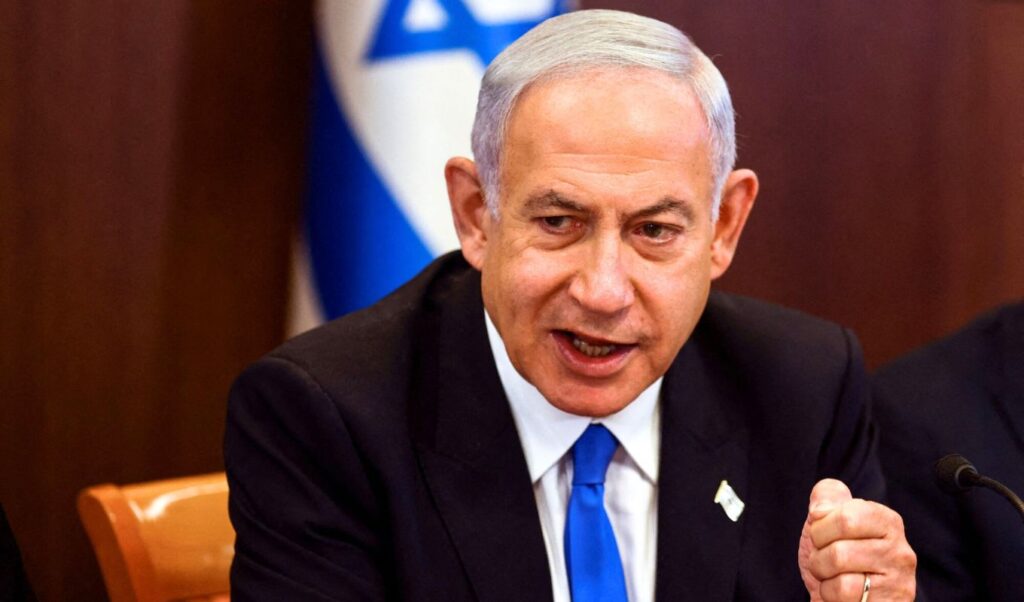
Benjamin Netanyahu unveiled an ambitious geopolitical plan to create a “hexagonal alliance,” which, as he stated, will include Cyprus and Greece as key Mediterranean partners, along with India, Arab and African countries, as well as selected Asian states.
Netanyahu: “Hexagonal alliance” focused on security and innovation
Speaking at the opening of his Cabinet meeting, the Israeli Prime Minister said the initiative aims to establish a multi-level cooperation framework that will strengthen economic development, technological innovation, and collective security in the broader Middle East and Eastern Mediterranean region. “In the vision I see before me, we will create an entire system, essentially a kind of hexagonal alliance, around or within the Middle East,” he declared, clarifying that this scheme includes Mediterranean countries like Greece and Cyprus. As he emphasized, this strategy responds to what he characterized as “radical axes,” both Shiite and Sunni, pursuing stability through partnerships in defense, technology, and regional cooperation. Nicosia and Athens appear, according to Netanyahu’s vision, as a bridge between Europe and the Middle East, in a scheme that aspires to transcend narrow regional boundaries and acquire broader geopolitical significance.
This morning, at the opening of our Cabinet meeting, I spoke about the historic visit of my dear friend, Prime Minister @narendramodi, to Israel this coming Wednesday. 🇮🇱🤝🇮🇳
The bond between Israel and India is a powerful alliance between two global leaders. We are partners in… pic.twitter.com/8cW2ltKdzK
— Benjamin Netanyahu – בנימין נתניהו (@netanyahu) February 22, 2026
Modi’s visit and the “unique relationship” between Israel and India
The announcement comes in the context of the upcoming visit by Indian Prime Minister Narendra Modi to Israel. Netanyahu described Modi as a “personal friend,” speaking of a “unique relationship” that has developed in recent years between the two countries. Modi is expected to address the Knesset and discuss cutting-edge issues such as artificial intelligence, quantum technology, defense, and infrastructure. Bilateral trade between Israel and India exceeds $10 billion annually, covering sectors such as defense, agriculture, and technology. In his post on platform X, the Israeli Prime Minister emphasized that the two countries are “partners in innovation, security, and a shared strategic vision.”