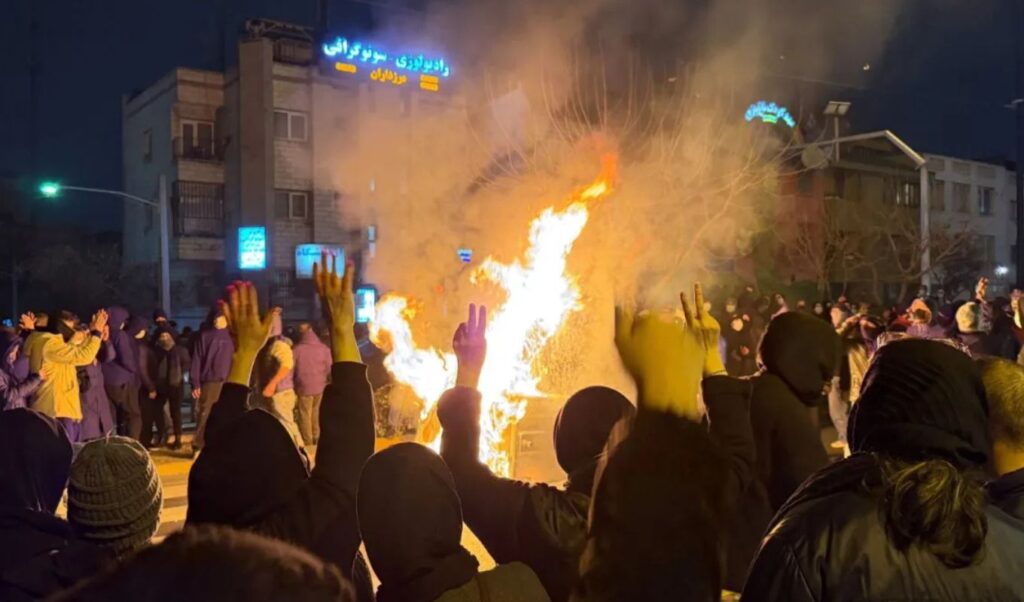
Shocking testimonies collected by the BBC reveal that Iran’s authorities are demanding large sums of money from families of protesters killed in recent unrest, in order to release their bodies for burial. Specifically, as multiple sources reported to the Persian edition of the outlet, protesters’ corpses are being held in morgues and hospitals, while security forces refuse to release them, demanding in exchange from relatives large monetary sums reaching up to $7,000. It should be noted that at least 2,435 people have lost their lives in more than two weeks of protests across the country.
Allegations in Iran: Authorities demand $7,000 to release bodies
A characteristic case is that of a family from the city of Rasht, in northern Iran. As the family told the BBC, security forces asked for about $5,000 to release the body of their relative. The corpse was being held along with at least 70 other protesters’ bodies at the morgue of Poursina Hospital, according to the family.
A similar complaint was made by a family in Tehran. According to what they told the BBC, when they went to collect their son’s body – a Kurdish seasonal construction worker – they were informed that they had to pay approximately $7,000. Unable to comply, they were forced to leave without their child’s body, as a construction worker in Iran typically earns less than $100 per month.
Nurses call relatives to rush to collect bodies before authorities arrive
In some cases, according to the BBC, hospital staff call relatives by phone, warning them to rush to collect the bodies before security forces arrive and demand money. Characteristic is the testimony of a woman, whose details are not published for security reasons. As reported, she learned that her husband had been killed only when she received a phone call on January 9 from nursing staff, who advised her to go to the hospital immediately.
The woman went to the hospital with her two children, loaded the body into the back of a pickup truck and drove for seven hours to their hometown in western Iran to bury him. “I sat in the back of the pickup and cried over his body for seven hours, while my children were in front,” she said, according to a relative living in London.
No charge if they declare the deceased was killed by protesters
Persian BBC has also received reports that staff at the Behesht-e Zahra morgue in Tehran inform families that if they declare that their child was a member of the paramilitary Basij organization and was killed by protesters, then the body will be released free of charge. “They asked us to participate in a pro-government rally and present the body as a martyr. We refused,” a victim’s relative said in a message to the BBC.
In another case in Tehran, a source told the BBC that several families broke into a morgue for fear that authorities would keep or bury the bodies without their knowledge. As reported, the families forcibly opened the door, pulled the bodies from ambulances and kept them for hours in the hospital courtyard until they found private ambulances to transport them.
The full picture of events remains unclear due to internet and communication cuts, while international human rights organizations have no access to the country. The Iranian regime does not allow the BBC and other international media to conduct on-site reporting.
According to the American organization Human Rights Activists News Agency (HRANA), since the start of the unrest at least 2,435 protesters have been killed, including 13 children, as well as 153 people connected to security forces or the government. Meanwhile, 18,470 protesters have been arrested, while arrests of activists, lawyers and ordinary citizens continue across the country.