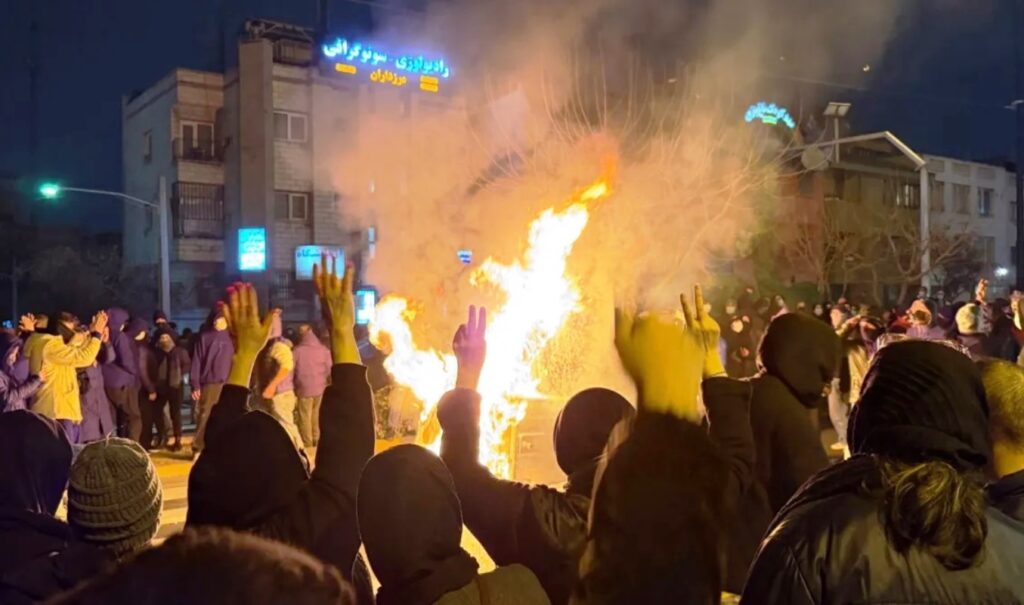
Iran is in a state of boiling tension as time runs out for the first protester execution of 26-year-old Erfan Soltani, with the international community watching with bated breath. The anti-government demonstrations have already left 2,571 dead, while fears are expressed that the real number of victims could exceed 20,000. At the same time, Donald Trump openly threatens military intervention if the regime proceeds with protester executions.
The protests in Iran erupted about two weeks ago in Tehran’s markets, as a reaction to galloping inflation and outrageous price increases for basic goods, with many products disappearing from shelves. Soon, social anger spread to all 31 provinces of the country, with streets turning into fields of violent repression and the fear of mass state executions becoming tangible.
Executions in Iran: The case of Erfan Soltani
At the center is 26-year-old Erfan Soltani, who was arrested on the evening of Thursday, January 8, 2026, near his home in the city of Karaj. His family remained without any information about his fate for three days, until security agents contacted them on Sunday, confirming that he was being held and had already been sentenced to death.
After desperate appeals, relatives were allowed one and only meeting lasting just ten minutes. Authorities made clear this would be the last “goodbye” before the execution of the death sentence, which, according to information, will be carried out by hanging.
Execution methods in Iran and the terror of public punishment
With more than 972 executions in 2024, compared to just 25 in the US, the regime of Ayatollah Ali Khamenei, who has ruled the country for over 35 years, remains inextricably linked to the death penalty, even during periods characterized as “peaceful.”
According to human rights organizations, public hanging with a crane is one of the most horrific methods. As experts from Iran Human Rights explain, prisoners die from asphyxiation or strangulation and it often takes several minutes for death to occur, turning the execution into torture before the eyes of the crowd.
Meanwhile, stoning remains a state-sanctioned form of execution, although no such cases have been recorded since 2010, mainly due to intense international pressure. The regime’s legal arsenal still includes firing squad, beheading, and throwing from height.
Awyar Shekhi from the human rights organization Hengaw points out that the Soltani case is developing with unprecedented speed, emphasizing that the government is using every available means to suppress social reaction and impose fear. In this context, executions in Iran emerge as a key tool of terrorization, with the country heading into one of the darkest periods in its modern history.