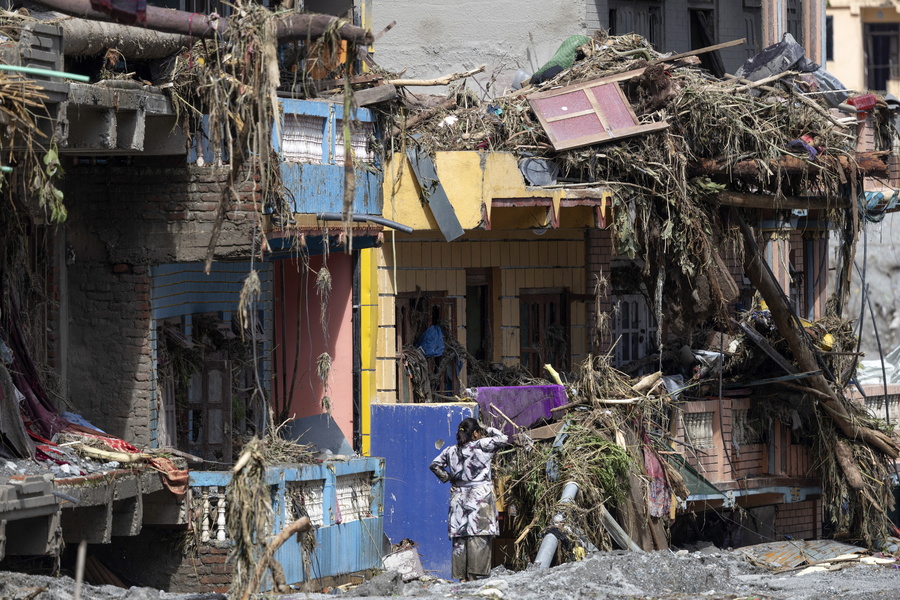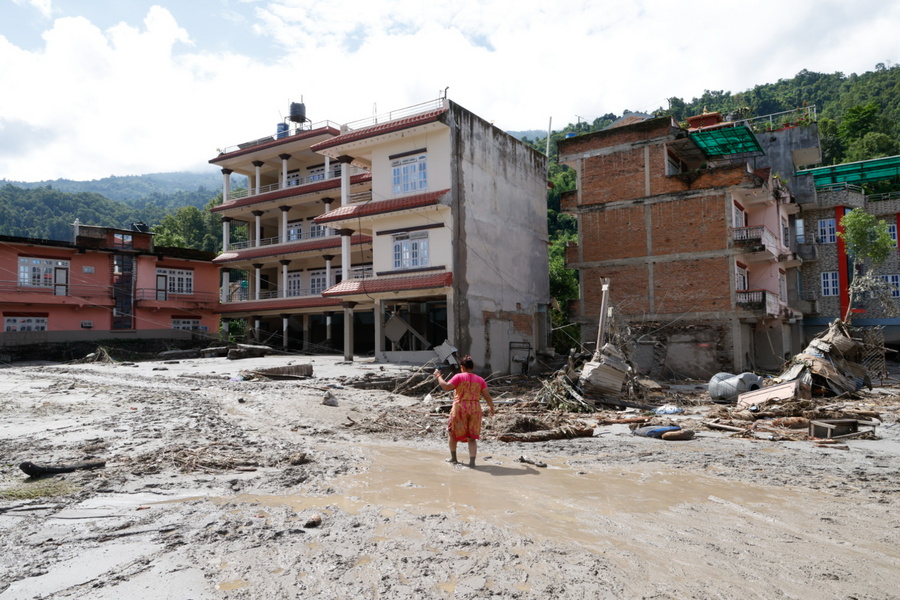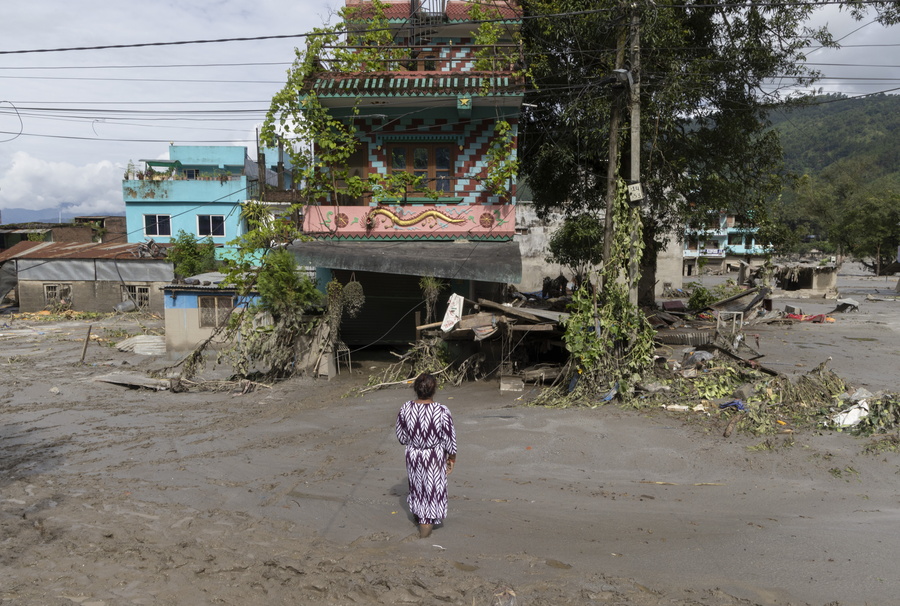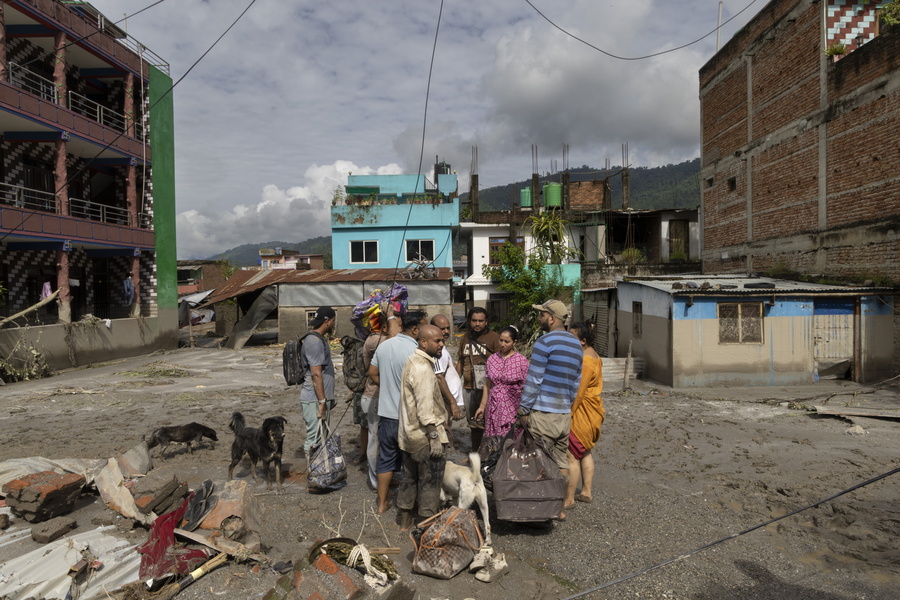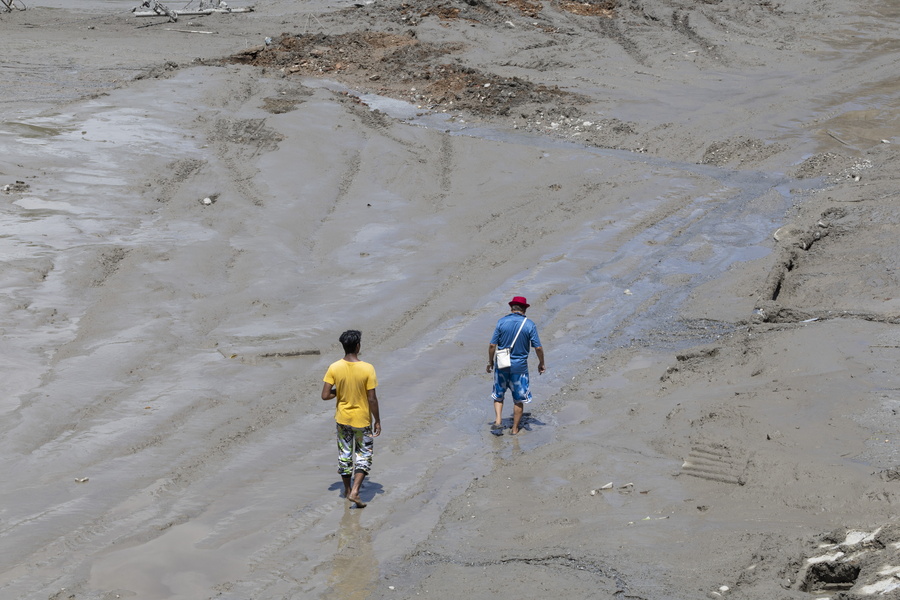
At least 380 people have been confirmed dead following the catastrophic floods that struck the border region between Nepal and Tibet. Local authorities, aided by rescue teams and volunteers, are working tirelessly to locate and free as many survivors as possible from the mud and debris.
However, according to Nepal’s Disaster Management Authority, the threat has not yet subsided, as a “serious risk of flash flooding” remains. A lake formed by the catastrophic floods may still overflow. The authority clarified that the warning applies to communities along the Bote Koshi and Trisuli rivers. Residents, tourists, and emergency service personnel have been urged to stay away from riverbanks and remain indoors until further notice. In a post on X, the authority stated: “As the possibility of another major flood remains, all parties in the lower riparian areas are called upon to take the necessary precautionary measures and remain on high alert.”
Read also: Expert raises “major question” over whether glacier detachment triggered earthquake in Nepal (Video)
Hundreds dead and over 1,300 missing
The disaster struck on the morning of Wednesday, August 26, when a massive volume of ice and rock collapsed into a mountain riverbed, triggering a cascading release of water and debris. The latest figures from international news agencies indicate that the death toll across Nepal and Tibet has surpassed 350, while more than 1,300 people remain missing. The numbers continue to change as rescue workers recover bodies from the river and flooded areas. In Nepal alone, at least 826 people are unaccounted for, while the Chinese side of Tibet has reported 558 missing. China has confirmed three deaths in the Gyirong area. There is also deep concern for foreign nationals — hundreds of citizens from other countries are among the missing, as the region is a key route for tourists, hikers, and pilgrims traveling to Mount Kailash.
devastating flood hit Nepal, with around 400 people reportedly missing, including 293 foreign tourists.
Praying for everyone affected. Stay safe, Nepal. 🙏🇳🇵 pic.twitter.com/iYonke5GOG
— keritingrambut 𐂂 (@bgkiting) August 27, 2026
Greeks describe the nightmare after Nepal’s devastating floods: “Mothers are searching for their children”
The scenes emerging from Nepal following the deadly floods are deeply harrowing — a trail of deaths, missing persons, and widespread destruction left behind in both infrastructure and residential areas. Greeks currently in the country describe villages and towns buried under mud, a shattered road network, and families desperately searching for their loved ones. Influencer Stavros Arvanitis, who is currently in Nepal, described the disaster as the worst the country has experienced in many years. “Men are searching for their wives, women have lost their husbands under the rubble, and mothers are looking for their children,” he said, capturing the full scale of the tragedy.
How the disaster began
In the early hours, there was uncertainty about the cause of the disaster. A magnitude 4.4 earthquake had been recorded and was initially believed to have triggered the flood. However, the United States Geological Survey (USGS) offered a different interpretation. The seismic signal was ultimately attributed to the ice and rock collapse itself, as well as the subsequent movement of debris — not to a conventional earthquake that caused the disaster. Early assessments indicate that a large volume of glacial ice collapsed at high altitude. The collapse carried with it ice, rocks, and glacial material, forming an enormous mass of mud and water that moved at extraordinary speed toward lower-lying areas. A Chinese geologist reported that the debris flow reached speeds of approximately 50 meters per second and traveled a distance of more than 20 kilometers. On the Trisuli River, water levels reportedly rose by as much as nine meters in just 30 minutes, leaving residents with almost no time to react.
🌏 NEPAL 🇳🇵 | ÇİN 🇨🇳 |
BİNLERCE İNSAN CANLI CANLI TOPRAĞA GÖMÜLDÜ, KÖYLER HARİTADAN SİLİNDİ.
Herkes yağmur yağmadan bu Selin nasıl olduğunu konuşuyor?
Saniyeler içinde kütle sel her şeyi alıp götürdü, köyler yok oldu, insanlık tarihinin gördüğü en büyük felaketlerden biri… pic.twitter.com/WOsC6asvwB
— Said Ercan 🇹🇷 🌍 (@saidercan) August 26, 2026
Villages buried under mud
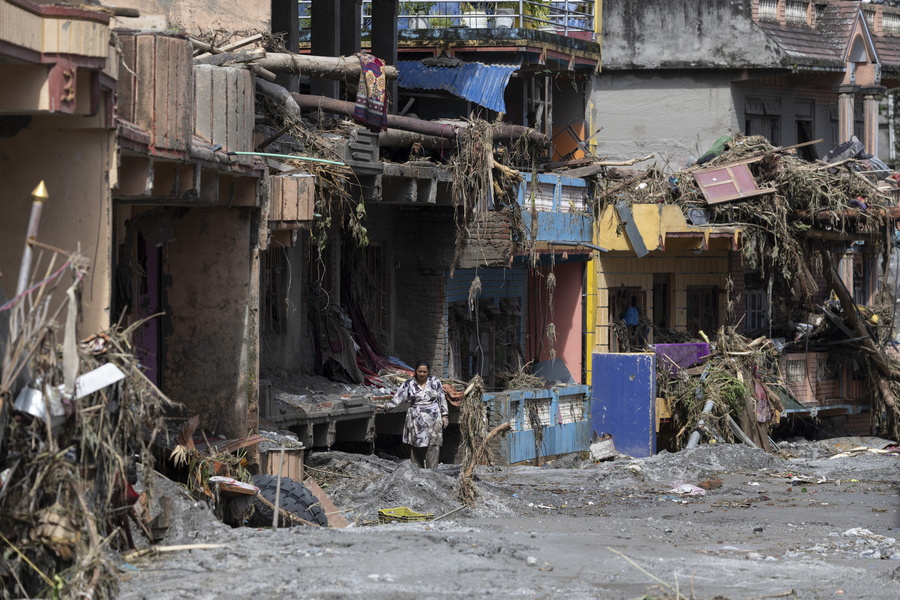
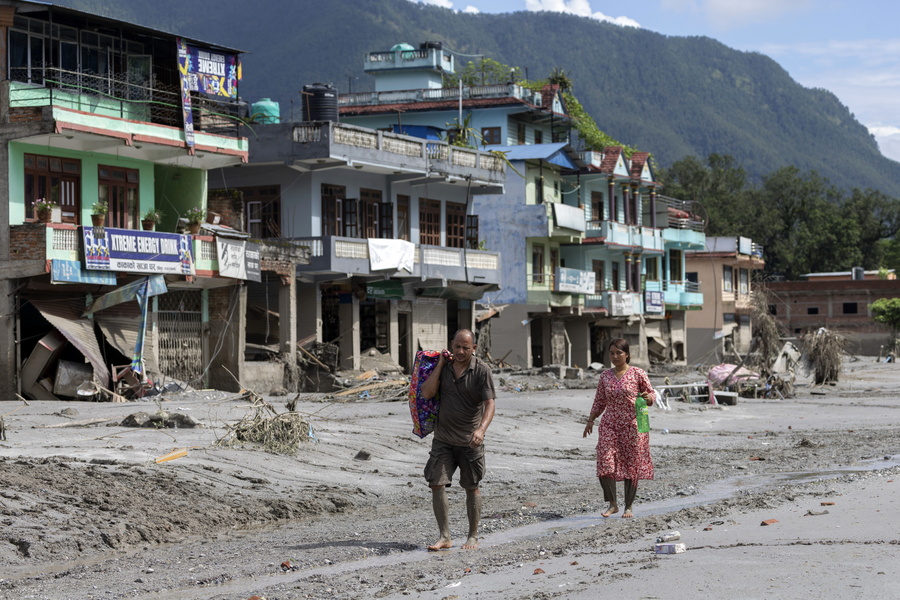
The destruction was particularly severe in the areas of Rasuwagadhi, Timure, and Syabrubesi, in Nepal’s Rasuwa district. Raging waters and enormous quantities of mud swept away homes, hotels, vehicles, bridges, and roads. Entire zones were reduced to vast expanses of mud and wreckage. Nearly 40 kilometers of road network have sustained serious damage, while dozens of bridges collapsed, making it extremely difficult for rescue teams to access affected areas. Hydroelectric power facilities were also impacted, leaving several areas without electricity or telecommunications.
#Nepal Flood की यह वीडियो देखकर के आपके होश उड़ जाएंगे
देखिए किस तरह 1 मिनट के अंदर अंदर सब कुछ बिखर गया 😭 pic.twitter.com/R3wXRmYqFO
— Ayesha Khan (@Ayesha0Khaan) August 27, 2026
A simulation of how the Nepal flood disaster may have unfolded:
A large section of Himalayan glacier collapsed, sending ice, rock and soil into the Lhende Khola on Aug. 26.
Nepali officials say the debris temporarily blocked the river, forming a lake that later burst and sent a…
— Open Source Intel (@Osint613) August 27, 2026
Floodwaters swallowing an entire village and houses collapsing under the force of the disaster as deadly floods hit Tibet and Nepal pic.twitter.com/UgrryWtZBu
— Surajit (@surajit_ghosh2) August 26, 2026
International response
The disaster has prompted a significant international response. The United Nations announced the activation of $2 million in funding from its Central Emergency Response Fund to provide medical assistance, shelter, and water to those affected. The United States also announced emergency aid of $500,000. On the Chinese side, hundreds of rescue personnel have been deployed to the Gyirong area, and Chinese Premier Li Qiang traveled to the affected region to oversee relief operations. Meanwhile, countries including India, the United States, Australia, the United Kingdom, and Canada are closely monitoring the situation, as many of their citizens are among those reported missing.
पानीको वाहाव यति शक्तिशाली हुन्छ भन्ने मैले जिवन मा कल्पना समेत गरेको थिइन!#Staysafe #nepal #flood pic.twitter.com/vObXIKNj4l
— न B न (@Nabin62158820) August 26, 2026
State Department: 90 American citizens missing
Approximately 90 American citizens are missing following the devastating mudflows that engulfed valleys in Nepal and Tibet, causing more than 362 deaths, the State Department confirmed. “We are currently seeking to locate 90 Americans who have potentially been affected by the floods and are unaccounted for (…). We can confirm that three Americans have been rescued in Nepal,” a State Department spokesperson stated, adding that the US currently has no confirmed reports of American fatalities.
If this is the condition of the rocks, just imagine what the people of Nepal must have gone through, Oh God pic.twitter.com/jFnksP9Edj
— Prayag (@theprayagtiwari) August 27, 2026