Washington is tightening the noose around Iran, targeting the country’s economic Achilles’ heel — a struggling economy battered by inflationary pressures — in a bid to force a reversal of course and build a narrative of victory out of escalation. After presenting the Strait of Hormuz as American territory on a map, and with Iran showing no willingness to ease tensions with the United States, the White House is now engineering a new economic war against Tehran. This offensive aims to cut off Tehran’s oil revenues and sever the support networks that continue to keep the Iranian economy afloat.
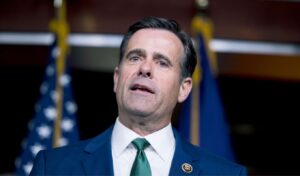
The scale of Washington’s ambitions is best illustrated by a statement from U.S. Treasury Secretary Scott Bessent, who described the new campaign — dubbed Operation Economic Outcast — using a striking historical parallel: the D-Day landings in Normandy. The reference was deliberate. For the American administration, this operation marks the launch of a major, coordinated offensive — not only against Iran itself, but also against the financial networks and third-party countries that continue to do business with Tehran. But what about the China factor?
Washington is well aware that the effectiveness of any economic isolation campaign against Iran depends on its ability to restrict foreign buyers of Iranian oil and the mechanisms through which Tehran converts its exports into usable revenue. And this is where the defining variable of the entire American strategy emerges: China. China is by far the largest buyer of Iranian oil. According to recent data, it absorbed approximately 80% of Iran’s oil exports in 2025. Despite sustained U.S. pressure, the flows never stopped — trade has been sustained through complex shipping networks, ship-to-ship transfers, and transactions conducted outside traditional Western financial channels.
This explains the true stakes of the new sanctions. For the first time, Washington is signaling with greater clarity that China is not beyond the reach of American sanctions. When Bessent was asked specifically about Chinese banks, he replied that “no one is above the reach of U.S. sanctions.” Yet Washington has stopped short of directly sanctioning major Chinese financial institutions — a choice that reveals the core dilemma facing the American government: how to wage economic war on Iran without triggering a new, uncontrollable confrontation with Beijing.
U.S. economic war on Iran: China’s response
Beijing’s response was immediate and unambiguous. China labeled the American unilateral sanctions illegal and emphasized that its cooperation with Iran takes place within the framework of international law. Chinese Foreign Ministry spokesperson Lin Jian stated that China would take “all necessary measures” to protect its rights and interests. This position is consistent with China’s longstanding opposition to unilateral sanctions not backed by a UN Security Council resolution.
The central question, therefore, is no longer simply whether Iran can withstand American sanctions. The larger question is whether the United States can enforce Iran’s economic isolation without coming into direct conflict with China.
The new strategy rests on a simple but highly aggressive logic: anyone who helps Iran circumvent American sanctions risks being cut off from the U.S. financial system. Washington has already imposed new sanctions on approximately 60 individuals, companies, and vessels linked to Iranian oil, shipping, financial flows, military procurement, and other activities. It is also expanding the range of sectors subject to sanctions, now including digital assets, technology, gold, aviation, and maritime transport.
American sanctions carry enormous power because the dollar and the U.S. financial system serve as the central pillars of the global economy. So-called secondary sanctions allow Washington to pressure even non-American companies: a Chinese, Indian, or Turkish firm may have no direct ties to the United States, yet risk losing access to the American market or the dollar-based financial system if it continues certain transactions with Iran.
Against a major economy like China, however, this tool becomes far more dangerous. China is not a small trading partner that can simply be cut off from the American economy. It is the world’s second-largest economy, a critical link in global supply chains, and the dominant force in rare earth processing and other essential minerals. Beijing has already used export restrictions on these materials as a negotiating tool in previous trade disputes with Washington.
This creates a particularly dangerous vicious cycle. If the U.S. sanctions major Chinese banks or companies facilitating Iranian oil trade, Beijing could respond with its own economic countermeasures. If, on the other hand, Washington fails to follow through on its threats against China, the credibility of the entire “Economic Outcast” campaign could be severely undermined. The message to other countries would be clear: American sanctions are truly universal only up to the point where they meet a power large enough to retaliate.
This is precisely why China represents the real stress test of the new American strategy. Washington can pressure companies, banks, insurers, and shipping groups in smaller countries. Imposing the same costs on a global economic rival — without simultaneously triggering a crisis in U.S.-China relations — is an entirely different challenge.
The Trump-Xi meeting
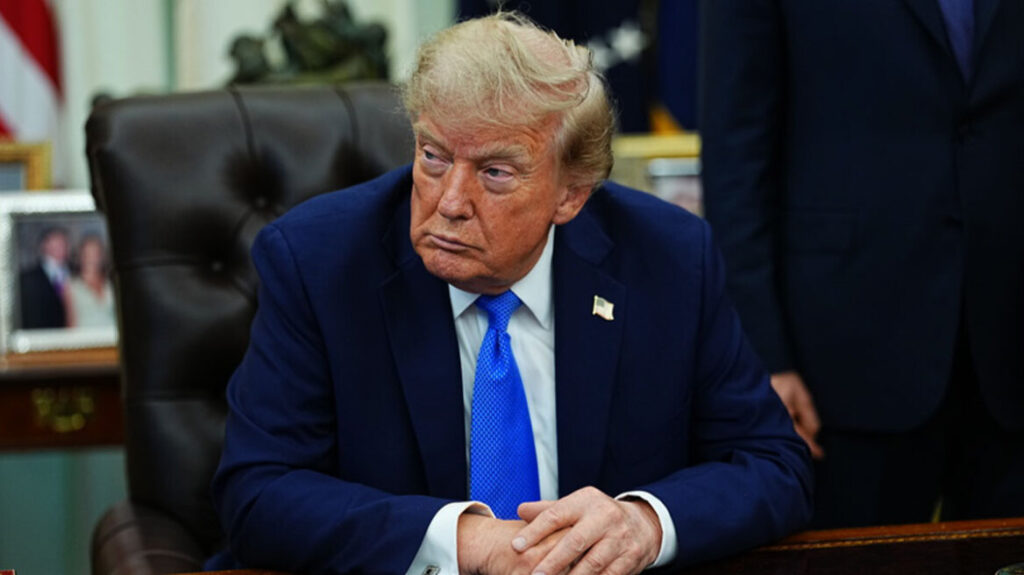
The issue takes on even greater significance given that this American campaign is unfolding at a moment when Washington and Beijing are already struggling to manage a fragile trade relationship. The scheduled meeting between Donald Trump and Xi Jinping next month transforms the Iran question from a purely Middle Eastern issue into a piece of the broader U.S.-China strategic rivalry.
Naval pressure on Iranian ports and significant disruption to shipping in the Persian Gulf and the Strait of Hormuz have already reduced Iran’s oil exports. Flows to China dropped sharply in August, according to Kpler data, falling from approximately 823,000 barrels per day in July to 534,000 in August. Nevertheless, China remains the primary economic lifeline allowing Tehran to preserve a portion of its oil revenues.
Iran, for its part, maintains that it has prepared for exactly this scenario. Economy Minister Ali Madanizadeh stated that the government has a two-year plan to manage the new sanctions and that Tehran still has its own tools to counter American pressure. The Iranian government has also warned that countries cooperating with the American campaign could face retaliation.
America’s economic “D-Day,” therefore, is not simply another round of sanctions against Iran. It is an attempt to shut down the entire ecosystem through which Tehran continues to trade oil, transfer money, and acquire technology. The critical question, however, remains whether this can be achieved without pushing the U.S.-China relationship to its breaking point.