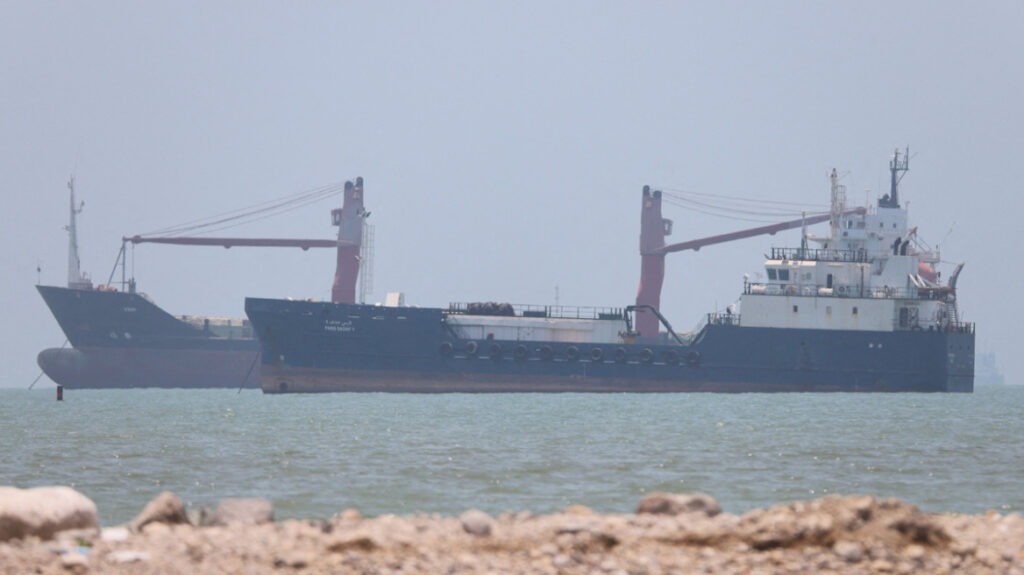
The confrontation between Tehran and Washington is entering a dangerous new phase, as Iran warns it may move to completely halt oil transit through the Strait of Hormuz. The threat targets one of the world’s most critical maritime routes for energy transport, deepening fears of further escalation in an already volatile region. Iran’s National Security Council chief Mohsen Rezaei declared that his country is determined to “neutralize the economic war” waged by the United States, warning that oil passage through the strait could be shut down entirely, according to the Tehran-affiliated Iranian network Press TV.
“America is backed into a corner. Either it will honor its commitments, or it will be forced to fight its way out of that corner — which will only make things worse,” Rezaei said late Saturday in a televised address broadcast by Press TV.
Iran threatens a complete oil blockade
Iran has continued to allow certain Iraqi tankers to transit the Strait of Hormuz, in yet another sign of the selective access Tehran grants to the strategically vital waterway.
However, Rezaei, secretary of Iran’s Supreme National Security Council, warned that Tehran would cut off all traffic if any neighboring country became involved in Donald Trump’s economic war against Iran.
“If they take such an action, we will not allow a single drop of oil to pass through the Persian Gulf. No oil will leave through the Strait of Hormuz or through the Persian Gulf,” he stated.
Rezaei also claimed that Iran has exported 70 million barrels of oil “in just the last one or two months,” implying that exports have continued despite the American blockade of Iranian ports, which was reinstated in mid-July.
Meanwhile, the U.S. Department of Energy reported that oil flows through the Strait of Hormuz are averaging between 8 and 9 million barrels per day, with several vessels conducting so-called “dark transits” through the waterway.
Specifically, with assistance from the U.S. Navy, oil companies have chartered tankers that disable their transponders and carry crude from the Persian Gulf, through Hormuz, and into the Gulf of Oman.
There, the crude is transferred onto customer tankers waiting in the area, before the vessels return once again through the disputed maritime route.