
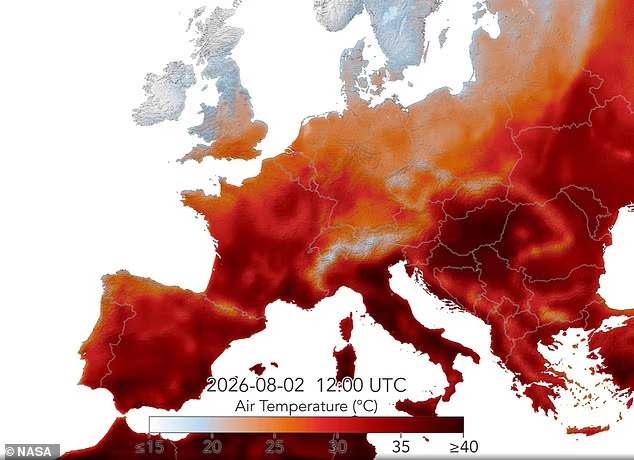
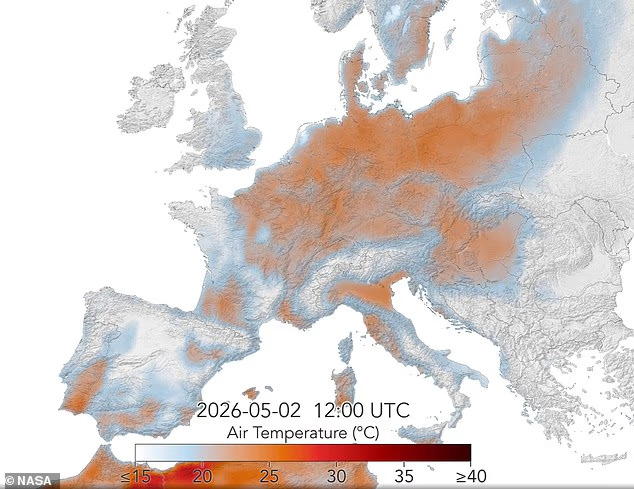
The successive heatwaves that struck Western Europe, pushing temperatures above 40 degrees Celsius, have been captured in a timelapse published by NASA. By mid-August, Europe had already endured its fifth heatwave of the year, with the first signs of an unusually scorching summer appearing as early as May. Many countries recorded temperatures that broke seasonal records, and as events would prove, this was no isolated incident — it was only the beginning of what was yet to come.
Read: Heatwave in France: 1,243 excess deaths in July — 75% were over the age of 75
NASA timelapse documents Europe’s successive heatwaves
What made these periods particularly alarming was not only the extreme peak temperatures, but also their duration. In many cases, the heat persisted for days or even weeks at a time, with little to no meaningful relief even during the overnight hours. The NASA timelapse captures the evolution of maximum daily temperatures across Western Europe from May 1 through August 19, 2026. The visualization was created by combining satellite observations with temperature data from NASA’s GEOS (Goddard Earth Observing System) global model. Areas shown in the deepest shades of red indicate locations where temperatures reached or exceeded 40 degrees Celsius.
Record-breaking temperatures
Temperature records were falling at a staggering pace, often shattered by wide margins. According to the UK Met Office, temperatures in London soared to 35.1°C (95.2°F) on May 26, breaking the previous May record by 2.3°C (4.1°F). In June, Bordeaux, France, broke its all-time maximum temperature record on three consecutive days, peaking at 42.5°C on June 24, according to Météo-France. Slovakia, meanwhile, recorded new national records in August for both daytime maximum temperatures and overnight minimum temperatures. The combined June and July temperatures across Western Europe were the highest ever recorded, according to the European climate monitoring service Copernicus.