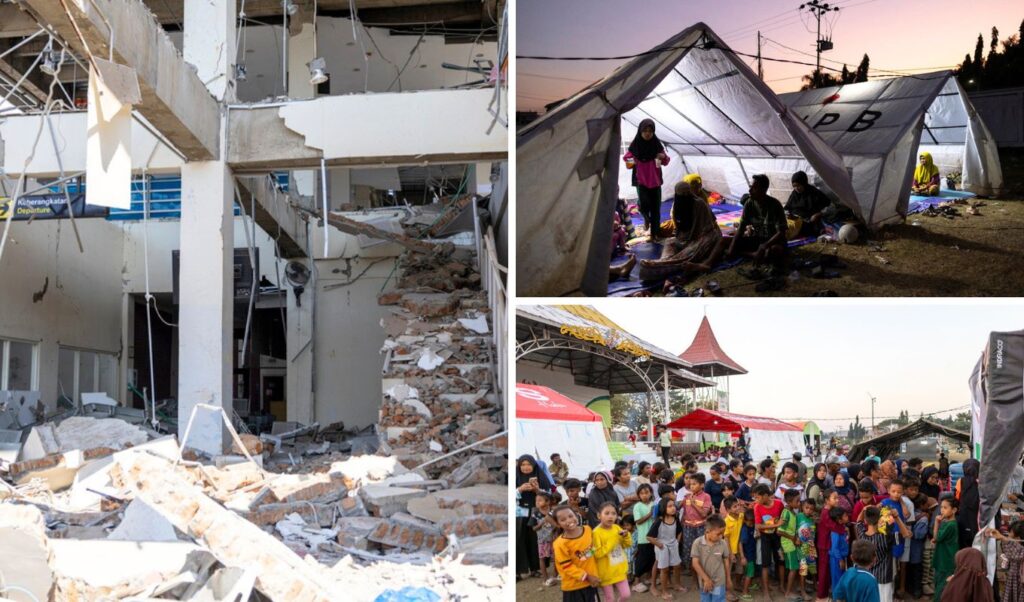
The death toll from the devastating 7.7-magnitude earthquake that struck Indonesia has climbed to 53. The powerful tremor forced thousands of residents to flee their homes on the island of Flores, leaving them in urgent need of humanitarian assistance. The massive earthquake caused widespread damage to hundreds of buildings, triggered landslides that blocked roads, and knocked out electricity, water supplies, and telecommunications in several areas.
Indonesia: State of emergency declared in earthquake-stricken region
The earthquake-affected region has been placed under a state of emergency, and the Indonesian government has begun delivering essential supplies to impacted areas. The Red Cross and Red Crescent have announced they are mobilizing to dispatch humanitarian aid to the disaster zones.
The region sits in a high-risk seismic zone, located along the Flores Back-Arc Thrust — an extensive fault system running along the northern edge of the Indonesian archipelago, formed by the pressure of converging tectonic plates in the area.
Major earthquakes in Indonesia
The same region was previously struck in 1992 by a 7.5-magnitude earthquake that caused widespread destruction.
The Indonesian archipelago lies along the Pacific Ring of Fire, one of the most seismically active zones on the planet.
In 2004, a catastrophic 9.1-magnitude earthquake off the coast of Sumatra triggered a massive tsunami that killed 170,000 people in Indonesia and approximately 50,000 more in neighboring countries.
To this day, it remains one of the deadliest natural disasters ever recorded in history.