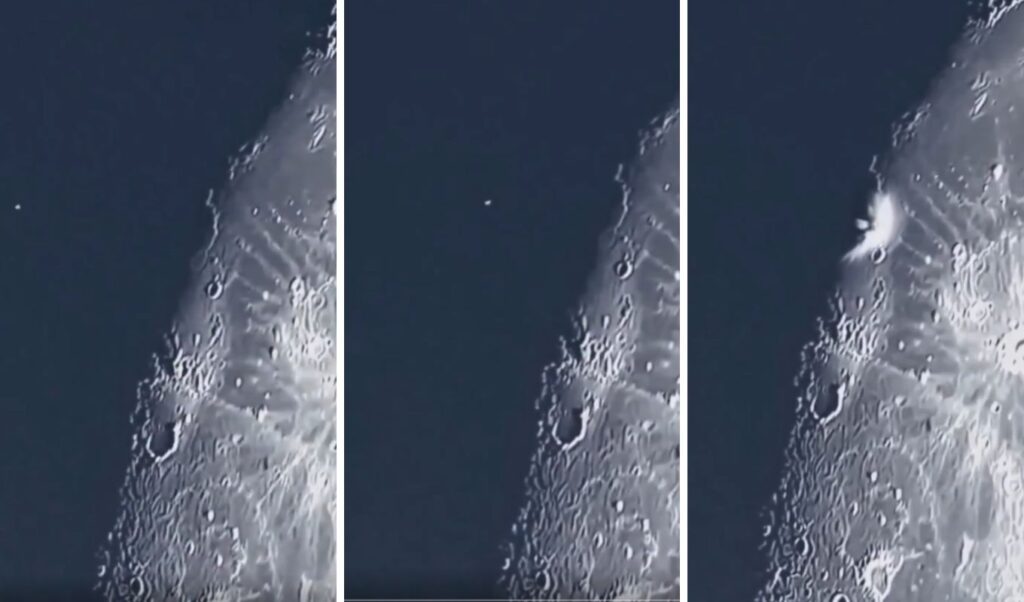
A SpaceX rocket has crashed into the Moon, creating a new crater on its surface. The object in question was a piece of rocket debris that had been drifting uncontrolled through space for months, with no means of guidance. According to estimates, the impact released energy equivalent to approximately three tons of TNT, hurling large quantities of lunar dust into the air. Scientists had previously noted that the debris had been traveling on an uncontrolled trajectory for months and suggested it might even be visible from Earth through powerful telescopes. However, no visible trace of the impact was recorded by amateur astrophotographers who had been monitoring the event.
🚀Zużyty stopień rakiety SpaceX Falcon 9 rozbił się o niewidoczną stronę Księżyca z prędkością 8700 km/h, tworząc nowy krater po misji księżycowej z początku 2025 roku.pic.twitter.com/U3lB08vHLQ
— Mateusz Grzeszczuk – Podróż bez Paszportu (@PBPaszportu) August 5, 2026
In space since January 2025
The debris was part of a Falcon 9 rocket mission launched in January 2025, carrying a lunar lander. Because the mission required a greater thrust to reach the Moon, the rocket stage did not follow the fate of previous ones, which typically fall into the ocean or burn up in the atmosphere. Instead, it remained in space and ran out of fuel, causing it to lose any controlled trajectory. According to Juliana Syman, director of NASA science programs and Dragon at SpaceX, a combination of solar activity and gravitational interactions ultimately placed the object on a collision course with the Moon.
NASA clarified that the incident posed no danger to Earth. Nevertheless, the impact is of considerable scientific interest, as researchers are now looking to study the newly formed crater and the materials ejected from the lunar surface. At the same time, the incident reignites the debate over space debris. The steady increase in satellite and rocket launches is leaving more and more uncontrolled objects in orbit, raising growing concerns about the long-term management of the space environment.