The situation regarding the war in Gaza had appeared frozen amid the sweeping developments across the Middle East. However, a Reuters report signaled progress in the Cairo talks, with a focus on the disarmament of Hamas. Compliance with the second phase of the peace agreement — drafted last September and signed in October — would mark the end of the war. This time, it appears Israel must respond as to whether it supports the outcomes reached through Egypt’s negotiations. The phrase “significant convergence,” used by a source close to the organization, carries its own weight — both regarding Hamas’s withdrawal from the territory and the deployment of an international stabilization force intended to ensure Gaza’s residents can continue living in the Strip, at least initially.
Gaza: Disarmament with no exceptions
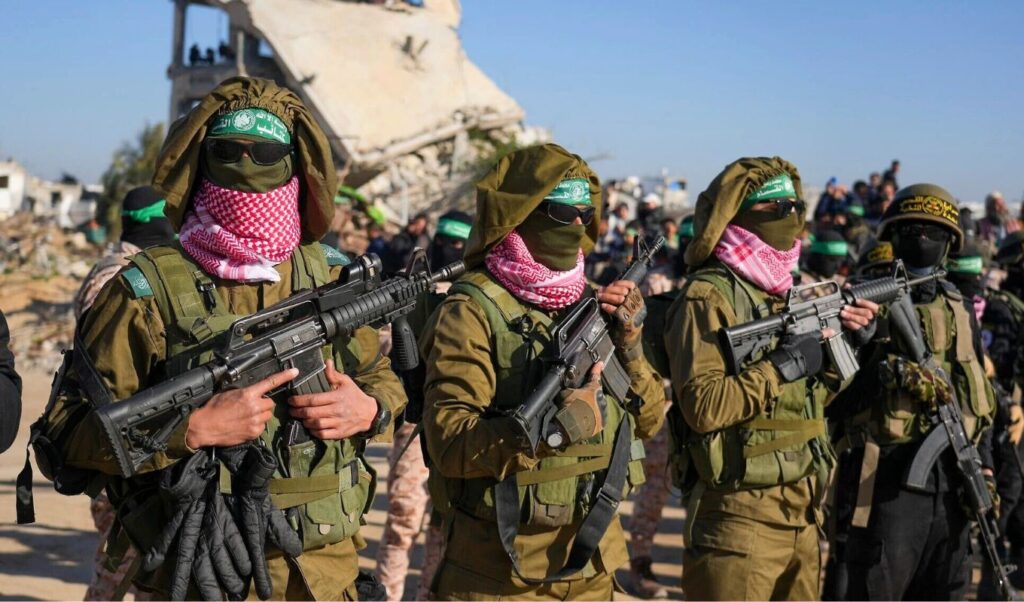
The fact that Israel must now respond suggests that full Hamas disarmament has likely not yet been agreed upon, even though progress on this issue appears to be the core of the discussions. A diplomatic source told Reuters that “we will continue to advance the roadmap” drawn up by the United States. That roadmap, however, calls for unconditional disarmament, so that the Palestinian technocratic government — the National Committee for the Administration of Gaza (NCAG) — can assume control. The process would essentially constitute a formal handover, with Hamas surrendering its weapons to that governing body in coordination with the International Stabilization Force (ISF), according to the diplomatic source. This could prove to be a sticking point, as Israel wants the weapons handed over directly to itself.
Hamas, for its part, has emphasized that the key breakthrough lies in the simultaneous dissolution of armed factions and withdrawal of Israeli forces. There is also talk of storing heavy weapons. Hamas, however, appears unwilling to discuss disarmament unless Israel halts its attacks and withdraws from Gaza. The safe passage and unimpeded movement of its members are listed as preconditions. It remains unclear what will happen with light or personal weapons, and whether Hamas’s proposal will be accepted by Israel or the Peace Council.
The central issue, then, is one of timing and trust. Hamas fears that Israel will launch an attack after it disarms, while Israel fears that Hamas will entrench itself in Gaza once the IDF withdraws. Reuters also cited an “Israeli political source” who reportedly stated that Israeli forces will not pull back from the “yellow line” in Gaza until Hamas is disarmed and the enclave is fully demilitarized. Meanwhile, according to the report, at least six Palestinians, including two children, were killed on Thursday, July 30, in Gaza by Israeli strikes.