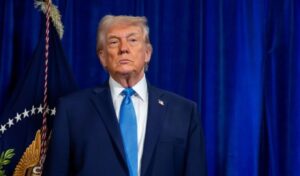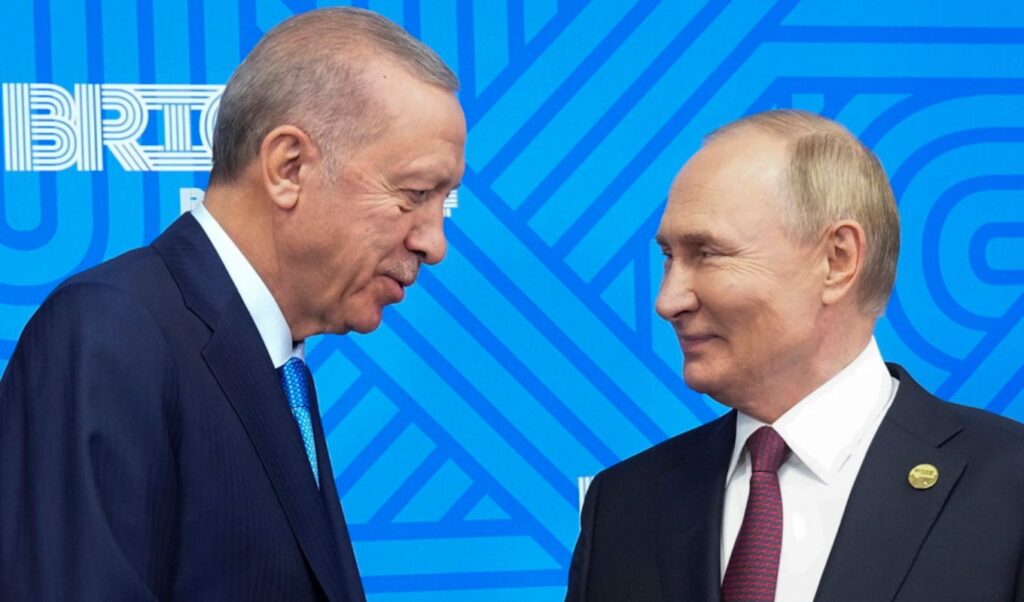
Turkey is searching for a way out of its Russian S-400 missile system deadlock. To date, no official announcement has been made — despite reports from Turkish journalists claiming that a deal was reached between the US, Turkey, and Russia regarding the country to which the systems would be resold, and despite Turkish Foreign Minister Hakan Fidan’s statement in an interview with TRT Haber that “there is no problem with this issue” — referring to the removal of the Russian missile system from Turkish soil and the lifting of CAATSA sanctions.
Read also: Israel clips Turkey’s wings over F-35 fighters: Netanyahu, armed with US military advantage law, could block the Trump–Erdogan deal
Alexandra Papadopoulou: “The US has made no commitment to supply Turkey with F-35s”
Greek Deputy Foreign Minister Alexandra Papadopoulou told parliament on Wednesday that the United States has not committed to supplying Turkey with F-35 fighter jets, responding to a question from lawmaker Alexandros Kazamias of the Course of Freedom party. She stated that “there has been no official announcement, commitment, or promise from the US to Turkey regarding its armaments programs. Foreign policy is judged on tangible facts, not impressions.”
Hulusi Akar’s Washington contacts over F-35s and S-400s
Meanwhile, the chairman of the Turkish Grand National Assembly’s National Defence Committee and former Defence Minister Hulusi Akar visited Washington, holding a series of meetings with House Armed Services Committee Chairman Mike Rogers and committee member Pat Harrigan. Analysts believe that his talks in the United States were aimed at finding a resolution to the S-400 issue as a prerequisite for Turkey’s reinstatement in the F-35 program.
Thrasyvulos Eftychidis: “Russia is the main obstacle to resolving the S-400 issue”
International relations analyst Thrasyvulos Eftychidis, speaking to parapolitika.gr, argues that Russia remains the primary obstacle to the removal of the S-400 systems. As he explains, “Russia does not accept their return. Nor does it agree to their transfer to another country without its permission. Kremlin spokesman Peskov’s latest statement says this is a serious matter that will be examined — but Russia has not yet provided an answer, particularly regarding a potential sale to a Gulf state. Qatar and the United Arab Emirates already operate American F-22 and F-18 fighter jets. So in practical terms, whoever acquires the system gains little from it, since they won’t be able to operate it effectively. And to acquire it at all, Russian authorization is required — authorization that has not been granted so far, for obvious reasons: to prevent Turkey from fully crossing over into the Western camp.”
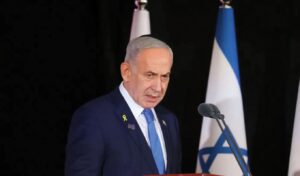
Adding further pressure, Israeli Prime Minister Benjamin Netanyahu’s public interventions appear to be placing additional obstacles in Ankara’s path. Netanyahu called on the US administration not to supply weapons to Turkey, and in a new statement on an American radio programme argued that Turkey supports Hamas and should therefore not receive F-35s. “I believe Erdogan should not get weapons. He doesn’t manufacture his own,” he said bluntly, adding that Turkey “deserves absolutely nothing.”
According to Eftychidis, the Trump administration cannot afford to ignore Netanyahu’s objections to arming Turkey, given that Israel holds a “qualitative military edge” in the Middle East region. As he puts it, “Israel has been designated by the United States for a specific role in the region. For this reason, it receives a permanent military aid package of $5 billion annually. Beyond that, there is an agreement that Israel will always possess the most advanced weapons compared to anyone else in the Middle East — and this has been upheld so far. Turkey, of course, is not part of the Middle East per se, but it is trying to get involved. The resistance Netanyahu is mounting will clearly be sustained and intensified, with all scenarios remaining on the table.”
What remains clear for now is that CAATSA sanctions are still in force, and for them to be lifted, the S-400 systems must be removed from Turkish soil. This was reaffirmed by the US Permanent Representative to NATO, Ambassador Matthew Whittaker, who reiterated that Turkey’s return to the F-35 program can only happen if Ankara removes the S-400 missile system from its territory.