The Middle East is entering a new phase of escalation, following the crash of an Apache helicopter in the Strait of Hormuz and new strikes launched by USA, Iran and Israel, with conflicts in Lebanon fanning tensions. However, the US and Iran may actually be closer to an agreement to resolve the conflict (whether it would be definitive remains to be seen). The optimism that continues to be expressed – albeit in a framework of uncertainty – by Washington, and even by Tehran (hopes for an agreement by the end of June was expressed Monday by Iranian UN Ambassador Amir Saeid Iravani) may be based on concrete tangible elements. A New York Times report characteristically noted that before the new tensions, the US and Iran were closing in on a nuclear deal based on 4 points, as talks had already progressed beyond opening the Strait of Hormuz.
What the US and Iran are discussing regarding Tehran’s nuclear program
According to the New York Times, the two sides appeared to find common ground on the following:
1. Long-term suspension of uranium enrichment
The United States has demanded for months that Iran agree not to enrich uranium for at least 20 years. The Iranians reacted by proposing a 10-year suspension, but American officials believe they would compromise on 15 years.
Earlier in the conflict, Donald Trump said a 20-year ban would be insufficient, but on Air Force One while returning from China on May 15, he told reporters he would accept it if it were “really 20 years.” It’s unclear if he would accept 15 years, the report notes.
2. Iran’s current enriched uranium stockpiles would be diluted
The United States would work with the UN’s International Atomic Energy Agency to dilute Iran’s enriched uranium stockpiles, according to two American officials briefed on the negotiations cited by the NYT. American officials envision playing an active role in managing the nuclear material, something Iran has always prohibited. Iranian officials indicate the United States would only have an observer role.
Secretary of State Marco Rubio has repeatedly stated in recent weeks that any agreement should cover all 11 tons of enriched uranium in Iran’s possession, not just the half-ton of fuel approaching the level required for bomb-making.
The Iranians have not spoken publicly about whether they are willing to surrender all their existing stockpiles. However, if the fuel is downgraded – rather than sent out of the country – Iranian leaders could claim they still possess the fuel. Trump hinted at this approach in his interview on NBC’s “Meet the Press” over the weekend, saying: “We’ll remove it and destroy it, whether it’s at the facilities or we move it off the facilities.”
3. Iran dismantles its nuclear facilities
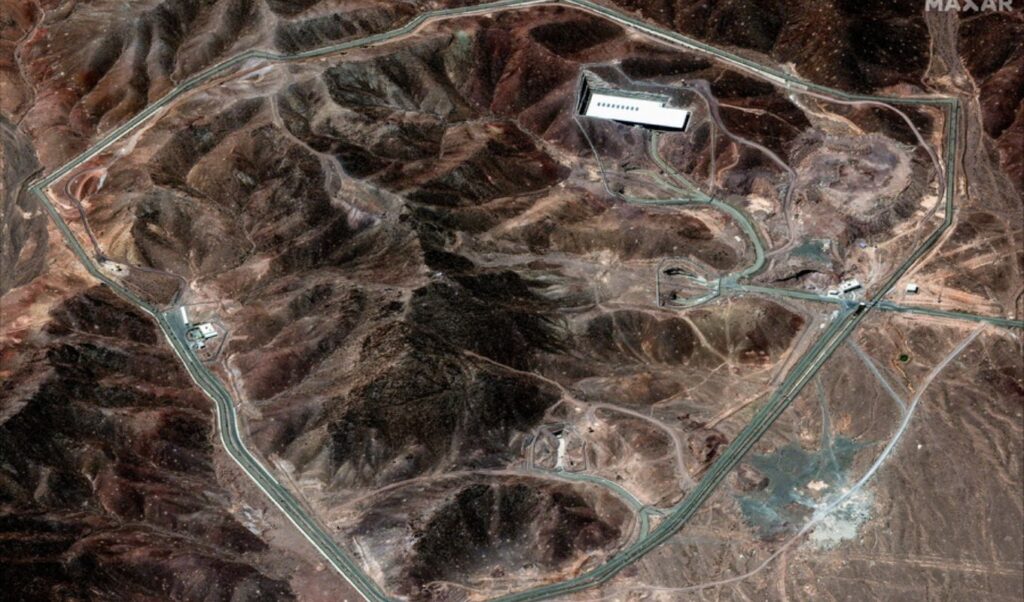
The United States has demanded Iran dismantle its three main nuclear facilities at Natanz, Fordow and Isfahan. The United States attacked all three as part of “Operation Midnight Hammer” almost a year ago, causing serious damage. Iran has discussed dismantling two facilities but insists on leaving one open, partly to prove it has not abandoned what it considers its “right to enrichment.”
This could prove problematic, the American publication notes: critics of the Obama-era deal focused on its failure to close Fordow, a deeply underground facility, which the Iranians later revived to produce near-bomb-grade fuel. Leaving one facility open would create a similar problem, unless activities are conducted above ground so it can be easily struck if Iran begins working on weapons. “Iran’s response is not clear,” the New York Times emphasizes.
4. Iran agrees to “surprise” inspections
The United States wants international inspectors to be able to conduct “surprise” inspections at any time and anywhere within Iran. It’s unclear if the Iranian government would agree. In practice, many suspected nuclear facilities are located within Revolutionary Guard military bases, where inspectors are often not allowed to enter.
If Iran agreed to the four restrictions on its nuclear program, this would represent significant progress compared to some of the concessions extracted from Tehran in the 2015 negotiations.
At least, it would be progress on paper. However, the agreement would depend on Iran’s cooperation at every stage: in guiding international inspectors and Western equipment to the nuclear facility in Isfahan, where most of Iran’s 60% enriched uranium stockpiles are believed to be stored deep underground, as well as providing inspectors access to every suspected nuclear facility in the country.
The not coincidental visit to Tennessee
Thus, it becomes clear that the secret visit on Thursday, reported by Axios, by the American president’s envoys Steve Witkoff and Jared Kushner to the Oak Ridge nuclear facilities in Tennessee to meet with top US nuclear experts who could play a role in negotiations with Iran on nuclear issues, was perhaps not coincidental.
“This Oak Ridge meeting doesn’t mean an agreement will be reached, but it’s a sign that negotiations are at a critical point and there’s a good chance they’ll be completed and we want to be prepared,” an American official said at the time. CNN reported that the Trump administration is preparing for the possibility of substantive talks on Iran’s nuclear program and has already assembled a team of about 100 experts to support negotiations and potential implementation of an agreement.
The US estimates new attacks against Iran won’t affect negotiations
US President Donald Trump said he believes the US and Iran will eventually reach a “very good” agreement, despite American attacks against Iran, in a phone conversation with ABC News chief Washington correspondent Jonathan Karl, shortly before the US Central Command (CENTCOM) announced the attacks Tuesday evening.
CENTCOM stated in its announcement that the attacks were a “proportional response to unjustified Iranian aggression,” referring to the downing of a US Army Apache helicopter over the Strait of Hormuz.
The American president’s view is echoed by US officials, who estimate that negotiations are not hindered by the new American strikes against Tehran.