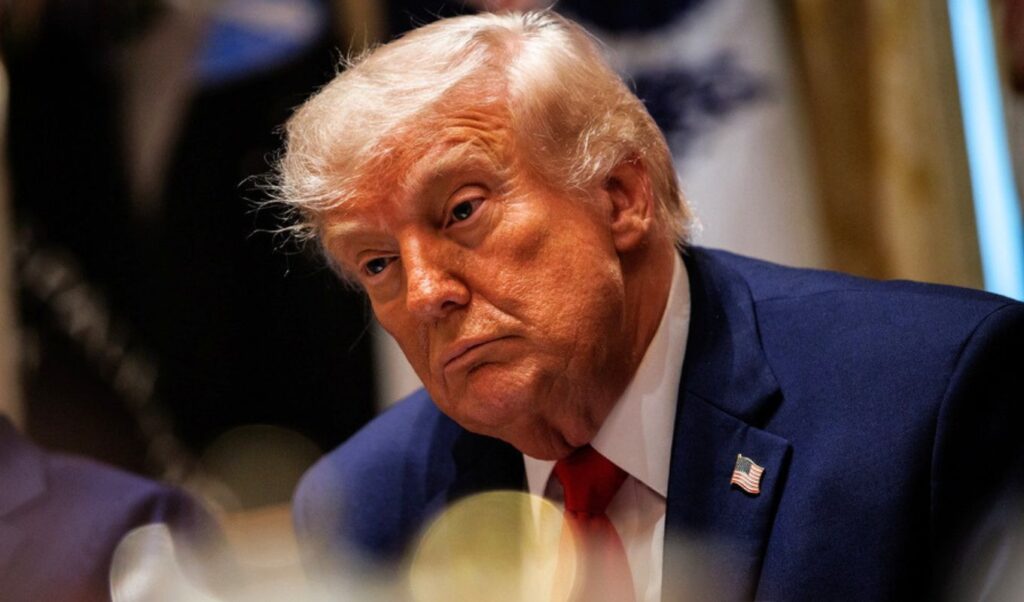
US President Donald Trump outlined the reasoning behind the war in Iran and parallel pressure to achieve an agreement in his Fox News interview, admitting that the US should never have been involved. Although he appears optimistic that a deal is close, analysts believe it will hardly constitute a final solution, describing an ongoing “narrative war” between the two sides.
According to reports from the New York Times and Axios, the White House sent a significantly tougher version of the proposed framework agreement to Tehran, attempting to force the country’s leadership into immediate compromise, while Trump himself made significant revelations about the background of American bombings.
Donald Trump: “We shouldn’t have been in Iran”
Speaking to Fox News about previous US military interventions, Trump expressed his opposition to the country’s involvement in wars, while drawing a comparison to the invasion of Iraq. “Look at what happened with Iraq. We screwed up so badly. What we did was so stupid. We shouldn’t have been there in the first place, by the way. We shouldn’t have been in Iran, but Iran has the capability,” he stated characteristically.
Despite this admission, the American President defended the intense US strikes, claiming they prevented Tehran’s nuclear threat. “If we hadn’t hit them with B-2 bombers nine months ago, they would have nuclear weapons right now and it would be a completely different story”.
“Not rushing” to close a deal with Tehran
Referring to the progress of current negotiations, he clarified that he is “not rushing” to close a deal with Tehran. “If you rush, you won’t make a good deal,” he noted, though quickly adding that the two sides are “close to a very good agreement”.
In another revelation during the same interview, Trump explained that Iran’s armed forces were not targeted with the same aggressiveness as other regime structures, as Washington considers the country’s army “somewhat moderate”.
According to the US president, while Iran’s navy and air force “have completely disappeared,” Washington deliberately avoided attacking the army with the same ferocity. As he explained, the complete destruction “of everything” could leave a country unable to rebuild for generations. “The world will be surprised to hear this, because mistakes have been made in wars where you eliminate everyone, and then you have a country that for 40 years can never rebuild,” he said characteristically.
“Narrative war”
The US and Iran appear to have entered a new “narrative war” surrounding negotiations to end the conflict and the future of Iran’s nuclear program. A SKY news analyst noted that what the US president said is in “stark contrast” to the stance and public positions of Iranian officials regarding a possible agreement.
“More than 90 days after the start of the war, we are again in a narrative war. Donald Trump wants history written his way and the Iranian regime wants the same. These two narratives are completely different,” she noted characteristically.
She pointed out that the versions presented by both sides regarding the memorandum of understanding under negotiation differ significantly. Meanwhile, she emphasized that even this draft agreement does not concern a final solution, but essentially a 60-day extension for both sides to return to the negotiating table and discuss outstanding issues, with Iran’s nuclear program being the most important.
According to the analysis, under this temporary agreement the ceasefire would also be extended, though there is no clear picture yet of whether a final diplomatic solution can be achieved.