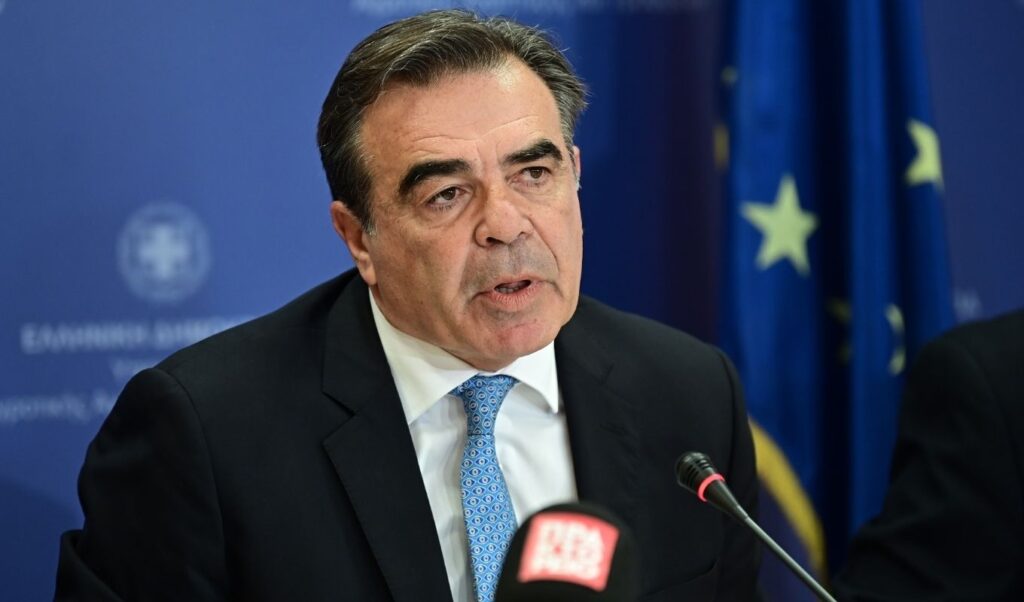
Six decades after the establishment of the Common Agricultural Policy (CAP), the landscape has changed, many European states want to alter the philosophy of agricultural subsidies and Greece, like other countries, is concerned. The Minister of Rural Development and Food, Margaritis Schinas, presented to the latest Cabinet Council the framework of the new Common Agricultural Policy 2028-2034, as it is being shaped through the Commission’s proposals for the new Multiannual Financial Framework of the European Union. We note that in the current programming period our country has received over 19 billion euros in total from the CAP.
The government’s objectives through the Common Agricultural Policy
The government, in the ongoing negotiations in Brussels, is seeking, among other things, to maintain current co-financing rates, greater flexibility in direct payments, a two-year transitional adjustment period to the new model and integration of processing into CAP interventions. At the core of the European Commission’s proposal is the Degressive Area-Based Income Support (DABIS), a new scheme that replaces various existing CAP payment systems. It provides support based on eligible hectares, but introduces a degressive support mechanism. This entails a gradual reduction of support for larger agricultural holdings, aiming for a more equitable distribution of support. At the same time, a payment ceiling of 100,000 euros per holding per year will be applied. The system will prioritize those who derive their main income from agriculture.
By 2032, retirees will no longer be eligible, with the aim of enabling younger farmers to enter or expand their activities in the sector. The government maintains that the new CAP, despite pressures for resource redistribution, can secure equal or even greater funding for the Greek primary sector. However, the new European environment is characterized by increased demands and intense pressures for “external convergence” of direct payments between member states. Countries like Poland, Romania and Bulgaria are seeking a larger share of funding, as they receive lower support per hectare compared to southern European countries.
Meanwhile, Ukraine’s potential accession to the European Union is considered a factor that could drastically change the balances in the new CAP, as Ukrainian productive lands correspond to approximately one-third of the productive areas of today’s EU. This intensifies concerns about even greater pressure on available agricultural resources.
At the center of negotiations are direct payments to farmers. The European Commission is promoting a new subsidy allocation system, aimed at more equitable support for smaller and family farms, as well as greater support for young farmers, women and areas with natural constraints, such as mountainous and island regions.
The Greek side appears positive about greater targeting, however it seeks an increase in the maximum support per hectare, as the Commission’s proposal envisages a ceiling of 240 euros per hectare (i.e.: one hectare). The definition of “active farmer” also becomes particularly important, as it will determine who continues to receive subsidies. The Greek government seeks to maintain the possibility of supporting retirees and those with other professions who continue to have agricultural activity, to avoid land abandonment and further rural depopulation.
New philosophy
The new CAP architecture substantially changes the philosophy of the previous model. The logic of the two traditional pillars –direct payments and rural development– is replaced by a unified funding system through National and Regional Partnership Plans (NRPP). The new model combines “ring-fenced” and “non-ring-fenced” resources, giving member states greater flexibility, but also greater responsibility in designing their policies.
“Europe is changing. And with it, the philosophy of the new Common Agricultural Policy is also changing. Greece must be –and will be– present in this major negotiation with a clear strategy. We seek more national flexibility and less bureaucracy in the producer’s daily life,” emphasizes Mr. Margaritis Schinas in a statement to “P”. “The new CAP gives member states greater planning capacity and better targeting of their policies. For our country, this can constitute a significant opportunity, provided we properly utilize the new tools and new possibilities being created. Despite the major fiscal pressures developing in Europe, I am optimistic that Greece can maintain strong resources for the primary sector. However, this requires serious preparation and active adaptation to the new funding architecture being developed in the European Union,” emphasizes Mr. Schinas, who knows Brussels personalities, matters and situations well, as chief spokesperson of the European Commission under President Juncker (2014-2019) and as vice-president of the Commission under President von der Leyen (2019-2024).
As he further notes, “the country must leave behind a narrow logic of subsidy management and move to a new era of added value for Greek production. We must invest more in quality, innovation, extroversion, processing and the real competitiveness of Greek products. And for the Greek voice to be heard loudly and credibly in the major negotiations of the new CAP, we must first complete with consistency and credibility the reform of the payment system. The country’s credibility is our strongest negotiating weapon”.
Published in Parapolitika