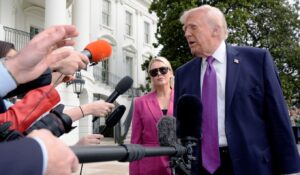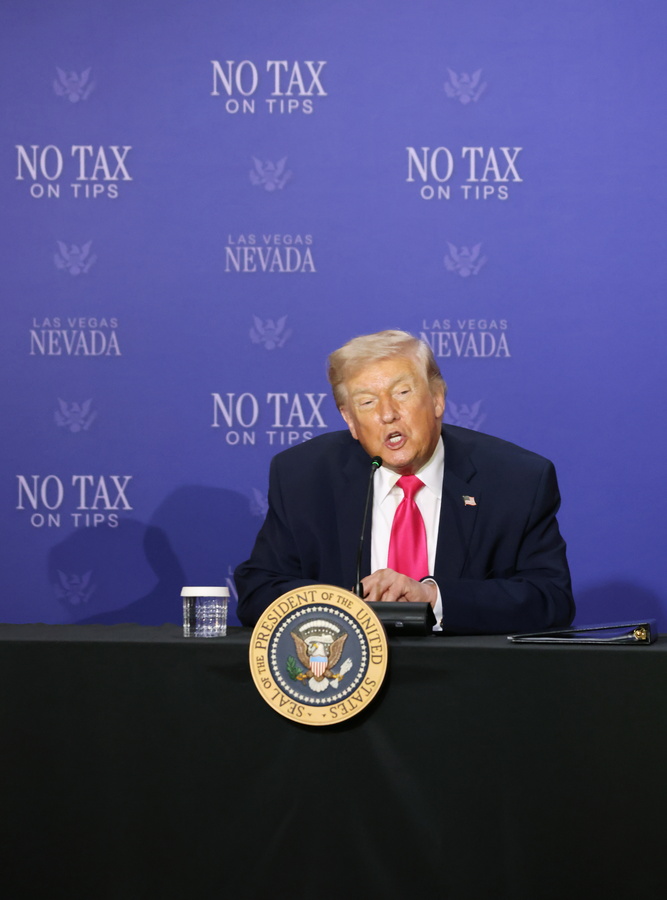
US President Donald Trump – in an interview with CNBC – appeared optimistic about the outcome of negotiations with Iran, stating that the US is in a “strong negotiating position” and that talks are progressing “very successfully.” The US President estimated that ultimately “a great deal” will be achieved. He also noted that the naval blockade against Iran “was successful,” while warning on the ceasefire that “there isn’t much time” and making clear he does not wish to extend it. “Iran must show restraint and common sense,” the US President declared, emphasizing that “the talks in Islamabad are the only way out before the bombs fall.”
“Wednesday’s deadline is final,” he stated, underlining that “I don’t want to extend the ceasefire.” Earlier, Trump accused Iran via Truth Social of violating the ceasefire multiple times, without providing details. The temporary ceasefire currently in effect in the Middle East expires tomorrow, Wednesday, with the American President launching harsh criticism against Iran not only regarding the ceasefire but also for the closure of the Strait of Hormuz by the Revolutionary Guards.
Tehran has made it clear that it will not participate in talks unless the naval blockade imposed by the US on the Strait of Hormuz and, by extension, Iranian ports is lifted. Meanwhile, the Islamic Republic insists on its “red lines,” emphasizing that its nuclear program is non-negotiable. It also demands the release of “frozen” assets held abroad, mainly in Qatar.
For their part, the US is examining ways to acquire Iran’s enriched uranium stockpiles – which Russia has expressed interest in obtaining – as well as ensuring free and safe navigation in the Strait of Hormuz, ruling out any possibility of imposing transit fees.
US & Iran talks: Diplomatic thriller in progress
The American delegation will be in Islamabad, but Iran’s delegation has not yet confirmed its presence.
Donald Trump continues his strategy of threats, with both sides seeking an agreement they can manage domestically. Neither wants to appear to have backed down at the altar of peace.
The three points that continue to block negotiations are the fate of Iran’s uranium stockpiles, the enrichment restrictions the US demands, and the opening of the Strait of Hormuz.
According to CNN, the two sides came close to an agreement just days ago, but the Trump administration pulled the talks back:
“As the weekend approached, the US and Iran seemed to be nearing an agreement to end the seven-week war. Then, President Trump appeared to try negotiating through the press. He claimed Iran had agreed to a series of terms that had not yet been finalized. The result was Iranian officials publicly rejecting many of these claims and denying they were preparing for another round of talks.”
Currently, US Vice President JD Vance is expected to arrive in Islamabad just as the ceasefire expires. The Speaker of Iran’s Parliament, who is supposed to go to Pakistan’s capital on Tehran’s behalf, has not made his intentions known.
According to Bloomberg, Donald Trump is telling associates he will not extend the ceasefire.
On the sidelines of the diplomatic thriller, the US military released images from its patrol of the seized Iranian vessel, while Iran demands the immediate release of the crew.
Europe is also closely monitoring developments in the Middle East.
International markets remain stagnant, with Brent crude selling at $94.5 per barrel and crude oil at $86.5, down 1% from yesterday. Normalization, however, will require considerable time, even if an agreement is reached.
The Lebanon front
In Lebanon, IDF forces remain on alert and warn: “Citizens of Lebanon must not move south of the line of visible villages and their visible surroundings shown on the map. Additionally, approach to the Litani River area, Wadi Salkhania and Saluki is prohibited.”
Statements from Hezbollah members and Israeli government officials reflect the tension and uncertainty about what comes next.
The coming hours will determine the outcome of a war that has lasted 53 days and has changed daily life even in Greece. The diplomatic thriller in the Middle East is in full swing.