Informal deliberations and behind-the-scenes maneuvering, involving secret meetings and bilateral communications, are taking place between PASOK and SYRIZA, with the central topic being the possibility of cooperation between the two parties and the formation of a unified democratic front against Kyriakos Mitsotakis’s New Democracy — with strong resonance across the progressive political space, aimed at shifting the balance of power. A successful alliance of this kind would weaken the role of Alexis Tsipras, who is seeking dominance over the center-left as the leader of ELAS.
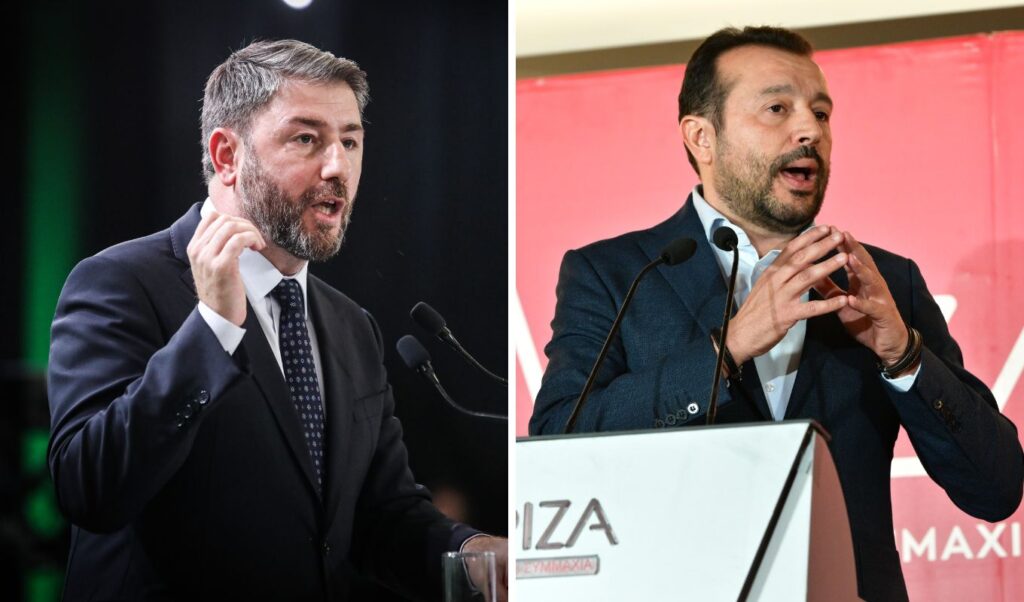
According to well-informed sources, open channels of communication exist between Charilaou Trikoupi (PASOK headquarters) and Koumoundourou (SYRIZA headquarters), with exploratory contacts taking place through confidential conversations, as the two parties seek to draw closer ahead of the national elections — initially cooperating at the parliamentary level. These discussions, conducted between close associates of Nikos Androulakis and SYRIZA’s Central Committee Secretary, Nikos Pappas, are said to have taken on the character of “negotiations” in a “protected environment,” as neither side currently wishes to reveal its hand publicly, for fear of exposure and unwanted backlash within SYRIZA or PASOK.
The messages Androulakis is conveying to Koumoundourou through his own envoys are that “PASOK’s base is not ready right now to accept a cooperation with SYRIZA” — while leaving the door open for collaboration after the national elections, should SYRIZA fail to secure enough votes to enter parliament. Of course, since politics operates by the rule of “never say never,” Charilaou Trikoupi will keep the lines of communication with SYRIZA open until the end of the year, and will act accordingly if a joint electoral agreement with Koumoundourou proves to be in PASOK’s best interest. After all, in recent election cycles, PASOK did not compete as an independent political entity but rather as the central pillar of a coalition framework — alongside George Papandreou’s KIDISO, A. Ponta’s EDEM, and Fotis Kouvelis’s DIM.AR. Including SYRIZA in its alliance portfolio would not be a dealbreaker, but rather a matter of careful impression management, given the potential backlash from those unprepared to accept such a partnership.
SYRIZA’s new leadership team is not opposed to PASOK
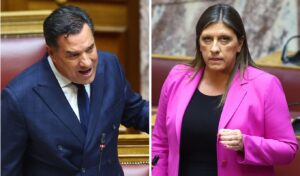
Based on the above information, the new leadership group at Koumoundourou — with the exception of the unpredictable Pavlos Polakis and Rena Dourou, who lacks strong leadership influence — does not consist of figures hostile to PASOK. Indeed, even the party’s current Central Committee Secretary, Nikos Pappas — regardless of having paid the price for Tsipras’s governance during the period when he served as a top minister and handled the controversial television license tender — had, as leader of the “Members’ Movement” faction between 2019 and 2023, set the “PASOKification” of SYRIZA as a goal. That effort ultimately fell short, as the PASOK-leaning figures he brought into the party were eventually sidelined by Tsipras, who sought to maintain a balance with SYRIZA’s “Group of 53” — namely Tsakalotos, Achtsoglou, Iliopoulos, and others. Having been undermined by the old SYRIZA guard in his efforts to bring PASOK closer to Koumoundourou, Pappas now — from his position as Central Committee Secretary — appears to be steering SYRIZA toward PASOK rather than toward Tsipras’s ELAS, whose leader from 2019 to 2023 consistently rejected his recommendations, a decision that ultimately cost him at the ballot box. Even during Stefanos Kasselakis’s presidency of SYRIZA — before the emergence of Tsipras’s ELAS — Pappas had proposed to PASOK and Nikos Androulakis that the progressive opposition parties stand together on a unified electoral list.
The “green” figures at Koumoundourou
The friendly atmosphere in PASOK-SYRIZA relations has long been evolving into a common front against Alexis Tsipras, who faces fierce attacks from both parties. It is no coincidence that Koumoundourou’s communications team, in a video released days ago criticizing former SYRIZA MPs who refuse to return their parliamentary seats to the party, chose not to include those who defected to PASOK’s parliamentary group — focusing instead on figures who have one foot in Tsipras’s ELAS. Equally telling, at a demonstration organized by SYRIZA’s party media outside its central offices, the participation of PASOK’s Lefteris Karchimakis drew considerable attention. And when Kostas Zachariadis announced his decision to join ELAS, SYRIZA spokesperson Giannis Panagiotopoulosresponded pointedly, calling on him to resign as leader of the “Open City” faction in the Athens City Council, and added: “It was SYRIZA and PASOK working together — not Zachariadis — that secured Haris Doukas’s victory.”
The key figures in today’s Koumoundourou hierarchy, trusted by SYRIZA Central Committee Secretary Nikos Pappas, share one common trait: they are all former PASOK members. Specifically, former PASOK figures Giannis Panagiotopoulospoulos, Dimitris Melidis, and Giannis Boulekos are now calling the shots. In a very real sense, Koumoundourou today is being run by the “green guard” of the old, orthodox PASOK — the very party that the current SYRIZA Central Committee Secretary, Nikos Pappas, brought into the game of power during the Tsipras years.
Published in Parapolitika