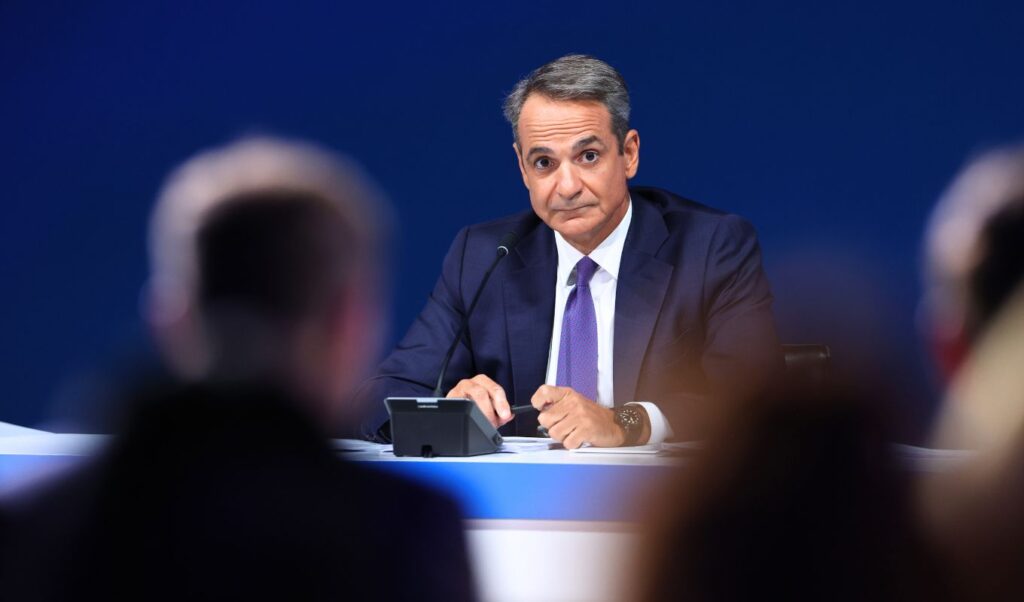
The €1.8 billion relief package to be announced by the Prime Minister from the podium of the Thessaloniki International Fair (TIF) is set to be finalized within the coming days. Of this amount, €1.4 billion will be directed toward new tax breaks and benefits for pensioners, freelancers, self-employed individuals, businesses, and farmers, while approximately €400 million will be allocated to energy investments under the new European escape clause. The economic team is in the final stages of drafting the package, which will form the backbone of the government’s policy announcements for the coming year and serve as the economic policy roadmap through the end of the current four-year term. With a clear picture now emerging of budget execution, tax revenue trends, and the outperformance recorded thanks to the expansion of electronic transactions and the intensification of digital audits by the Independent Authority for Public Revenue (AADE), the economic team must decide which of the measures currently under consideration will be included in the first wave of announcements for 2027 and which will be deferred to later years.
A 50%–55% reduction in advance tax payments is projected, with a fiscal cost estimated at €800 million
TIF: Measures for businesses
Businesses — and small and medium-sized enterprises in particular — are at the heart of the package, as the government seeks to reduce their tax and operating costs, boost liquidity, and create stronger incentives for investment and job creation. High on the agenda is a reduction in advance tax payments, as a first step toward their gradual abolition. Currently, the advance payment stands at 80% for legal entities, and the most likely scenario foresees a reduction to 50%–55%, at a fiscal cost estimated at €800 million. Also included in the same package is the permanent abolition of the business registration fee, at a cost of €240 million. The market considers this measure particularly significant, as it eliminates a standing burden of up to €1,000 per year for branches and companies.
Also on the table is a reduction in the corporate tax rate from 22% to 20% — an intervention with a strong growth impact that is expected to enhance the competitiveness of the Greek economy and serve as an additional incentive for new investments. The final decision, however, will depend on the available fiscal space. At the same time, a new reduction in employer social security contributions of half a percentage point is being put forward, at an estimated cost of €170 million, in order to strengthen business competitiveness and provide additional incentives for new hires.
The same package also includes a reform of the framework for carrying forward tax losses, extending the offset period beyond the current five-year limit. This is a measure that business associations have long been pushing for, as it would allow companies to utilize losses from previous years over a longer period, improving investment planning and their overall tax position.
Beyond tax relief, particular emphasis will be placed on improving small and medium-sized enterprises’ access to affordable financing, with the aim of strengthening their liquidity and opening the door to new investments and growth initiatives. The government’s plan includes leveraging the Hellenic Development Bank of Investments to create a new mechanism for providing preferential, low-interest loans totaling up to €5 billion, with the goal of meeting the financing needs of small and medium-sized enterprises and supporting investments, working capital, and business plans. This new instrument is designed to act as a bridge following the expiry of the Recovery Fund, so as to prevent a sudden gap in business financing.
What’s planned for freelancers and self-employed professionals
One of the most politically sensitive issues is the presumptive taxation system applied to freelancers and self-employed professionals.
The Ministry of National Economy acknowledges that the measure generated significant tax revenue — well over €500 million — unlocking valuable fiscal space, yet it created inequities for thousands of self-employed individuals with genuinely low levels of activity. For this reason, corrective measures are under consideration, including a reduction in the minimum presumptive income for specific categories, a review of the surcharges linked to years of operation, turnover, and staff numbers, and an expansion of exemptions for small businesses in mountainous and island regions. In addition, a reduction in the advance tax payment for sole traders from 55% to 40% is being examined, with a view to easing the tax burden at the point of annual return settlement.
A 6% discount for those who file their return within the first month of the platform’s operation and pay their full tax liability by the end of July
Who will receive bonuses
Of particular interest is the plan to create a reward system for compliant taxpayers. The aim is for those who have consistently filed on time, met their obligations promptly, and demonstrated a high degree of tax compliance over a number of years to be granted tax privileges. One of the key interventions involves increasing the tax discount for those who file their tax returns early and pay their tax liability by the end of July. Currently, a 4% discount is available for those who file by the end of April and pay in a lump sum, a 3% discount for those who complete the process by mid-June, and a 2% discount for returns filed by mid-July, provided payment is made in full. Under the scenarios being considered, the system could become even more attractive. A realistic model envisions raising the maximum discount to 6% for those who file within the first month of the platform’s operation and pay their full tax liability by the end of July, followed by a 4% discount for those who complete the process on time by June and 3% for timely returns filed before the deadline. Particular emphasis is also being placed on strengthening incentives for young professionals.
Also on the table is a doubling — from €10,000 to €20,000 — of the income threshold that would benefit from favorable tax treatment during the early years of a new business activity. The goal is to provide meaningful relief to young professionals and entrepreneurs by reducing the tax burden during the most challenging phase of a business’s development and encouraging the transition from undeclared to organized economic activity. In parallel, the creation of a more proportionate penalty framework is under consideration. The direction is to limit excessive charges for minor or technical violations and to allow for self-correction of errors without the imposition of strict penalties, where the taxpayer voluntarily amends their return within a specified period.
The economic team is considering a new increase of €50 or €100 to the one-off €300 benefit to be paid in November to 1.6 million pensioners
New increase to the one-off benefit
On the social side of the package, the focus falls on pensioners, as the government seeks to boost their disposable income at a time when the high cost of living continues to erode their purchasing power. The economic team is considering a new increase of €50 or €100 to the one-off €300 benefit to be paid in November to 1.6 million pensioners over the age of 65, as well as to recipients of disability benefits and welfare pensions administered by OPEKA. At the same time, a solution is being sought for those still affected by the personal difference clause, with the aim of reducing the inequalities that have arisen between older and newer retirees without disrupting fiscal balance.
What the package will include for farmers, property owners, and energy investments
The primary sector is also expected to feature prominently in the government’s announcements, with the aim of supporting farmers and livestock producers who continue to face high production costs, liquidity problems, and mounting loan obligations. Central to the package is a new model for disbursing support payments, with the goal of ensuring that subsidies are paid more regularly and in a shorter timeframe, giving priority to producers who submit the Single Area Payment Application ahead of the deadline.
In parallel, new interventions are being planned to address rising production costs, in an effort to ease the pressures on agricultural incomes stemming from energy prices, fertilizers, animal feed, and other inputs. In the same vein, measures are being introduced to relieve the debt burdens accumulated during successive crisis periods, with a focus on farmers and livestock producers struggling to service their obligations.
A key intervention is the creation of an Agricultural Entrepreneurship Fund through the Hellenic Development Bank. This new financing tool will function as a capital access mechanism for the primary sector, providing loans on more favorable terms to farmers and livestock producers, while also offering grants to those who draw up a comprehensive business plan for their agricultural activity. In this way, the aim is to transition the primary sector from addressing immediate liquidity problems toward a more structured model of investment financing, modernization, and production restructuring.
Interventions for vacant properties
Efforts are also continuing to bring thousands of vacant apartments back onto the market through additional tax incentives, while supplementary interventions to the property tax (ENFIA) for specific categories of owners cannot be ruled out. On the other hand, further reductions in rental income taxation do not appear to be moving forward, with plans deferring such measures to 2028. Similarly, no interventions are expected on excise duties or VAT.
Energy storage projects
The second strand of the package concerns investments in the energy sector, which will be activated through the European escape clause and are estimated at €350–400 million per year for the 2026–2028 period, with total project value reaching approximately €1.1 billion. The expenditure will be funded from national resources but will be excluded from the cap on the increase in net primary expenditure set out under the new European fiscal framework — up to 0.3% of GDP per year and up to 0.6% cumulatively through 2028. They will, however, continue to be counted toward both the primary balance and public debt. According to the Ministry of National Economy and Finance’s plans, the funds will be channeled into renewable energy storage projects, energy efficiency programs, building energy upgrades, and critical energy infrastructure that strengthens the security and resilience of the system. The goal is to use the additional fiscal space not for short-lived interventions but for projects that increase the economy’s productive capacity and reduce energy costs over the long term.
Reports indicate that the list of energy projects to be presented by the Prime Minister at the Thessaloniki International Fair is expected to be finalized by the end of August, with final selections already in the advanced stages of preparation. These are primarily mature, ready-to-implement interventions, designed to move quickly from planning to execution and deliver immediate growth results, while simultaneously strengthening the country’s energy security and advancing the penetration of renewable energy sources.
Published in Parapolitika