Greece’s Minister of Social Cohesion and Family, Domna Michailidou, has announced the permanent establishment and nationwide expansion of the Personal Assistant Program for people with disabilities. As announced by the Ministry of Social Cohesion and Family, the “Personal Assistant for People with Disabilities” has now become a “permanent institution, expanded across the entire country.”
The Ministry “drew on the lessons learned from the pilot program, listened to people with disabilities and Personal Assistants, and developed a stable, continuous state service with individualized support.” As stated in the announcement, “the Personal Assistant program allows people with disabilities to choose the support they need, organize their daily lives with greater autonomy, travel, study, work, and participate equally in social life.”
What Minister Domna Michailidou said about the Personal Assistant program
Starting January 1, 2027, the monthly value of personal assistance will reach up to €1,939, depending on each beneficiary’s needs. The program will operate through digital applications, automated data verification, and individualized assessment, with specific procedures in place to ensure continuity of personal assistance for current beneficiaries.
“We are delivering a major reform for the autonomy and independent living of people with disabilities”
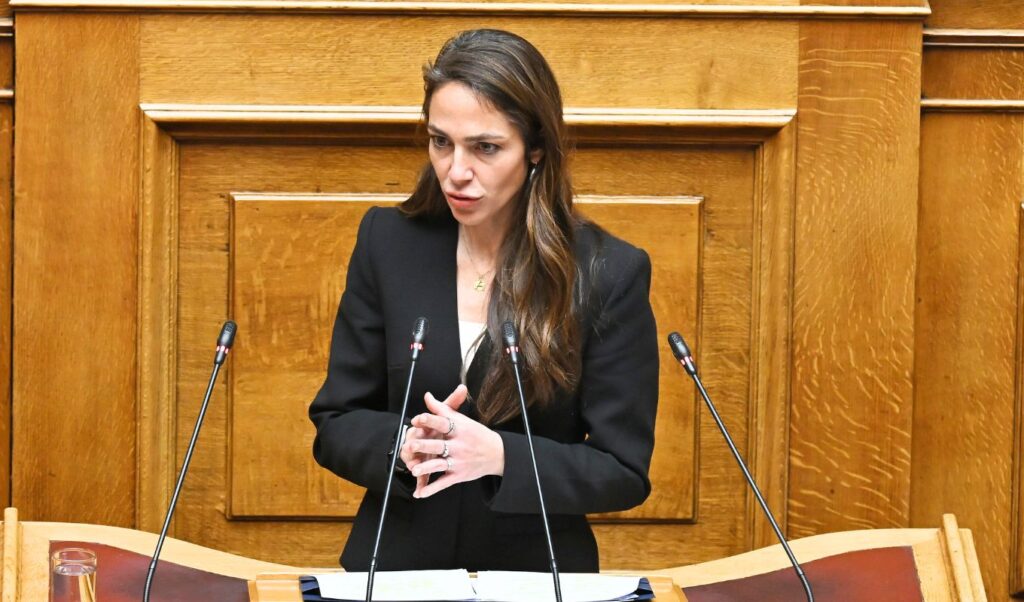
Minister of Social Cohesion and Family Domna Michailidou stated: “We created the Personal Assistant program, implemented it as a pilot, and tested it in practice. We listened to the people who need it and to the Personal Assistants, identified what needed to be improved, and worked systematically to transform it into a permanent institution of national reach. And we succeeded. The Personal Assistant program is now becoming a permanent state service across the entire country, with digital procedures and individualized assessment of each person’s needs. We increased the salaries of Personal Assistants and Assessment Committee members, recognizing their critical role in the program’s operation. At the same time, we are ensuring continuity for current beneficiaries. In doing so, we are delivering a major reform for the autonomy and independent living of people with disabilities.”
Who can participate in the program
The program is open to individuals with physical, intellectual, developmental, sensory, or mental disabilities, aged between 16 and 67, who are permanent and legal residents of Greece, are tax residents of the country, and hold a lifetime disability certification from the Disability Certification Center (KEPA). A primary condition rate of at least 67% is required, or a determination that the individual is in a permanent state requiring assistance from another person. As an exception, individuals up to the age of 75 may participate, provided they had become beneficiaries of the mobility allowance before reaching the age of 67.
Income thresholds
The annual income threshold is €35,000 for a single-person household, increased by €17,500 for each additional adult member or for the first minor in a single-parent household, and by €8,750 for each additional minor member. A requirement for residency in a home applies. Those who do not yet live in a home may still submit an application and be assessed, with their enrollment being activated upon relocation.
Digital application and individualized assessment
Applications will be submitted digitally at prosopikosvoithos.gov.gr, and data will be automatically verified through public registries. Upon submission, an immediate decision on eligibility and scoring will be issued, with the option to file an electronic appeal.
How the scoring system works
Scoring will be based on, among other factors, household composition and income, the presence of another person with a disability in the household, and the rate and characteristics of the disability. Additional points will be awarded to those who are employed or studying.
Applicants with the highest scores will be assessed by a multidisciplinary Special Committee at their place of residence or, as an exception, via video conference. The assessment will examine daily needs, functional capacity, and the contribution of personal assistance to education, employment, and social participation. Support already provided by a relative or another person will not be held against the applicant.
Benefit amounts
From January 1, 2027, the monthly value of personal assistance will be up to €416 for minor needs, up to €831 for moderate needs, up to €1,352 for significant needs, and up to €1,939 for absolute and continuous dependency. Classification will be determined by the Special Committees, based on an assessment of each beneficiary’s needs.
Each beneficiary will be able to select from the Registry between one and four Personal Assistants providing hourly services, or one Personal Assistant on a co-residency basis. The gross hourly compensation will range from €6 to €7, while in co-residency arrangements the gross monthly compensation will amount to €1,200, and the beneficiary will receive a financial supplement of €250 per month.
Specifically in mountainous and island municipalities with a population of up to 5,000, beneficiaries will be able to select their spouse, cohabiting partner, or a first- or second-degree blood or in-law relative as their Personal Assistant.
Age requirements
Prospective Personal Assistants must be between 18 and 67 years of age, have the right to work in Greece, and meet the applicable criteria. Their permanent registration in the Registry will require the successful completion of a free digital training program offered by the Organization for Welfare Benefits and Social Solidarity (OPEKA). Those already registered will remain in the Registry.
What applies to current beneficiaries
Those who had received at least 60 days of Personal Assistance by June 30, 2026, or who permanently reside in a mountainous or island municipality with a population of up to 5,000, will remain beneficiaries until December 31, 2026, with no action required. To continue their participation from January 1, 2027, they will only need to submit a Consent Declaration, without a new eligibility check, scoring process, or reassessment.
Those who had an active agreement on June 30, 2026, but do not fall under the previous category, will also remain beneficiaries until December 31, 2026, without needing to take any action. To continue from January 1, 2027, they will submit a Participation Application through the same process that will apply to new applicants.
All other participants in the pilot program will submit a new application from the beginning. The permanent program will be implemented nationwide by OPEKA. The terms of implementation, participation requirements, assessment procedures, personal assistance amounts, and the rules for selecting and compensating Personal Assistants have been established by joint ministerial decision.