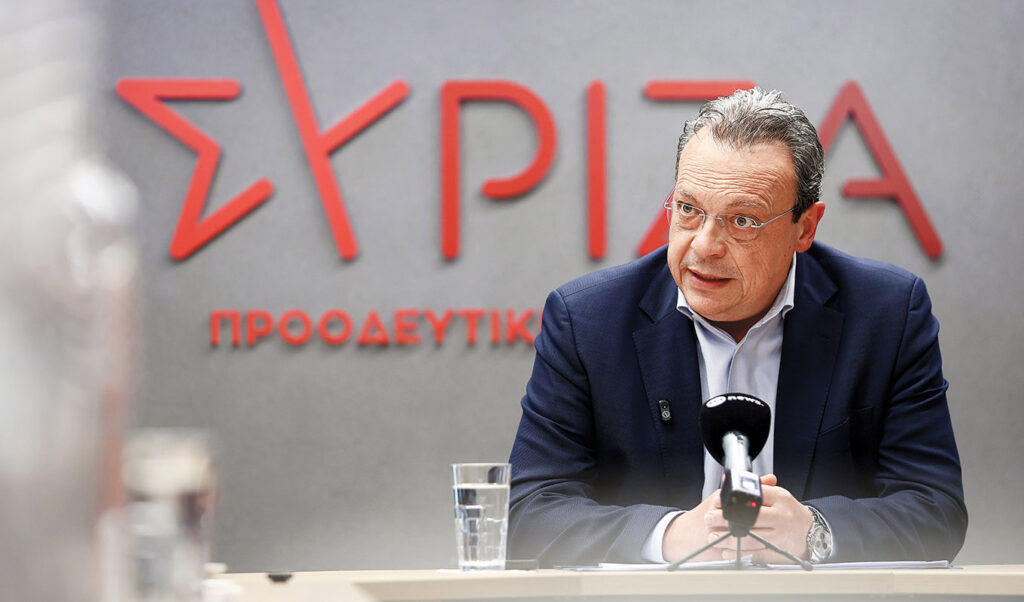
The phone call made on Thursday morning by Sokratis Famellos to Alexis Tsipras — asking whether there was room for cooperation between the two parties — and the former prime minister’s flat refusal led to the SYRIZA leader’s decision to step down from his position. At that moment, Sokratis Famellos clearly saw the dead end he had reached: at the Central Committee meeting, he would have been unable to defend any position. He could neither argue in favor of supporting Alexis Tsipras’ ELAS, given the clear refusal he had received, nor agree to SYRIZA entering the elections with a rival ballot — something he simply did not believe in.
Read also: “Chaos” at SYRIZA: Koumoundourou does not recognize today’s process — “It was a simple meeting of Central Committee members”
SYRIZA: Famellos’ resignation letter and the reference to refusing cooperation with ELAS
It is telling that in his resignation letter, Famellos referred indirectly to his contact with Alexis Tsipras, expressing bitterness over the stance taken by ELAS cadres. “Despite the significant concessions we made, ELAS has publicly stated its refusal to cooperate and converge — contrary to the call from society, which demands unity. Furthermore, dismissive comments are being circulated that undermine SYRIZA-PS’s ability and its people’s capacity to contribute positively to a coalition of left-wing and progressive citizens and collectives. I have done everything possible until today to prevent this split in the left-wing world, which drains strength from the goal of a progressive way forward and forces progressive citizens into impossible dilemmas,” he characteristically wrote. His phrase “I have done everything possible until today” confirms that the phone call between the two men did indeed take place.
The deadlock in the Central Committee
At the same time, knowing that the atmosphere within the Central Committee would be particularly toxic — as Pavlos Polakis had warned it would be a final showdown (“victory or defeat”) — the former SYRIZA leader decided to make his bold move. Mr. Famellos stated that he is remaining in SYRIZA, though no one can say for how long. This is because he firmly believes that, under no circumstances, should a rival ballot against Alexis Tsipras be put forward. If SYRIZA’s Central Committee decides to contest the elections independently, all signs point to Sokratis Famellos resigning from the Koumoundourou party altogether. Nevertheless, even after Famellos’ resignation from the party leadership, internal clashes continued, with the party’s deputy secretary, Anastasia Sapouna, announcing a postponement of the session, while Nikos Pappas and Pavlos Polakis insisted it would proceed as planned. The MP for Chania even called on Central Committee members to attend at the hotel where the session was due to take place on Saturday.
Of particular significance is what will happen to the cadres who supported Sokratis Famellos, as the wave of departures has already begun.
Polakis, Dourou, and Pappas: Three different strategies for the day after
The day after at Koumoundourou looks exceptionally difficult. As all signs indicate, a number of cadres who do not want SYRIZA to contest the elections against Alexis Tsipras will head for the exit. Giorgos Karameros has already officially resigned from his parliamentary seat via a letter to the Speaker of Parliament, while Ilias MP Dionysis Kalamatianos has stepped down from his role as secretary of the Parliamentary Group.
On the other hand, P. Polakis is eager for events to move quickly, as he believes he has strong odds of winning the party leadership. By contrast, Rena Dourou and Nikos Pappas appear to favor a collective leadership arrangement for the time being — one that would decide on SYRIZA’s electoral participation and manage all internal developments, and most importantly, organize the party congress needed to elect a new leader. These two approaches may well come into conflict, as the three minority figures hold differing views on the path forward for SYRIZA. As things stand, when the time comes to elect a new leader, Pavlos Polakis and Rena Dourou are expected to run, and it is considered almost certain that Nikos Pappas will also make a bid for the SYRIZA leadership. Of obvious significance is the fate of the cadres who backed Sokratis Famellos. Quite a few are expected to walk out following their leader’s resignation. Those who stay, however, will play a pivotal role in the party’s internal balance of power — as whoever manages to win them over will hold the majority within SYRIZA.
Published in Parapolitika