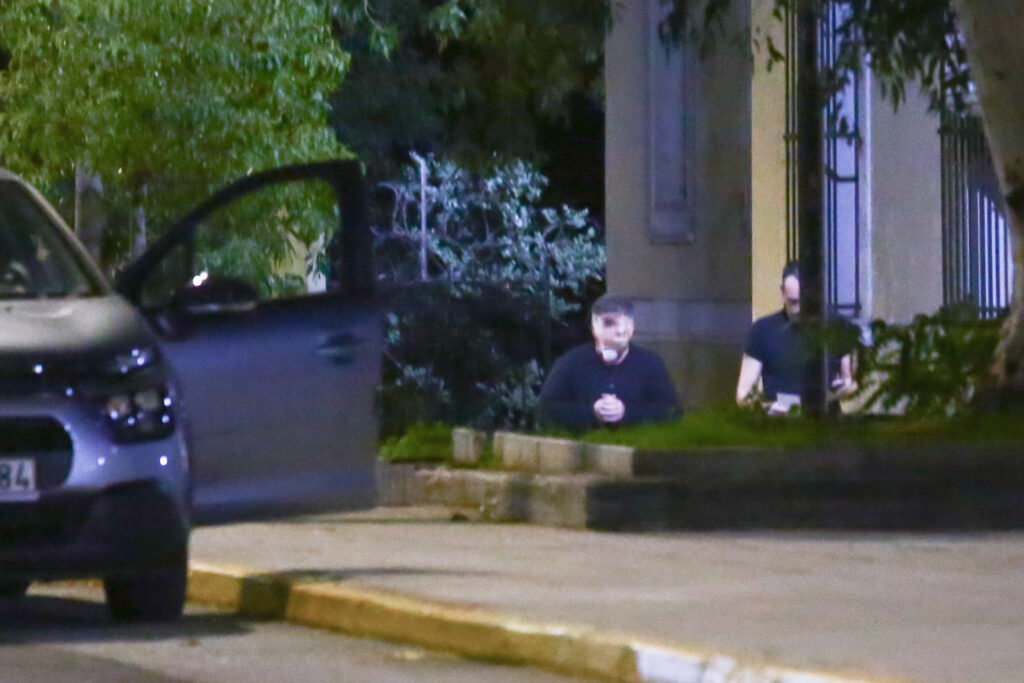
The 63-year-old man accused of the murder of his 61-year-old wife in Thiseio, Athens, will remain under house arrest with electronic monitoring until the competent judicial council issues its ruling, following a disagreement between the examining magistrate and the prosecutor over the appropriate pretrial measures. In her reasoning, the magistrate acknowledged that serious evidence of guilt had emerged against the accused, as well as a risk of him committing similar offenses in the future. Nevertheless, she concluded that house arrest with electronic monitoring provides sufficient guarantees that he will not reoffend.
Specifically, the magistrate took into account the particular characteristics and circumstances surrounding the alleged act, the fact that the accused has a known and stable place of residence in the country, and that he personally submitted a request for this specific restrictive condition to be imposed.
Thiseio murder case: What the accused claimed about his wife
The prosecutor, however, argued in favor of pretrial detention, resulting in a formal disagreement between the two judicial officers. The final decision on the defendant’s pretrial status will now rest with the competent judicial council, which is expected to rule within five days. In the meantime, the 63-year-old will remain under house arrest with electronic monitoring.
The accused faces a charge of premeditated murder in a calm mental state. During his testimony, he reportedly appeared devastated by the death of his 61-year-old wife, to whom he had been married for 39 years.
According to what he is said to have claimed, his wife struck him first and he reacted by hitting her back. He also referenced the long-standing psychological issues that, according to his account, his wife had been dealing with, describing an argument that he claimed spiraled completely out of control.
“She was in a crisis and a frenzy,” he is reported to have said of his wife, adding that “I tried to stop her for her own good.”
Finally, he is said to have attributed his wife’s death to blows she sustained to the chest, rejecting the claim that she died from asphyxiation due to strangulation.