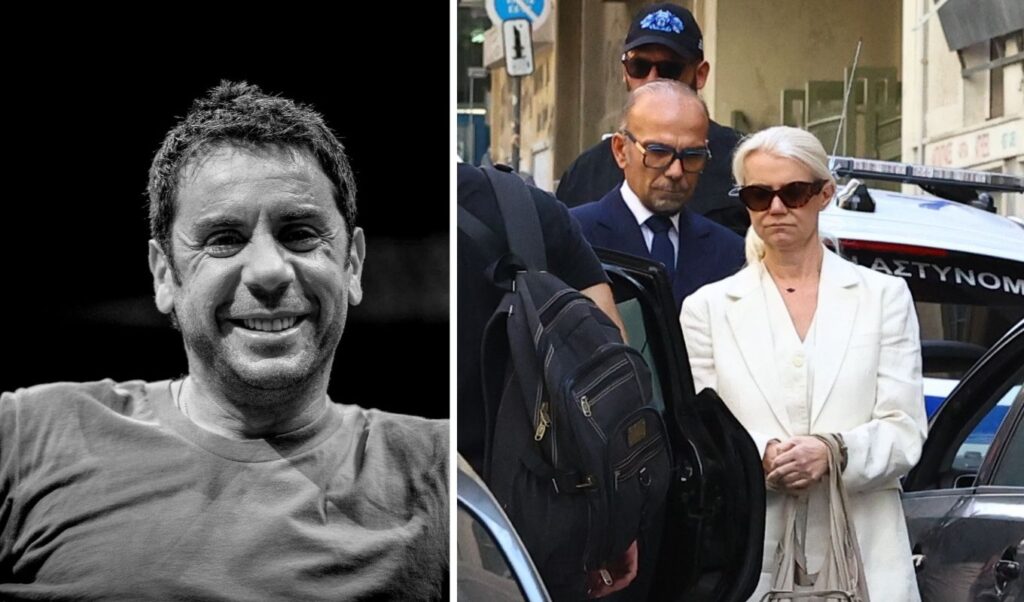
New individuals may come under the scrutiny of judicial authorities in the death case of Giorgos Mazonakis, as the investigation into what took place at the clinic on Karneadou Street, in the upscale Athens neighborhood of Kolonaki, continues with undiminished intensity. The central question authorities must now answer is who knew about the alleged “cocktail” of powerful pharmaceutical substances administered to the popular singer — and how those specific drugs made their way into the clinic.
Read also: Mazonakis death: “It was not plasmapheresis but immunoapheresis” — what the 56-year-old doctor will argue (Video)
According to sources, the investigative process has advanced considerably, with testimonies already collected from individuals directly or indirectly involved in the case. However, this does not mean the circle of witness statements has been definitively closed. On the contrary, new witnesses may yet be called — and some could even be elevated to suspect status, should evidence emerge that they were aware of the administration or use of the substances in question.
The Mazonakis death case: The “key” of the official toxicology results
The official toxicology results, which are still pending, are expected to play a decisive role in how the investigation unfolds. Analyses already conducted at a foreign laboratory — commissioned by the singer’s family — have yielded significant findings regarding the presence of pharmaceutical substances in his system.
Three substances are at the center of the inquiry: propofol, midazolam, and flumazenil. Propofol is a powerful intravenous anesthetic, while midazolam is used to induce sedation. Their combination can dramatically amplify their depressant effects, posing serious risks to respiratory function. The third substance, flumazenil, is used to reverse the effects of benzodiazepines such as midazolam.
The fact that substances with distinctly different pharmacological effects were detected raises critical questions about the sequence and circumstances of their administration. The official toxicology results are expected to shed further light on the concentrations of these substances in the samples tested. Their interpretation, combined with the remaining forensic data, will help clarify the role they may have played in the singer’s death.
How did the anesthetics end up at the clinic?
One of the most serious issues under investigation concerns the origin of the specific pharmaceutical drugs. Who obtained them? Where did they come from? Who decided to use them? And who knew they were present at the clinic?
These are questions of considerable weight, given that propofol is a potent anesthetic that requires a specialized administration environment, appropriate monitoring equipment, and the capacity to immediately manage complications. Investigators are working to determine whether the drugs were obtained and used in accordance with established protocols, and whether the necessary conditions for their safe administration were in place.
Mobile phones, computers, and communications under the microscope
The investigation has also extended into the digital realm. Authorities are examining data from mobile phones and computers, searching for information that may shed light on the movements and communications of those involved. Of particular interest is the role of an anesthesiologist whom, according to sources, a colleague of the two doctors had contacted. Investigators are scrutinizing the content and circumstances of this communication to determine whether it is connected to the use of the pharmaceutical substances in question.
The possibility of new suspects remains “open”
Although a significant body of testimonial evidence has already been gathered, the case remains open to new developments. The official toxicology results, witness statements, and examination of digital records are expected to be assessed together in order to form a more complete picture of the circumstances surrounding Giorgos Mazonakis’s death. The possibility that additional witnesses or suspects will be called remains very much on the table, should new evidence come to light.
What is now at stake is not merely which substances were found in the singer’s system, but who administered them, with what knowledge, under what conditions — and whether the tragic outcome could have been prevented.