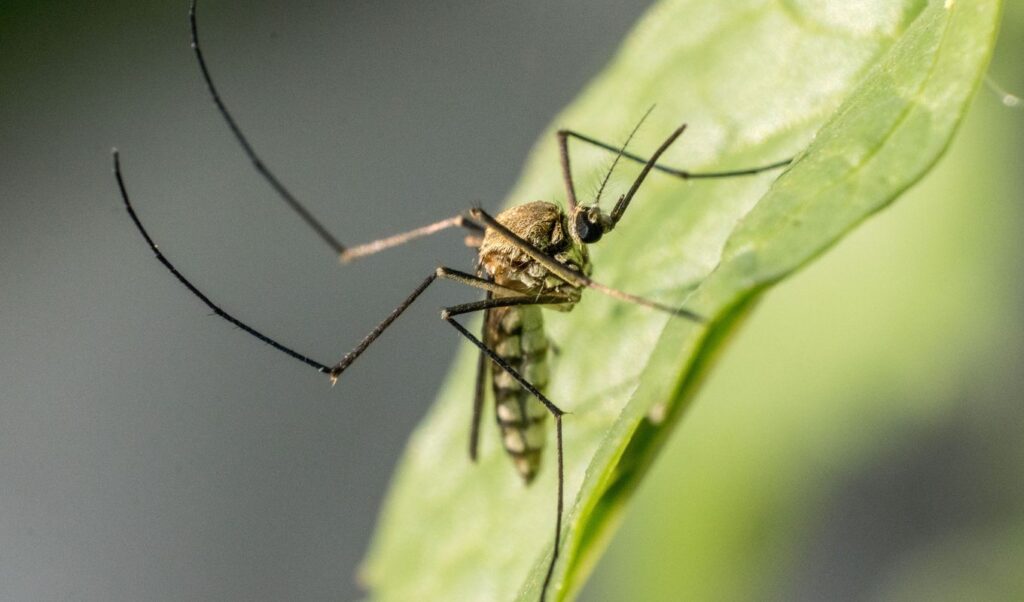
The West Nile virus is no longer just an occasional summer threat. This year’s outbreak in Greece is among the most serious in recent memory, with double-digit death tolls and more than 200 patients suffering central nervous system complications. As weather conditions remain favorable for transmission — and with the European Centre for Disease Prevention and Control warning that more cases are expected in the coming weeks — the critical question is whether we can predict the next outbreak before people fall ill.
Read also: West Nile Virus: 34 new cases and 6 deaths in one week
Spraying alone is not enough. It is an important control measure, but it must go hand in hand with continuous surveillance of mosquito populations and their breeding sites, says Professor Petros Ligoxygakis, Professor of Immunology at the University of Oxford, speaking to Praktoreio FM and journalist Tania Mantouvалou. His research focuses on disease vectors — the insects that transmit infectious diseases to humans. Professor Ligoxygakis stresses that the fight against the virus must begin months before the first human case appears, by identifying the areas where mosquitoes are likely to breed.
West Nile Virus: What Professor Ligoxygakis highlights
In this context, the systematic insect monitoring already underway in Greece is of particular importance, as it can reveal when and where risk levels are rising. He also points out the need to investigate whether the virus has become endemic in the country — something that can be determined through epidemiological studies and population-wide antibody screening.
The true scale of the virus’s spread
Regarding the true extent of the virus’s spread, Professor Ligoxygakis explains that the serious cases reaching hospitals represent only a very small fraction of total infections. Given that approximately 80% of infections are asymptomatic and fewer than 1% progress to severe neurological disease, the reported cases are, as he vividly puts it, “the tip of a very large iceberg. These infections are one percent of all total infections.”
The age factor
Why is someone aged 80 or 90 at far greater risk? Is it simply a matter of age, or is there a specific mechanism of immune aging that we can predict? “The mechanism of immune aging is that as we grow older, the cells responsible for fighting viral diseases are no longer replenished. That is why older people are more vulnerable — not just to West Nile virus, but to all viral infections.”
Mathematical models could predict the next outbreak
The next step, according to the professor, is to move beyond simply recording cases and toward actually predicting outbreaks. Mathematical models could integrate data on temperature, rainfall, standing water, mosquito population density, the presence of the virus in mosquitoes themselves, previous case history, population immunity, and potential virus reservoirs such as birds.
Such a comprehensive system could identify which areas are most vulnerable to an outbreak and enable timely intervention. Professor Ligoxygakis believes that Greece has both the scientific expertise and the resources to develop such a system — one that would carry broader European significance, given that similar risks affect Italy, southern France, and Spain.
No vaccine, no specific treatment
On the therapeutic front, options remain limited. There is currently no specific antiviral drug that can be administered early enough to prevent infection from progressing to encephalitis, and no vaccine is available for the general public. But how realistic is it to develop a vaccine for a virus that appears sporadically and unpredictably? “With mRNA technology, I think we now have a far more advanced tool at our disposal — much more effective than previous efforts — which could in the future contribute to the development of a vaccine with high protective efficacy.”
The remarkable adaptability of mosquitoes
Professor Ligoxygakis has spoken about mosquitoes’ ability to adapt even to brackish water. Could this adaptability reshape the map of vector-borne diseases across Europe in the coming years? “Absolutely. This is a major problem and a major question. The adaptation of mosquitoes — which we are currently studying — we are not yet certain whether it involves a change in DNA that is passed down from generation to generation, or whether it is epigenetic: a chemical modification of part of the DNA that is not a permanent change, but flexible enough to shift from generation to generation. That is what we want to find out. However, if it turns out to be a genetic change, then yes, it is a very serious issue. It could lead to a massive expansion of vector mosquitoes as sea levels rise, because brackish water will increasingly penetrate further inland — into islands and coastal areas.”
The threat looking ahead to 2035
What do you think Europe will be facing from mosquito-borne diseases by 2035 that we are not yet prepared to handle? “I believe that if climate change is not addressed — combined with the geographic spread of disease vectors and the various land-use changes that are bringing human populations ever closer to pathogen reservoirs and insect breeding grounds — we will inevitably see a rise in these diseases. Unfortunately, they will become endemic not only in Greece but across all of southern Europe, creating an entirely new public health landscape. Until we develop more effective predictive systems, personal protection remains critical — especially for the elderly: long clothing, insect repellents, and avoiding areas with standing water,” the professor concludes.