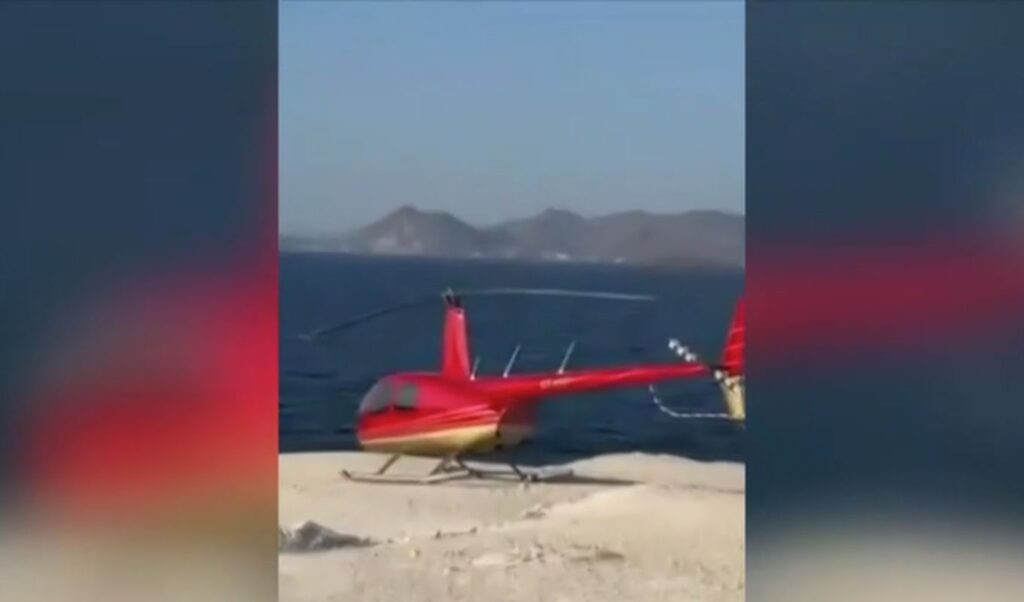
Milos has become the center of controversy following the landing of a private helicopter at Sarakiniko beach, where passengers disembarked to swim in the area. The incident occurred at one of the island’s most popular and recognizable natural landmarks, which attracts large numbers of visitors every day.
Milos helicopter landing at Sarakiniko: prosecutor intervenes, investigation underway
A prosecutorial intervention has already taken place in connection with the case. The public prosecutor issued an order to the competent authorities on Milos to collect the details of all individuals involved, along with the relevant preliminary investigation material. As part of the inquiry, authorities are examining whether the incident constitutes a criminal offense and, consequently, whether the conditions for pressing criminal charges have been met.
At the same time, the incident has brought renewed attention to the issue of safety at Sarakiniko, as well as the rules and procedures governing helicopter flights and landings on Milos.
Sarakiniko is a beach of exceptional natural beauty that attracts thousands of visitors every year. The presence of a private helicopter in the area has raised questions about the protection of the natural landscape and the strain imposed by increasing tourist activity.
What the helicopter pilot said
Helicopter pilot Tzortis Chiotakis addressed the incident on Sunday evening (9/8) in an interview with Alpha TV. According to him, Presidential Decree 19, Article 12, stipulates that flights are carried out at the pilot’s discretion and with the permission of the landowner.
In the case of Sarakiniko, he noted, the land belongs to the Greek state. For this reason, he explained, the helicopter’s pilot-in-command was required to file a flight plan before landing. He also added that, based on information he had received from the pilot, clearance had been requested from the Milos air traffic control tower and permission had been granted for the landing at Sarakiniko. According to his account, the pilot-in-command told him that there were no other people in the area at the time of landing.
Hellenic Civil Aviation Authority also launches investigation
The Hellenic Civil Aviation Authority (HCAA) is also examining the case within the framework of its supervisory and oversight powers under Law 4757/2020. Sources from the HCAA indicate that a process of collecting and evaluating all available data is currently underway, with the aim of determining whether the legally required procedures, flight regulations, and applicable operational requirements were followed.
The process also includes the submission of explanations by both the pilot and the helicopter’s owner, prior to any further assessment or action by the Authority.
Updating the regulatory framework for helicopter flights
The HCAA is simultaneously working on the reform and modernization of Presidential Decree 19/2009, including provisions relating to helicopter air transport, with a particular focus on flight safety, the protection of human life, and the safeguarding of areas subject to special protection status under current legislation. Such areas include, among others, Natura 2000 network sites and other designated protected areas.