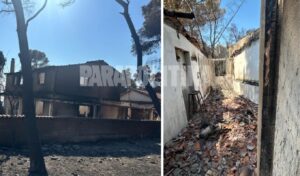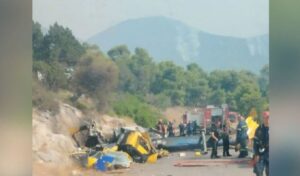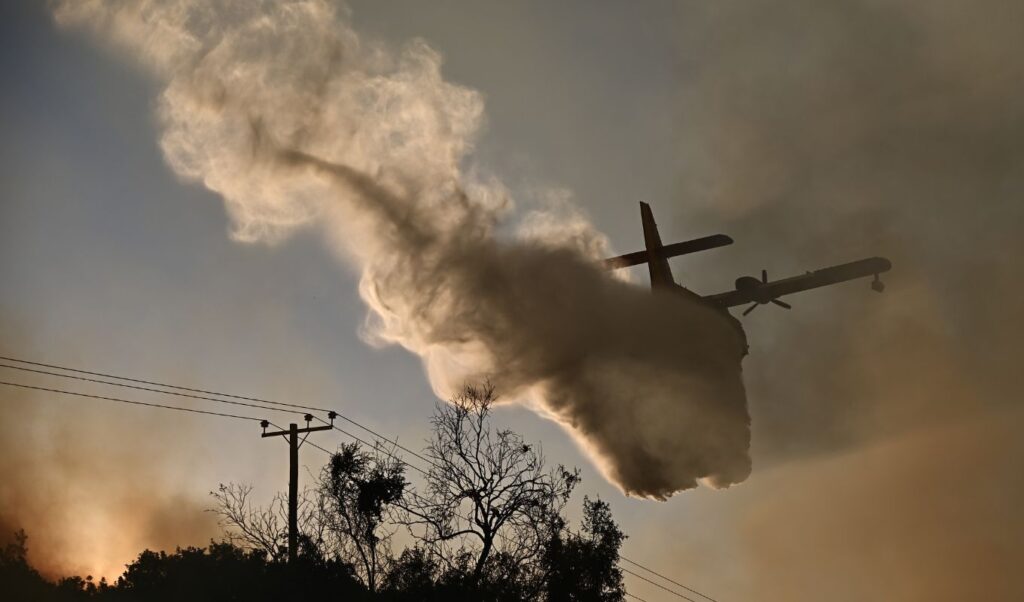
As the situation surrounding the devastating wildfire shows significant improvement, Megara is gradually moving into the recovery phase, with firefighting forces remaining on full alert and authorities beginning to assess the extent of the widespread damage. As the Mayor of Megara, Panagiotis Margetis, told parapolitika.gr, aerial units continue to carry out water drops over inaccessible terrain where small active hotspots — known as “candlelights” — still persist, in order to eliminate any risk of rekindling. Meanwhile, a strong ground presence of firefighting personnel remains deployed in the area, maintaining heightened vigilance.
At the same time, a municipal committee has already been established to receive applications from residents whose homes sustained fire damage, while a corresponding regional committee is expected to be formed to record losses suffered by local businesses. Inspections by ELGA — Greece’s agricultural insurance organization — are also anticipated for the affected farmland, in order to assess losses and initiate the relevant compensation procedures.
Megara fire: The environmental and economic toll is enormous
According to the mayor, the wildfire has left behind a massive environmental and economic footprint, with an estimated 25,000 stremma (approximately 6,200 acres) of forest land burned, alongside significant destruction to agricultural crops. Damage to rural infrastructure has also been described as particularly severe, as irrigation networks and high-value pipelines were destroyed — a blow that will make it considerably harder to restart productive activity in the region.
Despite the clear improvement in conditions, authorities are not letting their guard down, as the risk of rekindling remains as long as scattered hotspots and large quantities of combustible material persist across the affected area.