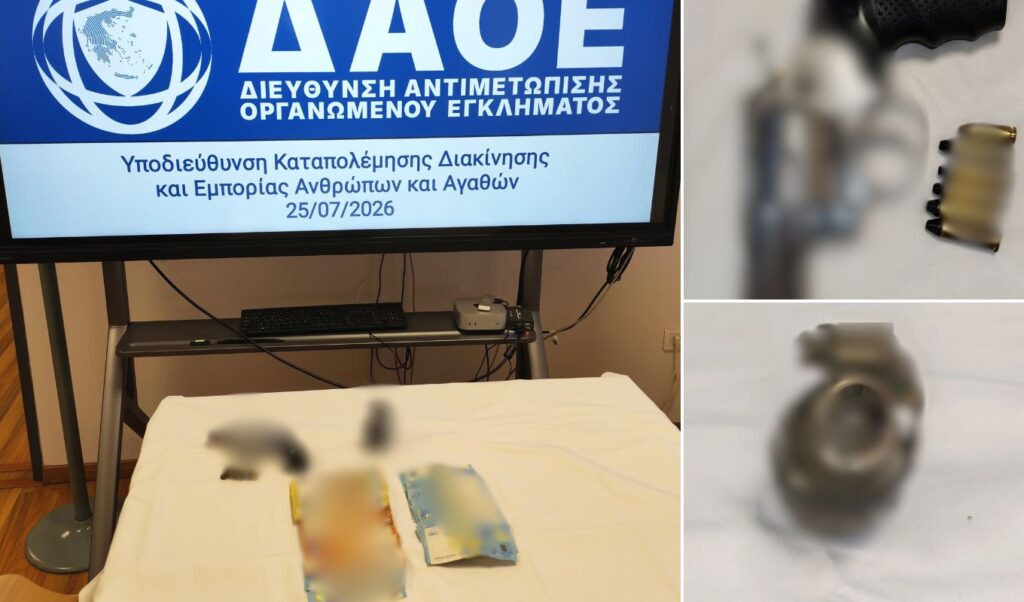
A particularly serious case that could have had unpredictable consequences has been uncovered following a coordinated operation by the Organized Crime Response Directorate (D.A.O.E.), which prevented a planned grenade attack in the Attica region.
Two foreign nationals of Egyptian origin, aged 30 and 31, have been arrested in connection with the case. A 27-year-old Greek national — identified as the person who handed over the grenade to the 30-year-old — is also included in the case file and remains at large.
The case has attracted even greater attention given that among the individuals assessed by authorities as potential targets of the planned attack was former Supreme Court Prosecutor Isidoros Dogiakos.
The grenade handover
According to the official announcement by the Hellenic Police, the 30-year-old suspect was located on the afternoon of July 24 in the Attica region during a meeting with the 27-year-old.
Investigators found that the 27-year-old handed him an object disguised as a paper cup.
Officers intervened immediately and upon inspection discovered that the cup contained a defensive-type hand grenade, secured with plastic cable ties.
The 30-year-old was arrested on the spot and taken to the headquarters of the Organized Crime Response Directorate.


The role of the 27-year-old
The case file also includes a 27-year-old Greek national who is believed to have played a pivotal role, as he was the person who supplied the grenade to the 30-year-old suspect.
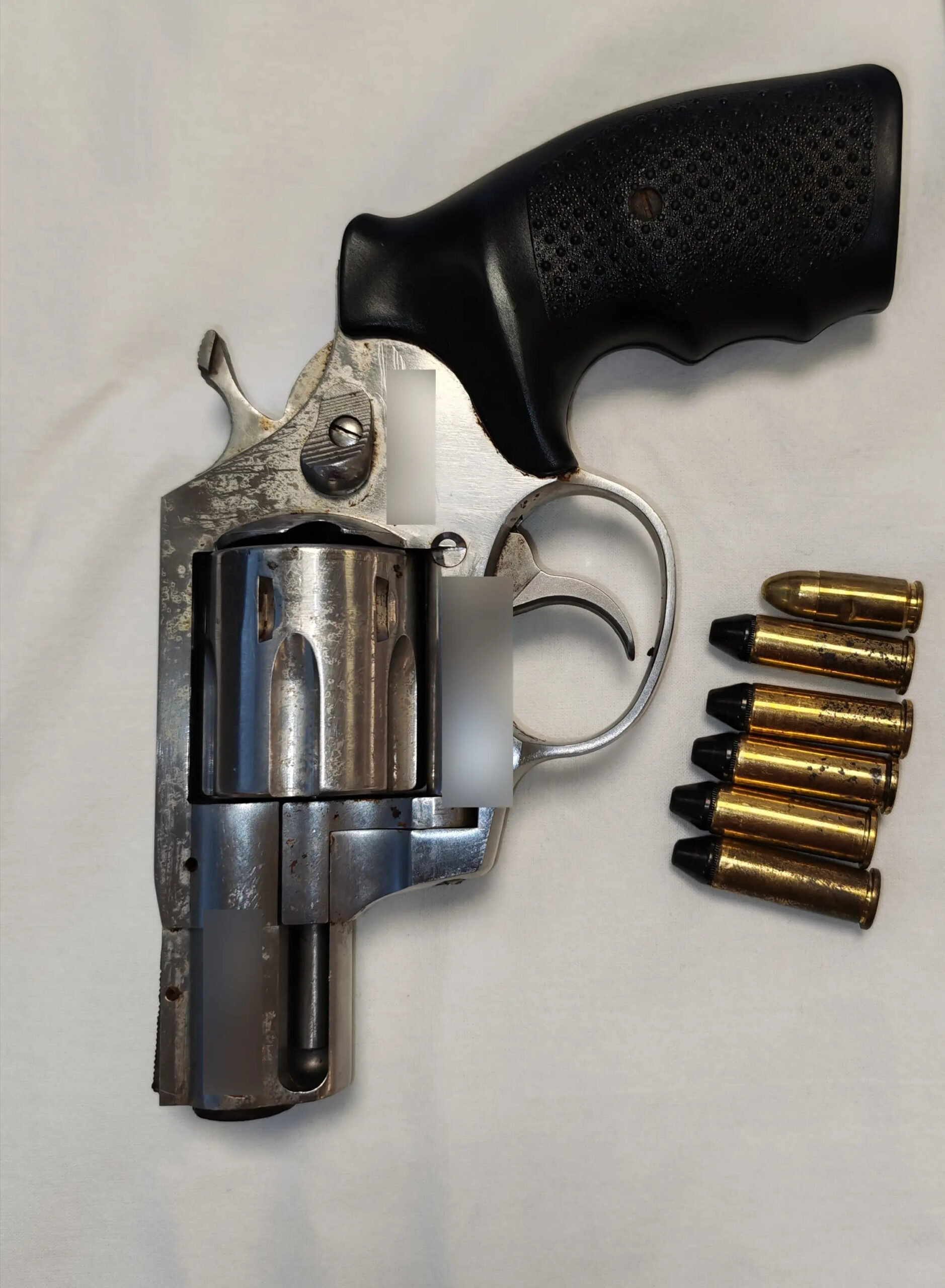
In a subsequent search carried out with the assistance of the Special Counter-Terrorism Unit (EKAM) at a residence the 27-year-old had previously visited, officers located and seized a revolver loaded with five rounds of ammunition.
Orchestrating the attack from behind bars
The 31-year-old Egyptian national is considered the central figure in the case. He is currently serving time in a detention facility in northern Greece.
According to the Hellenic Police, he played an organizational role in planning the attack. He is alleged to have instructed the 30-year-old to meet the 27-year-old, collect the grenade, and then transport it to a specific location in Attica where it was to be placed or thrown.
During a search of his prison cell, a mobile phone was seized and is now being examined as a potential means of communication through which he issued instructions for coordinating the criminal operation.
The investigation and intelligence regarding Dogiakos
The D.A.O.E. operation appears to have been the result of intelligence gathering and coordinated actions that preceded the arrests.
According to information from police sources, as part of the evidence assessment, investigators examined a number of potential targets for the planned attack — among them former Supreme Court Prosecutor Isidoros Dogiakos.
The same sources indicate that precautionary protective measures had already been put in place, though it has not been officially confirmed that he was the ultimate target of the attack.
Evidence seized
During the searches, officers confiscated the following:
- one defensive-type hand grenade,
- a revolver and six rounds of ammunition,
- €4,410 in cash,
- two mobile phones,
- a large number of prepaid SIM card packages,
- a baseball cap,
- a backpack containing a sheet of paper with sports team stickers and the paper cup inside which the grenade had been concealed.
The 30-year-old was brought before the competent prosecutor and referred to an investigating judge, while the 31-year-old, currently in custody, will be brought before the relevant prosecutorial authority following the issuance of the appropriate prosecutorial order.
Statement by the Union of Greek Prosecutors
The case prompted an immediate response from the Union of Greek Prosecutors, which linked the intelligence surrounding the planned attack to the growing dangers faced by members of the judiciary.
In its official statement, the Union noted that “the recent reports that have come to light regarding the prevention of a planned criminal act allegedly targeting the former Supreme Court Prosecutor, combined with previous incidents that have highlighted the risks to which members of the judiciary are exposed, demonstrate in the most compelling way the urgent need to review and substantively strengthen the framework for the protection of prosecutorial officers.”
The statement emphasized that prosecutorial officers — particularly those who handle cases involving organized crime, terrorism, corruption, and other serious forms of criminal activity, or who have served in positions of heightened responsibility — continue to face serious risks even after leaving active service.
For this reason, the Union called for further reinforcement of security measures both within and outside judicial services, through a modern and continuously updated protection framework.
The statement concluded with a clear message to the state, stressing that “the effective protection of prosecutorial officers is not a privilege for their own benefit, but a necessary precondition for the independent, unimpeded, and unhindered exercise of the prosecutorial function and, by extension, for the protection of the rule of law and the proper administration of justice” — urging authorities to address the matter with the seriousness the circumstances demand, before the existing risks lead to tragic consequences.