The Secretary General of Civil Protection, Nikos Papaeustathiou, convened an emergency Risk Assessment Committee meeting on Thursday (23/7) due to the severe weather expected to strike several parts of the country on Friday (24/7), following an emergency weather deterioration bulletin issued by the Hellenic National Meteorological Service (HNMS).
Read also: Emergency weather bulletin from HNMS: Severe thunderstorms, hail and lightning from Friday
Strong winds, hail and intense lightning activity
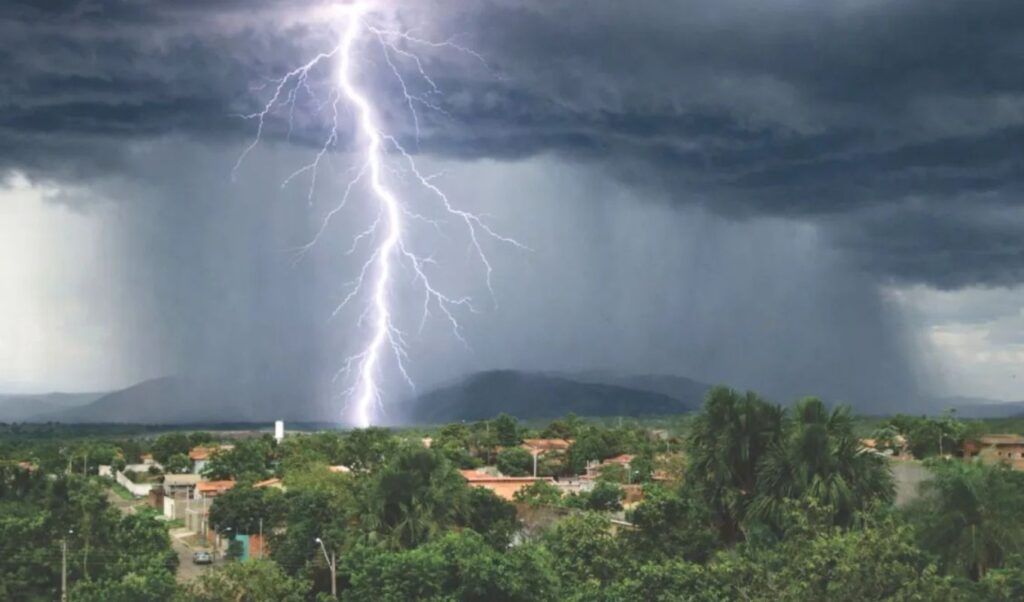
The committee’s meeting focused on the Emergency Bulletin of Hazardous Weather Phenomena issued by the Hellenic National Meteorological Service (HNMS). According to the bulletin, from Friday, July 24 through Saturday, July 25, 2026, heavy rainfall and thunderstorms are expected across the country. The weather phenomena will be accompanied in several areas by strong squall winds, high-frequency lightning strikes, and the possibility of localized hailstorms.
According to the committee’s scientists:
– On Friday (24/7), the most severe conditions are expected in the Sporades islands, Central Greece and Euboea, as well as along the coastal areas of the regional units of Larissa and Magnesia. Additionally, strong weather phenomena will develop in Imathia, Pieria, Attica, Thessaloniki, Chalkidiki, Phthiotis and Southern Euboea.
– On Friday, Athens and the Attica region will experience rainfall and isolated thunderstorms during the afternoon and evening hours.
– On Saturday, the weather phenomena will be confined to the Aegean Sea, with locally intense conditions expected in the Sporades and the Northern and Northeastern Aegean islands, including Thasos, Lemnos and Samothrace.
Red alert issued for 11 regions
Following the Emergency Bulletin of Hazardous Weather Phenomena issued by the HNMS and the subsequent Risk Assessment Committee meeting, the General Secretariat of Civil Protection has placed the following regions on full mobilization status (Red Code) for Friday, July 24, 2026:
– Region of Attica
– Regional units of Thessaloniki, Pieria, Imathia and Chalkidiki, within the Region of Central Macedonia
– Regional units of Larissa and Magnesia (including the Sporades islands), within the Region of Thessaly
– Region of Central Greece (Sterea Ellada)
– Regional unit of Thasos and the regional unit of Evros (island of Samothrace), within the Region of Eastern Macedonia and Thrace
– Regional unit of Lemnos, within the Region of North Aegean
National emergency response mechanism on full alert
The National Emergency Response Mechanism has been placed on full mobilization status, deploying the necessary personnel, equipment and resources to ensure preparedness ahead of the imminent threat, respond to emergency needs, and manage the consequences of any potential disaster. Short-term recovery, relief and support operations have also been initiated to mitigate the impact of the severe weather.
In this context, municipalities and regional authorities in the affected areas have been called upon to immediately convene their Local and Regional Civil Protection Operational Coordination Bodies in order to address preparedness and risk management issues related to the anticipated severe weather phenomena — including heavy rain, thunderstorms, localized squall winds, frequent lightning strikes, localized hailstorms — as well as potential flooding events.
The Secretary General of Civil Protection has been in direct contact with the affected regions, while the National Operations and Crisis Management Coordination Center has already reached out to local and regional authorities at all levels, as well as all relevant agencies, to monitor weather developments and ensure the corresponding operational readiness and response capacity.
It is noted that the Risk Assessment Committee will convene again on Friday morning (24/7) for an updated situation assessment.