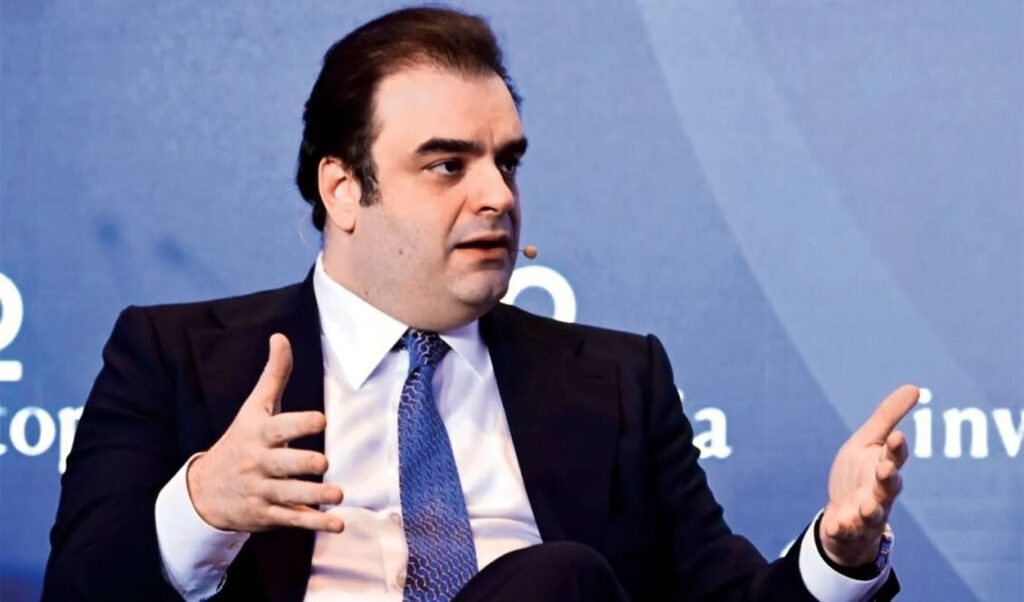
Greece’s Minister of National Economy and Finance and Eurogroup President, Kyriakos Pierrakakis, took center stage at the Annual Conference of the Institute of Internal Auditors Greece (IIA Greece), held under the banner “Lights on, let’s go!” — spotlighting the country’s significant push to modernize internal audit practices. At the heart of his address was Artificial Intelligence: a transformative force for internal auditing that, he argued, must itself be subject to rigorous oversight.
Integrating international standards
Speaking from the conference podium, Kyriakos Pierrakakis outlined how, since 2019, Greece’s modernization efforts have been driven by the adoption of international standards — with the goal of enabling the state to identify its own weaknesses in a timely manner. For Pierrakakis, this process carries profound significance: a country’s fiscal credibility is built on how effectively it leverages its resources over time. In this context, internal audit plays a pivotal role, underpinning the transparency and accountability that sound governance demands.
The critical role of internal auditors
Zooming out to a pan-European perspective, Pierrakakis noted that investment needs in energy, defense, and technology are rising sharply across the continent, while fiscal resources remain finite — making their efficient use a top priority. In navigating this landscape, internal auditors are more critical than ever, as risks evolve at an accelerating pace, introducing additional volatility into energy markets amid a surge in cyberattacks.
AI needs oversight as much as it provides it
On the domestic front, the Finance Minister highlighted that Greece is now attracting more investment than ever before — creating a responsibility to protect the gains already achieved. Meeting that responsibility requires independent auditors and open access to information, with Artificial Intelligence emerging as a frontline tool for risk detection through advanced audit systems. As Pierrakakis emphasized, AI unlocks capabilities that can fundamentally transform internal auditing — but it also brings new responsibilities in its wake. “Artificial Intelligence can enhance oversight, but it needs to be overseen itself,” he stated pointedly.
Closing his address, Pierrakakis stressed that the contribution of the internal audit profession extends far beyond any single organization — shaping the functioning of the state as a whole. The next frontier for internal audit, he argued, is achieving greater depth and longevity: a goal that demands consistency, sustained effort, and people with the expertise to identify — before it’s too late — what needs to change in the way any organization operates.