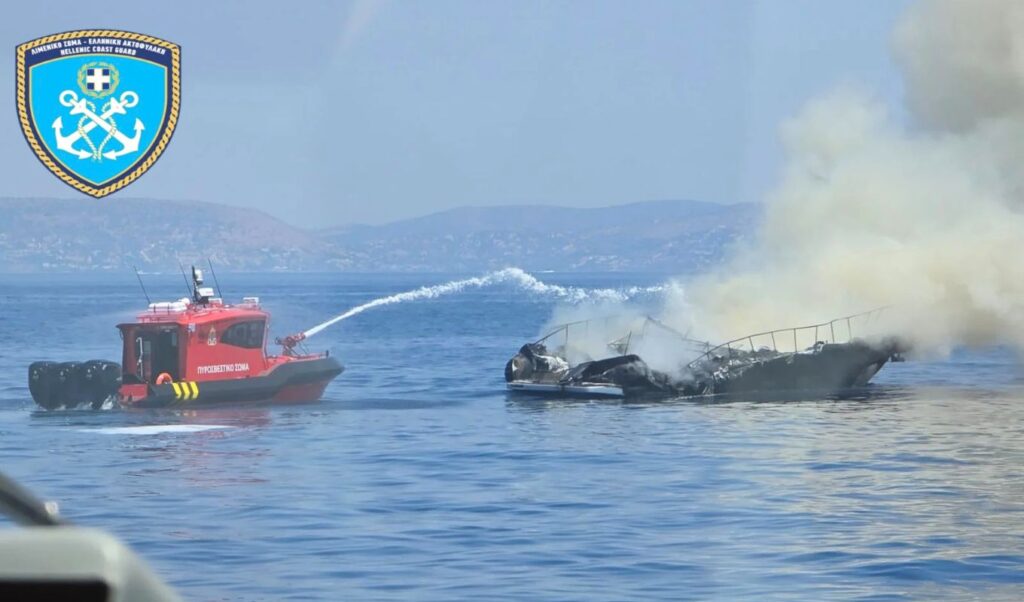
A speedboat that caught fire off the coast of Vouliagmeni on Friday morning (July 3) has sunk, despite the swift response of the relevant authorities. According to the Hellenic Coast Guard, four people were on board the vessel at the time — all of whom were rescued by a passing sailboat and are reported to be in good health. The survivors include a 63-year-old skipper and three 22-year-olds, who were subsequently transferred to the Coast Guard station in Palaia Fokaia.
Read also: Alarm in Vouliagmeni: Speedboat catches fire, all four passengers rescued (Video)
Images and video from the Vouliagmeni speedboat fire and sinking
Two Coast Guard patrol vessels, two Fire Service firefighting boats, and two rescue craft were deployed to the scene. See images from the incident below, along with video footage of the moment the boat sank:
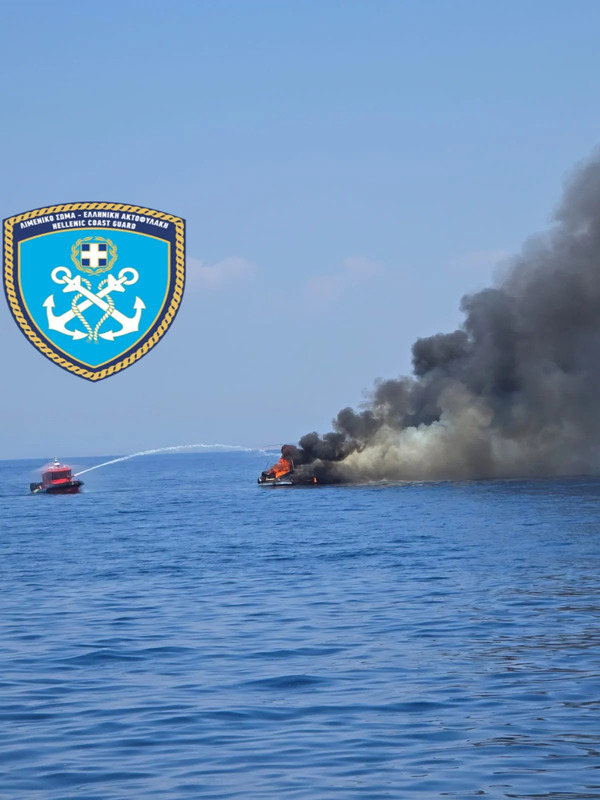
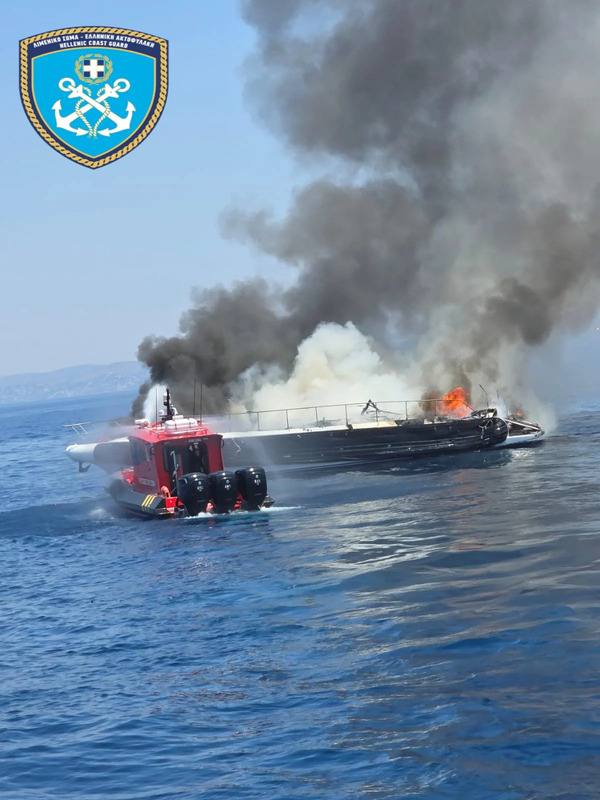
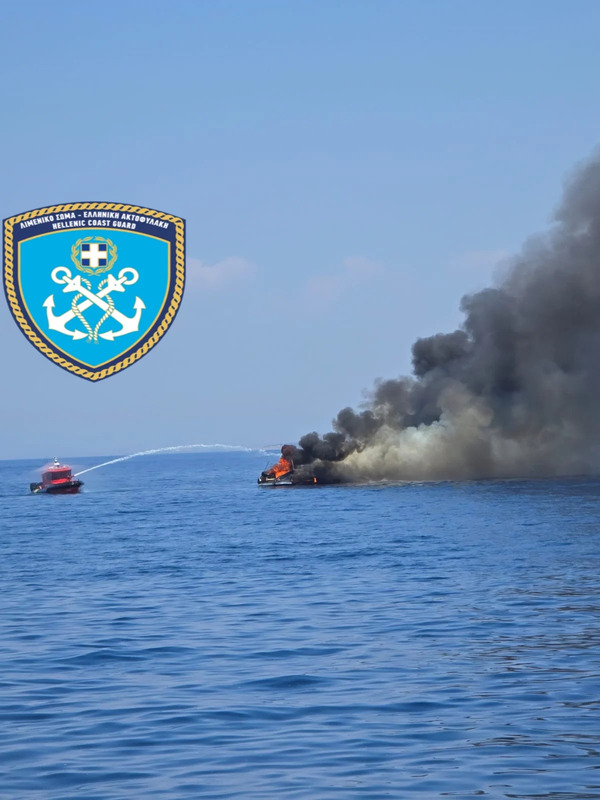
@parapolitika The speedboat that caught fire on Friday morning off the coast of Vouliagmeni ultimately sank, despite the immediate intervention of authorities and assistance from passing vessels. 📽 Hellenic Coast Guard #parapolitikagr
Watch the Orange Press Agency video capturing firefighting efforts by the Fire Service’s specialist vessel as it attempted to extinguish the blaze on the Vouliagmeni speedboat:
Giorgos Vallis: Alarming rise in maritime accidents involving recreational boats and speedboats
“We are unfortunately witnessing a worrying increase in maritime accidents and incidents involving recreational vessels and speedboats — incidents that could largely have been prevented through proper organisation, professional maintenance, and regular technical inspections,” said Giorgos Vallis, President of the Panhellenic Union of Private and Commercial Yacht Crews, in response to Friday’s (July 3) incident.
“The latest incident — a speedboat fire off the coast of Vouliagmeni, which triggered an emergency response and the rescue of all those on board — is yet another addition to a series of events highlighting the same chronic failings within the recreational maritime sector.
In many cases, the root of the problem lies in inadequate maintenance of vessels during the winter off-season. The absence of systematic inspections, failure to replace worn components in a timely manner, and treating a boat as a ‘seasonal object’ rather than an active seagoing vessel all create conditions of heightened risk,” he noted, among other remarks.