The cause of the intense gas smell that became noticeable on Tuesday morning across many areas of Attica, mainly in the southern suburbs, remains unknown. According to the Fire Service, investigations and inspections that were carried out were completed without producing any clear findings. Meanwhile, an announcement from the Ministry of Climate Crisis and Civil Protection notes that, following communication with DESFA, no leak or other malfunction has been detected so far at the Revithoussa facilities.
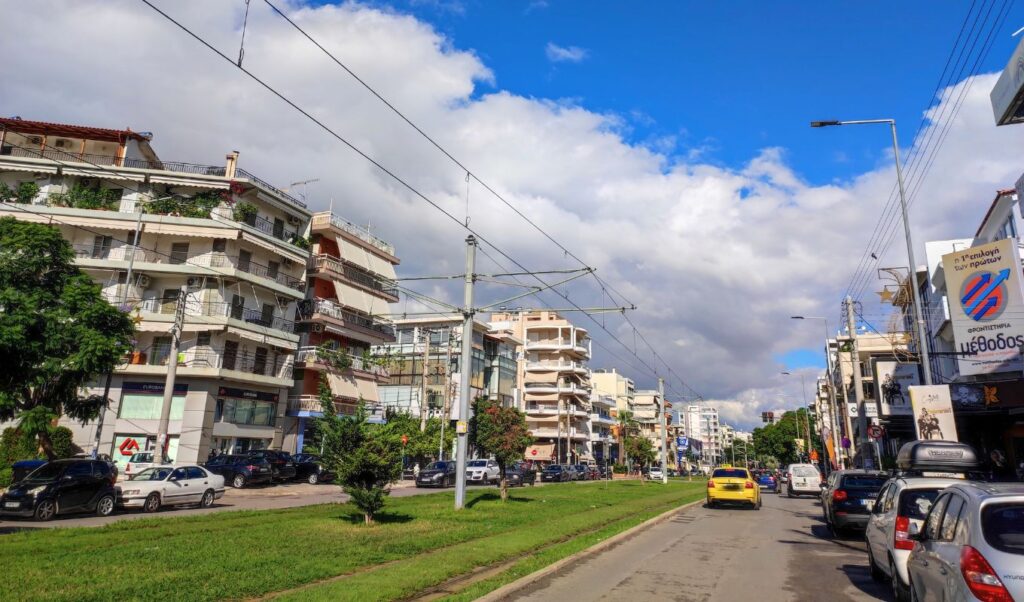
The intense odor was recorded shortly before 12 noon on Tuesday in several areas of the basin, with greater intensity in the southern suburbs and along the coastal front. As it became known, the Unified Coordination Center for Operations and Crisis Management (ESKDIK) began receiving from 11:40 successive calls from citizens about gas smell in various areas of Attica, with the Fire Service immediately mobilizing vehicles to conduct inspections at the reported locations.
Similarly, from ENAON EDA Attikis, as emphasized in the relevant ministry announcement, it was reported that no related problem has been identified. At the same time, in communication with the Coast Guard Operations Center, extensive inspections carried out on passing gas transport ships reported no related incident. The incident was reported from the beginning to the General Secretariat of Environment of the Ministry of Environment with the Environmental Inspectors Department, as well as the competent Environmental Directorate of the Attica Region. “Based on current data, fixed meters show no indication of increased pollutants nor is there any other indication beyond the unpleasant odor,” the ministry announcement concluded.
Intense gas odor in Attica: “Possible sources that need to be investigated are port or maritime activities, fuels, sewage, organic decomposition or phytoplankton,” Kolydas post
For his part, meteorologist Theodoros Kolydas states that “possible sources that need to be investigated are port or maritime activities, fuels, sewage, organic decomposition or phytoplankton,” as, he notes, air masses – according to initial analysis results – “had previously moved mainly from a southern to southeastern marine or coastal sector, with routes related to the Saronic Gulf, the southern coastal front and the sea area south-southeast of Attica.”
“This finding is important because it makes a marine or coastal origin of the odor meteorologically compatible. However, it does not constitute proof of the exact source,” Mr. Kolydas notes.
🎯ΟΣΜΗ ΑΕΡΙΟΥ ΣΤΗΝ ΑΤΤΙΚΗ
✅Η έντονη οσμή που έγινε αισθητή σε περιοχές της Αττικής, όπως η Νέα Σμύρνη, το παραλιακό μέτωπο και το κέντρο της Αθήνας, προκάλεσε ανησυχία στους πολίτες και κινητοποίηση των αρμόδιων αρχών. Από τους μέχρι τώρα ελέγχους δεν προκύπτει διαρροή φυσικού… pic.twitter.com/nOKJ0HhT21— Theodoros Kolydas (@KolydasT) May 19, 2026