Signals of a new surge in inflationary pressures in April are emerging from price surveys by the Hellenic Statistical Authority (ELSTAT), indicating an explosive rise in the index to around 4.9%-5% from the 3.9% recorded in March. According to estimates from relevant authorities, pressures on consumers will intensify in the coming months, as the wave of price increases is not expected to subside.
Inflation: Rising costs create headache for economic officials
The surge in rising costs is causing intense concern for economic officials, given that it impacts household incomes and purchasing power, threatening to shrink consumption, which serves as a driving force for economic growth. At the same time, it undermines the compensatory strength of the €300 million support package, putting on the table the scenario of strengthening and extending interventions to compensate for losses in family budgets.
According to estimates from international organizations and analysts, the wave of rising prices is not expected to subside at least until the end of 2026, depending on the course of the crisis in the Middle East. The Minister of National Economy and President of the Eurogroup, Kyriakos Pierrakakis, stated from Brussels that we must be prepared even for the most adverse scenarios.
“We are in a stagflationary trend”
“Citizens feel the pressure in their daily lives, especially the most vulnerable,” he noted, emphasizing that similar pressures are also faced by businesses operating in a particularly demanding environment. He added that “at this moment we are in a stagflationary trend.” As he mentioned, forecasts are being revised downward for growth and upward for inflation, a fact that confirms the pressure faced by European economies.
For his part, Economics Commissioner Valdis Dombrovskis acknowledged that what Europe is facing today is a “stagflation shock,” meaning a slowdown in economic growth with simultaneous increases in inflation. Referring to the most recent data, he emphasized that inflation in the eurozone stands at 3%, which is mainly due to rising energy prices, with an increase of 10.9% on an annual basis, further burdening economic activity.
Energy, fuel and food prices “inflating” the price index
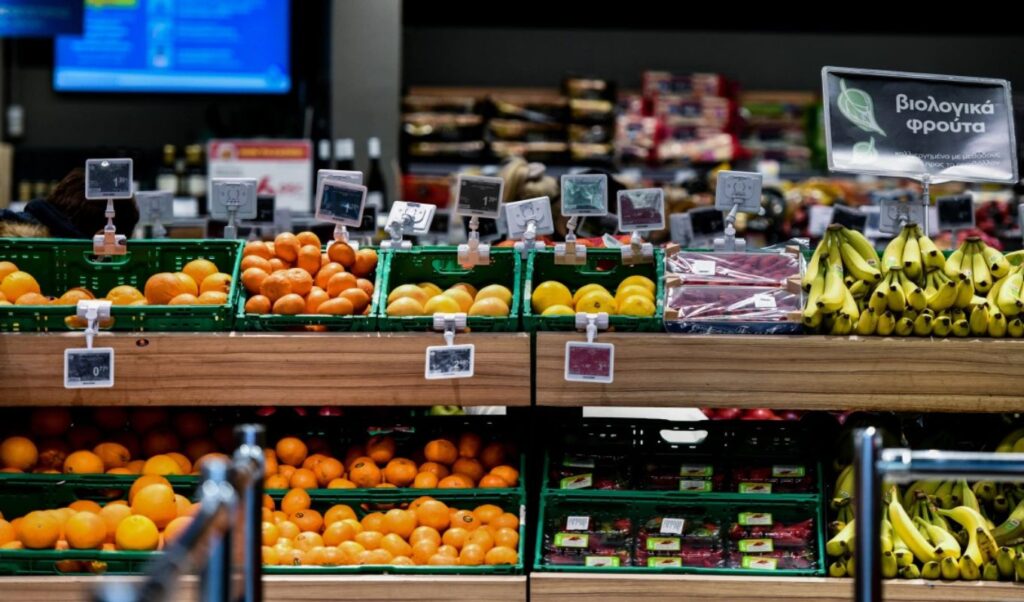
Everything indicates that the price index counter in April will record an annual rate of change reminiscent of the effects of the 2023 energy crisis, due to price increases in diesel fuel, gasoline, transport services (mainly aviation), electricity, as well as a wide range of food items. It should be noted that, according to Eurostat data, in April the harmonized index in Greece jumped to 4.6% from 3.4% in March, fueled by a rapid 21.9% increase in energy costs.
New household support measures on the table
The economic team is watching developments with anxiety and concern, as the upward trajectory of prices increases the likelihood that additional compensatory measures will be needed to prevent strong blows to household incomes, as there is a “firepower” of €200 million and in coordination with institutions it can be increased without violating the rules of the Stability Pact. For now, the economic team has proceeded to revise estimates for inflation downward to 3.2% for this year from the initial estimate of 2.2%.
In the same direction, the Bank of Greece proceeded to an upward revision of its forecast, setting the bar at 3.1% from 2.9% previously, confirming that pressures are stronger than initial estimates. The IMF, for its part, estimates that inflation in Greece will be shaped at 3.5% this year, incorporating increased external risks.