Oil prices are moving downward following Donald Trump’s announcement that Operation “Freedom” is being suspended for a “brief” period. Before the American president’s statement, Pete Hegseth had declared that the ceasefire with Iran remains in place, a development that had contributed to market “calm”.
Concerns about potential escalation and a return to military confrontations had intensified after recent attacks on the United Arab Emirates. However, confirmation of the ceasefire led to de-escalation.
Specifically, Brent crude futures contracts are declining by approximately 1.7% to $108 per barrel, while American WTI crude records a 1.6% drop, settling at $100.64.
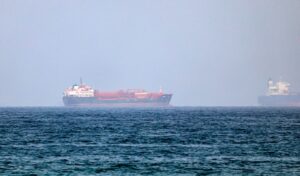
This move came as a correction after Monday, when prices had surged more than 4% as the ceasefire appeared to be collapsing. Tensions had peaked when Iran launched drones and missiles against the UAE, while Washington announced the sinking of Iranian vessels in the strategically important Strait of Hormuz.
The US launched an operation on Monday to open the Strait of Hormuz to commercial shipping. Two American merchant vessels, escorted by destroyers, crossed the passage, proving that the waterway is free. Hegseth commented mockingly that the Iranians “are embarrassed” as they claim to control the strait, which is not true. Shipping company Maersk confirmed that the vessel “Alliance Fairfax” crossed the strait under military protection. Nevertheless, Donald Trump warned Iran of total destruction (“will be wiped off the face of the earth”) if it targets American ships.
On the diplomatic front, Iranian Foreign Minister Abbas Araghchi argued that there is no military solution to the crisis and called on the US not to be dragged into a “quagmire” by bad actors. Meanwhile, Iraq (an OPEC member) reportedly offers significant discounts to oil buyers this month, provided that tankers agree to cross the Strait of Hormuz.
What’s happening with oil reserves – Where there are serious risks of product shortages
Beyond geopolitical risk, Goldman Sachs warns about supply adequacy. While global reserves are not at critically low levels, their rate of decline raises concerns about local shortages in products such as naphtha, LPG, and jet fuel. Chevron CEO Mike Wirth emphasized that the issue now is not just price, but the physical availability of fuels.
According to Goldman Sachs, total global oil reserves correspond to approximately 101 days of demand and are expected to fall to 98 days by the end of May.
Although this number is above the emergency threshold, there are serious risks of product shortages in specific countries such as South Africa, India, Thailand, and Taiwan due to export restrictions.