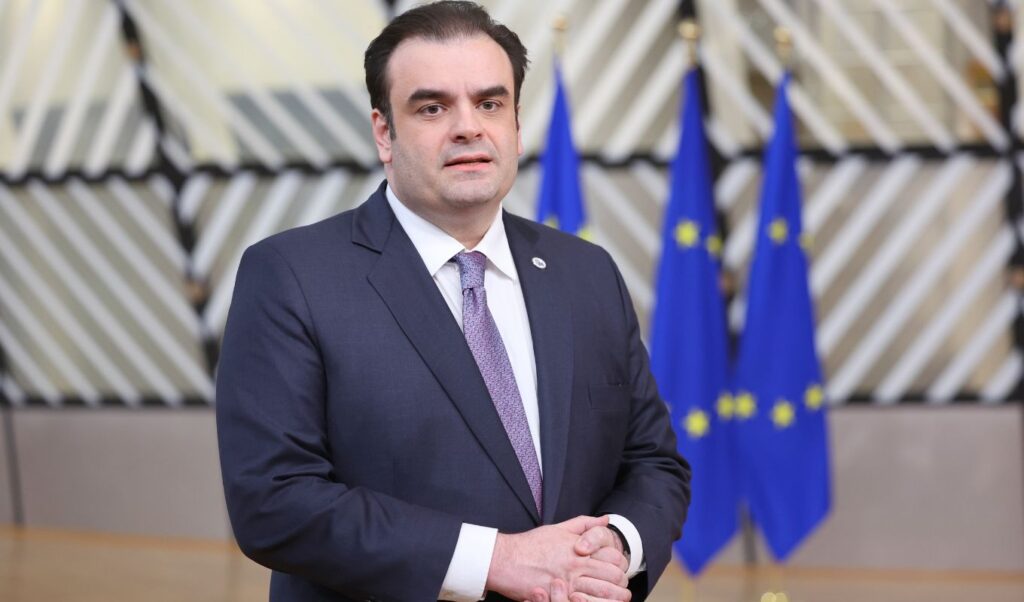
The expectation that the primary surplus will move higher than initial forecasts was expressed by the Minister of National Economy and Finance Kyriakos Pierrakakis, while leaving open the possibility of taking support measures for citizens, depending on available fiscal space and developments in the energy crisis. “The surplus will be larger than the target. The economy’s outperformance will return to citizens with targeted support,” he said characteristically.
In an interview with ERT, on the sidelines of the International Monetary Fund’s spring meeting in Washington, he noted that final fiscal performance is expected to exceed initial estimates, emphasizing however that the full picture will be reflected in the coming period. He stressed, however, that available fiscal space is not automatically equivalent to the increase in surplus, as it is subject to European spending rules and requires agreement with relevant European authorities.
As he mentioned, the direction of economic policy remains stable. Additional revenues from growth and combating tax evasion return to society, a practice that has already been implemented in previous years. Final decisions, however, will be made after clarification of fiscal data.
Referring to IMF estimates, which record growth slowdown, he noted that the Fund chronically adopts a more conservative approach. He added that the trend of declining growth and rising inflation is recorded internationally, in conjunction with developments in the Straits of Hormuz.
Continuing, Mr. Pierrakakis focused on the issue of inflation, emphasizing that it directly affects household living costs. As he explained, the government strategy moves on one hand towards strengthening disposable income through tax interventions and on the other towards taking targeted measures where this becomes necessary.
Pierrakakis: Strong economic trajectory, but increased uncertainty due to energy crisis
Mr. Pierrakakis emphasized that the Greek economy enters the current situation from a stronger starting point, having achieved higher growth rates than the European average, primary surpluses and rapid de-escalation of public debt. This particular development is attributed, among other things, to the reduction of tax evasion, increase in investments and strengthening of exports.
At the same time, he pointed out that the energy crisis constitutes a basic factor of uncertainty, with its duration being a decisive variable. In this light, he emphasized that the government will stand by citizens against its impacts.
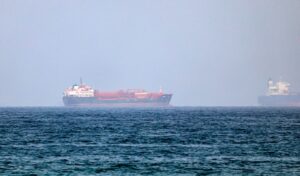
Referring to data from the International Energy Agency, he estimated that there is a risk that the current situation could develop into one of the biggest energy crises, if the flow from the Straits of Hormuz is not immediately restored.
As he noted, losses in oil supply already amount to approximately 13 million barrels daily, exceeding the levels of the 1970s crises, while in natural gas the reduction, if reflected on an annual basis, is estimated to potentially reach 110 BCM. At the same time, he mentioned approximately 80 energy installations in the Middle East that have been affected, of which 30 have suffered serious damage.
Under these conditions, he noted that the Greek government and European institutions are closely monitoring developments, constantly assessing impacts on living costs and adapting their response where required.
At the European level, he emphasized that the intervention framework is based on experience from the 2022 energy crisis, with emphasis on targeted measures that will be temporary and fiscally consistent, as well as harmonized with the European Central Bank’s monetary policy.
Finally, he stressed the need to avoid transferring energy crisis pressures to fiscal stability, noting that the country now has a stronger base and greater flexibility to address challenges.
Full interview with Kyriakos Pierrakakis:
Lena Argyri: Minister, thank you very much for this interview with ERT. Let’s start with the International Monetary Fund’s forecasts since we are here at the Organization’s headquarters. It predicts growth slowdown to 1.8% versus 2.4% that our own budget predicted. Does this change the government’s planning strategy somehow?
Kyriakos Pierrakakis: Let me say, first of all, that the International Monetary Fund is always more conservative in its forecasts and this concerns both growth and inflation data.
However, what I can also tell you is that it is given that in this environment, internationally, every country at this moment, and the Eurozone as a whole but also countries like Germany for example, are revising growth downward and revising inflation upward. This is the environment we find ourselves in, these are the effects of a very significant crisis, the crisis concerning the Straits of Hormuz.
As for us, the framework in which we will move is what we have already announced: to be able to provide targeted measures, targeted support to citizens and at the same time with our strategy, as manifested at the last Thessaloniki International Fair, to support those who need state support most, especially in a crisis like this.
And what I can say and assure those watching us is that every step of this crisis, even if we are in the most difficult scenarios or even if we are in the best ones, we will traverse together.
The Greek economy is not what it was. We are now in a position to stand much better and much more firmly on our feet.
Lena Argyri: Since you mentioned inflation, we have an increase to 3.5%. Does this worry you about new pressure on household incomes?
Kyriakos Pierrakakis: I will tell you that this too, as I emphasized before, is a bit more than what we ultimately expect. But nevertheless, inflation obviously worries us in the sense and terminology that citizens watching us use, it’s what we call high prices. It’s the price increase.
What has been the government strategy we have followed for some time? On one hand to be able to take regulatory measures like the cap. On the other hand to be able to support citizens’ disposable income with your policy overall, not only with the here and now, with crisis management. At the last Thessaloniki International Fair we made the biggest tax reduction in the post-dictatorship era. Why? Because we judged that the best way, the most systematic way to support citizens is to increase their disposable income. But from there on, yes, in an energy crisis like this, we saw it in 2022 after Russia’s invasion of Ukraine and the energy crisis that followed particularly regarding natural gas, you support citizens with emergency measures, with targeted measures.
And now we also have this experience of what worked and what didn’t work from then, globally and pan-European, to be able to make measures like those we have already announced: diesel support, fuel pass, support regarding fertilizer prices.
So if one puts all these together, it’s an overall strategy that stands firmly on the foundations of growth, political stability and all those achievements of the Greek economy, I would say of Greek society overall.
Lena Argyri: How vulnerable is the Greek economy to a prolonged rise in energy prices due to war and in this difficult framework are you thinking of continuing what you mentioned, subsidies on fertilizers and fuels.
Kyriakos Pierrakakis: Let me say first that it is much less vulnerable than it was in the past. The Greek economy stands much more firmly on its feet, as I said before. And of course if one compares it with other European countries – you mentioned growth data – growth is double or more than double the European average in recent years. The same performance is happening now.
So we are in a much stronger condition and at the same time we have strong surpluses both primary and overall, debt is de-escalating faster. Therefore we are a different economy and especially if one sees how this growth emerges, it emerges in a very systematic way, with reduction of tax evasion, with increase of investments, with increase of exports.
Therefore, let me say it again, Greece is not what it was and especially here in the IMF space, the Greek Finance Minister feels this much more intensely than if we had this discussion 10 years ago.
From there on, regarding support to citizens in the data of this crisis, let me say that the critical parameter is one, the word duration. We have uncertainty regarding duration. This crisis will be different if it lasts another two weeks, different if it lasts another two or three months. In any case and in any scenario we will be next to every citizen. We will manage and traverse this crisis together. The Greek economy is in a position to conquer this, is in a position to achieve this.
Lena Argyri: In a few days we also expect data on the primary surplus. What expectations are there, what do we expect and if they exceed our expectations, is there room for some emergency support measures.
Kyriakos Pierrakakis: Okay, what I can tell you is that there will be an upward revision. It is given that the performance of the primary surplus and overall surplus will be better than expected. What exactly this will be we will see in the coming days, because we still need to have, if you will, the final version of the data.
Let me say here that the available space is not exactly the increase that will result in this surplus, because you know very well now we have the spending rule in the European Union. You must agree with Brussels what exactly is the space available to be able to spend. But in any case, you saw it last year too, you see it at every moment, in every initiative the Greek government takes, this money, which comes systematically from combating tax evasion, from more growth, returns to those concerned, returns to Greek society, returns to every citizen. So: we will wait to see the final data, we will wait to see what the available fiscal space is, we will correlate our assessment with what is happening in the Straits of Hormuz, with what is happening in the coordinates of this energy crisis and we will certainly intervene accordingly. Depending also on what this space will be.
Lena Argyri: Indeed. I heard you Minister. Since you mentioned the crisis and duration many times, I have heard you in all the interventions and interviews you have given here in Washington saying that the global economy may be facing the most difficult, most serious energy crisis in history and you brought, for example, the two energy crises of the ’70s combined with that which arose from the war in Ukraine in ’22. How close to such a serious scenario, to such a difficult situation are we and what are your estimates?
Kyriakos Pierrakakis: We are very close to this and what I emphasized is exactly what Fatih Birol of the International Energy Agency also emphasizes – what is the dimension of this crisis? It can potentially be bigger than the three previous ones together.
If you take the oil crises of the ’70s, in total we had a loss of 10 million barrels per day of oil in both cumulatively. Now we are at 13. If we compare regarding natural gas 2022 with today, the drop in BCM that occurred after Russia’s invasion of Ukraine was from 155, we fell to 80. It was minus 75. Now, if we go on an annual basis, what is happening, that is if the loss is indeed translated on an annual basis, we are at minus 110.
So if one puts these down, cumulatively you have the biggest energy crisis in history, if the Straits of Hormuz do not open immediately. Of course, if they open immediately, we will have to see how quickly we can return to the previous balance and where the price of oil and natural gas will go.
Why? Because we know that very many energy installations in the Middle East, about 80 energy installations, have been affected. About 30 of these have very serious damage. So we have to see how quickly all these can be restored.
And of course many other products pass through the Straits. One third of fertilizers, since we mentioned fertilizers before – that’s why we took the fertilizer support initiative – but also many other derivative products, related to oil, petrochemicals.
You know, it is clear that it is a tremendously important artery of the global economy. And the impact of the Straits being closed is felt by every economy globally and every household globally. So all initiatives must succeed for the Straits to open immediately.
And from there on, we as the Greek government – I would say the European economy overall – are studying the impact, we want to see what the inflationary impact will be and what this means on the shelf for every citizen watching us, when they go to the supermarket. And to intervene accordingly, because we understand that even if the Straits open tomorrow, some of the effects have come to stay.
So some of the measures and some of the interventions we will make along the way will be proportional, to be able to support every citizen, every family.
Lena Argyri: So, if the Straits open even tomorrow, things will not return soon to the state that existed before?
Kyriakos Pierrakakis: Experts say that it may take at least two months for things to return to where they were, and with many question marks about what the situation is in the field. As I told you, the keyword is the word “uncertainty” along with the word “duration”.
In any case, I emphasize again what I told you before: the Greek economy is not at the point it was a few years ago. We are really in a position… with the surpluses we have, with the growth rates we have, with the lowest unemployment in decades, with the fact that our debt is de-escalating quickly, we have achieved a lot. This is a conquest of the Greek people. It is a conquest of those watching us.
We will safeguard this conquest and build on it, with targeted measures, with targeted support, as the Commission also says, to go where there is really the greatest need: this is what we are trying to do, we will be there at every step of this crisis.
Lena Argyri: At the European level is there discussion about activating the escape clause or new common support measures. You mentioned that the European Union is of course monitoring the crisis very closely, but how do you see it?
Kyriakos Pierrakakis: Look, in the first phase, what was announced by the Commission is the perimeter of measures, it is the lessons of 2022, that is, what kind of measures you take, which measures work.
Because this policy we do as governments is fiscal policy. You simultaneously have monetary policy done by the European Central Bank, which tries to contain inflation, to contain high prices.
So certainly, what do we say? First we must not do backwards things, things that will undermine this effort. That’s why the Commission talks about targeted measures, temporary measures, measures that are fiscally responsible so we can contain and achieve the best possible result, really for those who have the greatest need.
The Greek government has taken the measures we have already announced: support for diesel horizontally, because we considered and consider that diesel automatically passes to inflation, faster to inflation, support through fuel pass for unleaded really for those who need it most and support regarding fertilizer prices.
We will see the steps we will have ahead of us as challenge and crisis along the way depending on whether the Straits