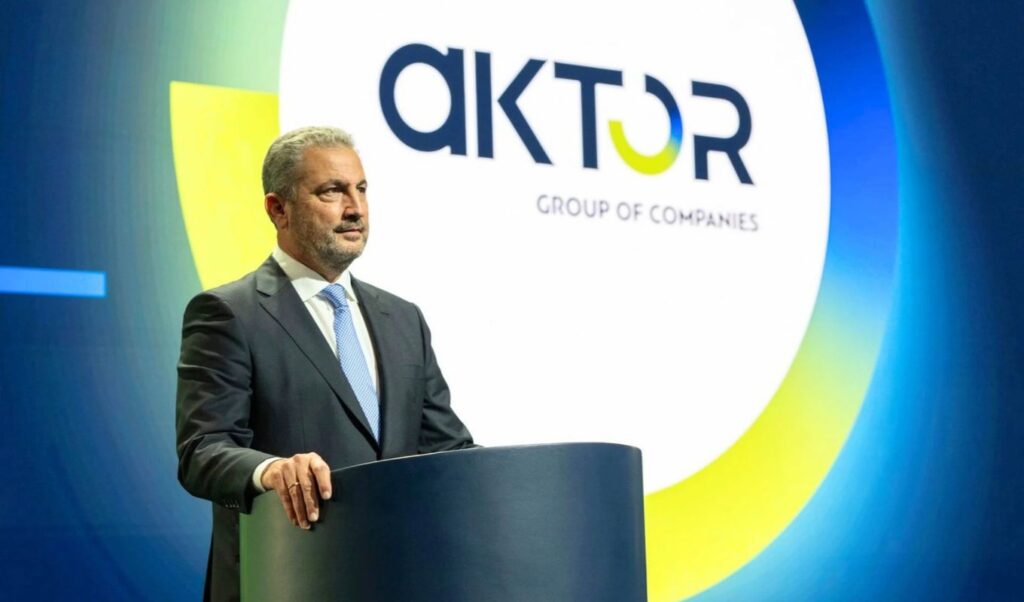
Alexandros Exarchos, CEO of AKTOR Group, is calling on European governments to take immediate action to address the energy crisis. In statements made on October 16 to Platts, part of S&P Global Energy, the head of the Greek infrastructure company — which is rapidly expanding into the energy sector — stressed the urgent need for additional electricity subsidies and a drastic reduction in natural gas transmission fees. “This is a crisis — they need to think outside the box, they need to act now,” he stated in his interview.
Read also: LNG: Alexandros Exarchos’ warning about the difficult winter and Europe’s energy crisis — and Von der Leyen’s admission 5 months later (Video)
The “Vertical Gas Corridor” and the need for further action
On the subject of natural gas, the CEO called on European governments to drastically reduce transmission costs for imports, at a time when global liquefied natural gas (LNG) prices are surging. Exarchos made specific reference to the “Vertical Gas Corridor” — a transmission route linking various Central and Southeast European gas markets to LNG import terminals in Greece. The operators along the corridor and the European Commission reached an agreement earlier this year on the applicable tariffs. Exarchos described the agreement as “significant,” but added that it falls short given the current high-price environment. “They need to do more,” he emphasized.
Concerns over the EU’s exposure to spot LNG markets
Exarchos expressed serious concern about Europe’s exposure to spot market LNG prices this winter, warning of “an environment that… is not at all safe when it comes to securing adequate supply.” Gas experts convened by the European Commission have repeatedly stated that EU gas supply remains stable, playing down the possibility of shortages. Exarchos disagreed, saying: “I believe that does not reflect reality.” He also criticized recent calls by EU Energy Commissioner Dan Jorgensen urging member states to reduce gas and electricity demand wherever possible — including through measures such as limiting heating temperatures. “I found it naive and foolish,” he said. A spokesperson for the European Commission did not immediately respond to a request for comment.
Long-term LNG deals with the US as a solution
Going a step further, Exarchos argued that European entities should secure more long-term LNG agreements with US sellers. These deals, he noted, should have a duration of at least five years. The United States is already the EU’s largest LNG supplier. According to S&P Global Energy CERA data, during the first nine months of 2026, the US accounted for approximately 60.7% of EU LNG imports. Exarchos clarified that he is not necessarily advocating for an increase in that share, but rather for securing future supply volumes. “I don’t expect this problem to be resolved within the next two years — so [Europeans] need to make sure they will have adequate volumes from the US in the years ahead,” he said.
AKTOR’s strategy in the LNG market
Aktor already holds long-term exposure to US LNG through Atlantic SEE LNG Trade, a joint venture between the construction company and Greek natural gas and LNG importer DEPA. Atlantic SEE has secured an agreement to supply 1 million metric tonnes of LNG per year from US exporter Venture Global, under a 20-year deal with deliveries beginning in 2030. Earlier this year, Atlantic SEE had expressed interest in securing additional short-term LNG supplies, in anticipation of the EU’s gradual phase-out of Russian LNG and growing pressure on international markets. However, as of October 16, Exarchos stated that his companies have not yet managed to lock in additional volumes.
“We are in discussions, but we haven’t been able to move forward — and that is why I am concerned,” he said. “We don’t want to take on spot market risk, as prices are highly volatile. We also don’t want to make firm commitments, as we are finding that in Europe, at this stage, there is no appetite for commitments beyond spot transactions.”
New FSRU unit in Corinth to boost Greece’s LNG capacity
Exarchos also announced that his company has reached an agreement with Greek refiner Motor Oil to develop an additional floating storage and regasification unit (FSRU) in Greece, aimed at further expanding the country’s LNG import capacity. According to Exarchos, the FSRU at the port of Corinth will have a capacity of 4.5 billion cubic meters of natural gas per year, with operations expected to commence in 2031. Motor Oil did not immediately respond to a request for comment. Greece already operates two other LNG import facilities: a land-based terminal at Revithoussa and a floating FSRU unit at Alexandroupolis.