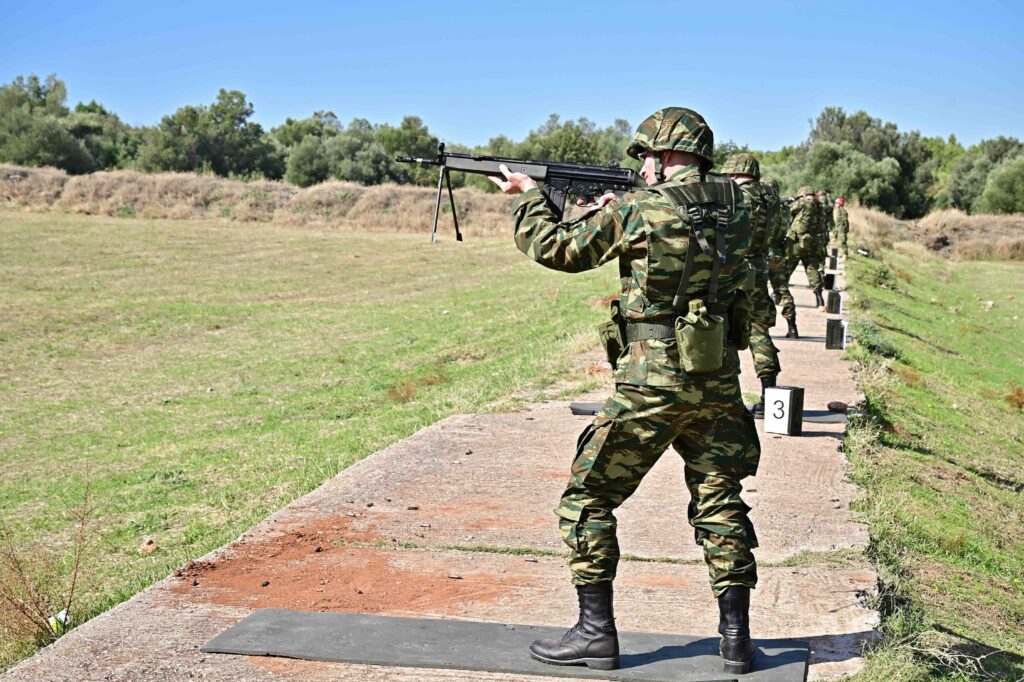
Greece’s Minister of National Defense, Nikos Dendias, has outlined the framework of changes being pursued regarding the reorganization of the Armed Forces Reserve. As Minister Dendias has emphasized, the full reorganization of the Reserve is one of the most significant reforms the country is undertaking under the “Agenda 2030” framework, stressing that “we are talking about an institution that lies absolutely at the core of our homeland and our traditions — it represents the timeless bond of defending the fatherland by the armed Greek citizen.”
Read also: Dendias: The reorganization of the reserve is one of the most significant reforms of “Agenda 2030”
“The ability of citizens to support the Armed Forces in defending the homeland, its sovereignty, and its sovereign rights,” as Minister Dendias stated at the opening of the 2nd Conference on the “Reorganization of the Reserve Institution.” The reorganization of the Active Reserve is a key pillar of the new Armed Forces plan, with the goal of building an organized, trained, and operationally available reserve force of 150,000 personnel.
Armed Forces: What will change in the Reserve
The transition to the new model, as Minister Dendias has underlined, “will be carried out gradually, through successive phases, to allow the necessary time for reservists to adapt and familiarize themselves with the new requirements.” The plan includes accelerating training cycles and expanding them with more training activities in subsequent stages. A significant part of the effort involves developing the appropriate infrastructure for the training and retraining of reservists. Two Reserve Centers have already been renovated — in Avlonas and Litochoro — while a third center is planned for Crete, with the aim of completing construction during the first half of 2027.
New training program with a focus on modern technologies
Upgrading training is one of the most important pillars of the new model. The retraining program is being enriched with subjects that reflect modern operational requirements and technological advancements. Specifically, it includes familiarization with new weapons systems, countering and operating unmanned aerial vehicles (drones), use of modern communication technologies, and battlefield first aid training.
Additionally, the program provides for wider use of simulators and the conduct of small-unit exercises, aimed at maintaining and upgrading the knowledge and skills of reservists. Training will not be limited to a single cycle of activities but will develop across successive phases, with more training opportunities and a gradual acceleration of the overall program.
Voluntary Active Reserve and the training of reserve officers
The new framework also includes the institutionalization of voluntary retraining through the “Voluntary Active Reserve” program. This initiative gives citizens who have completed their military service the opportunity to voluntarily participate in organized training activities and maintain an active relationship with the Armed Forces. Special provisions are made for reserve officers through the organization of a Land Operations Tactical Planning School at the Army War College. Additionally, specialized staff training is planned, along with the creation of a digital library that will house educational materials and support the ongoing professional development of reserve officers. These initiatives aim to strengthen staff training and better prepare reserve officers for their role within the Active Reserve.
The goal: a stronger connection between the Reserve and the Armed Forces
One of the key objectives of the new plan is to forge a closer and more stable connection between the Active Reserve and the active units of the Armed Forces. This relationship will not be limited exclusively to training periods but will extend to other activities as well. In this context, reservists are set to participate in formation activities, national commemorations, public events, and other Armed Forces activities.
“The objective is for the Active Reserve to gain a stable and permanent presence in the functioning of the Armed Forces — and not to remain an institution that is activated only occasionally or within the framework of scheduled training,” as Minister Dendias stated. In this way, reservists maintain their connection to the military environment and strengthen their ties to the units in which they may be called upon to serve.
What changes in mobilization
Another significant change is the modernization of the communication and notification process for reservists. Mobilization documents are now also delivered digitally through the Gov.gr platform and the Citizen Portal, replacing older bureaucratic procedures in which notices were served in person by a police officer. The digital process allows for faster and easier receipt of the relevant documents, streamlining communication between military services and reservists.
To receive mobilization documents in digital form, citizens are required to register in the National Communications Registry through the unified digital portal Gov.gr. Implementation will proceed gradually, through additional training sessions and new initiatives, with the ultimate goal of building a reserve force equipped with up-to-date knowledge, better preparation, and a meaningful role in the country’s defense operations.