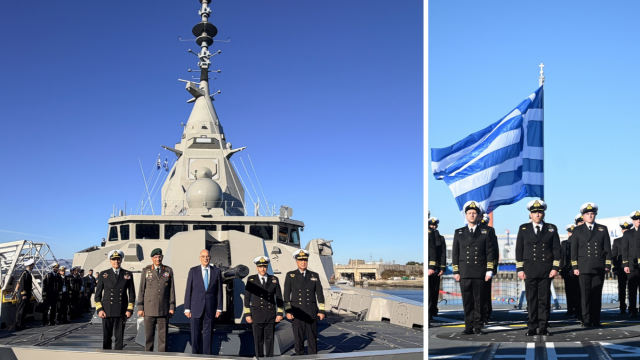
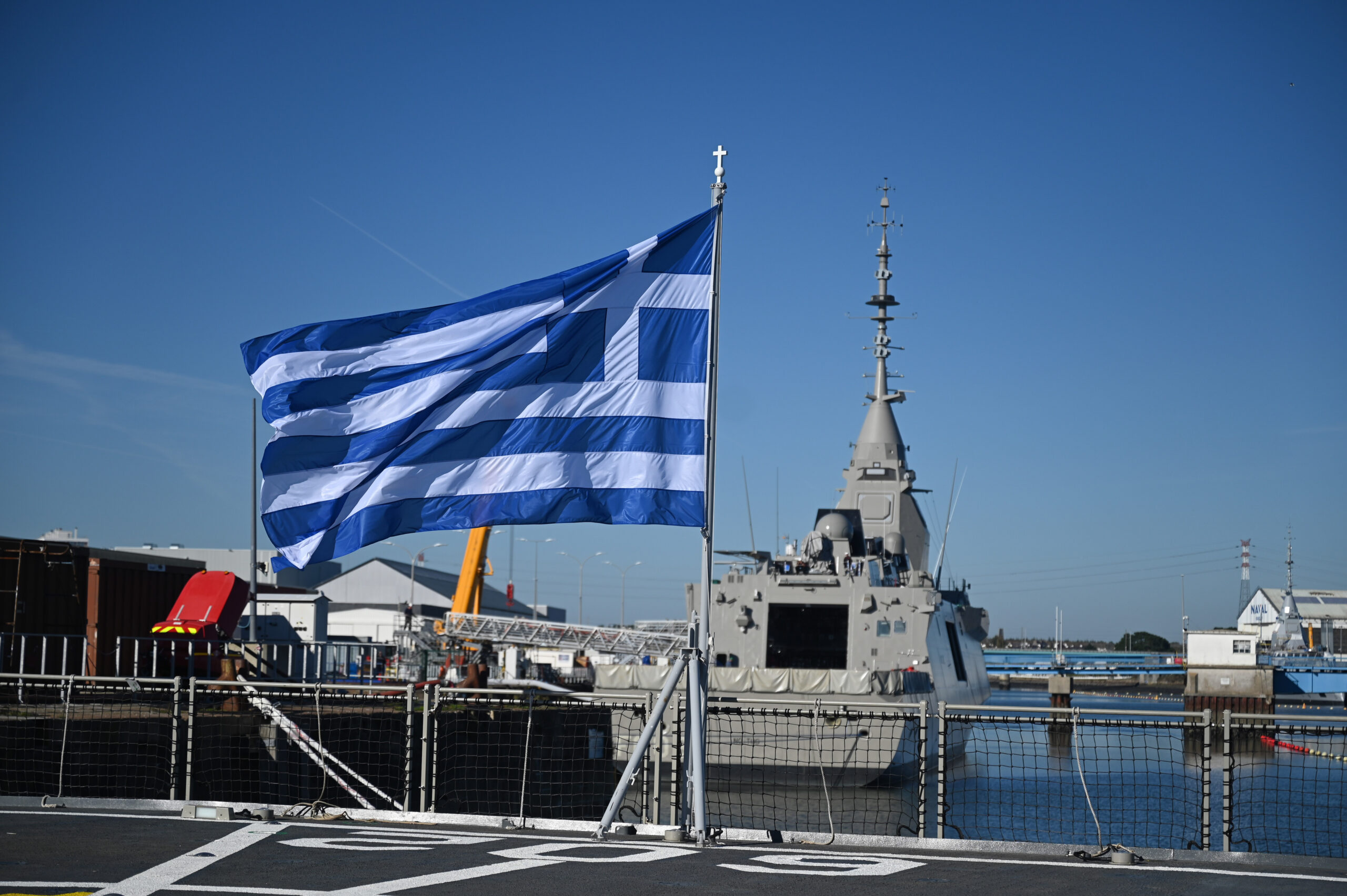
The commissioning ceremony of the new FDI-type frigate frigate “Nearhos” marks a rapid enhancement of the Hellenic Navy’s operational capabilities, with its official entry into the Greek fleet sending an unmistakable message of naval superiority and deterrence across the entire Eastern Mediterranean basin.
Frigate “Nearhos”: Arrival in Greece and what Nikos Dendias said
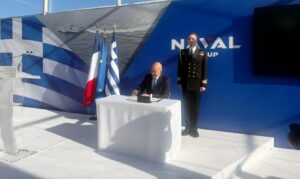
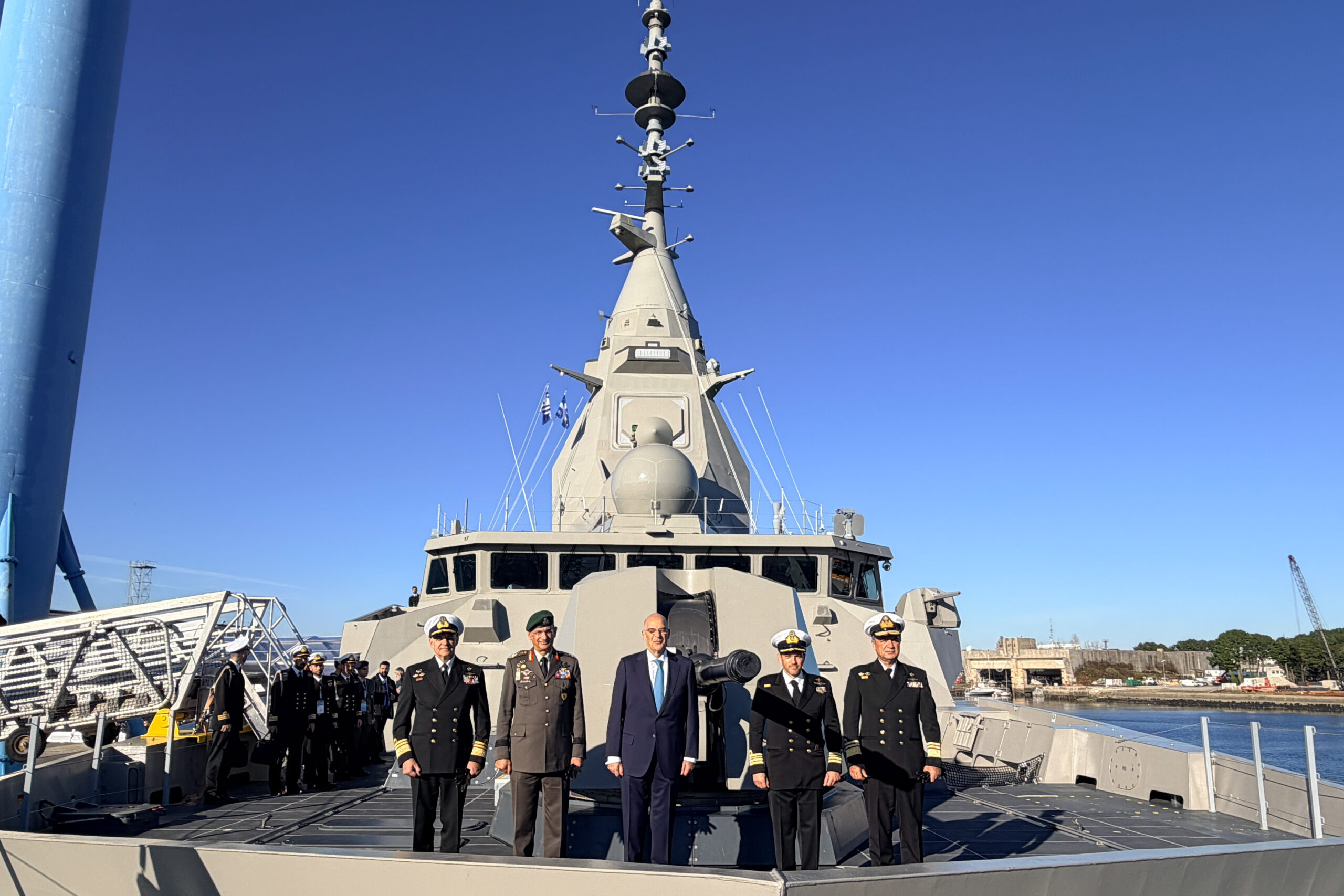
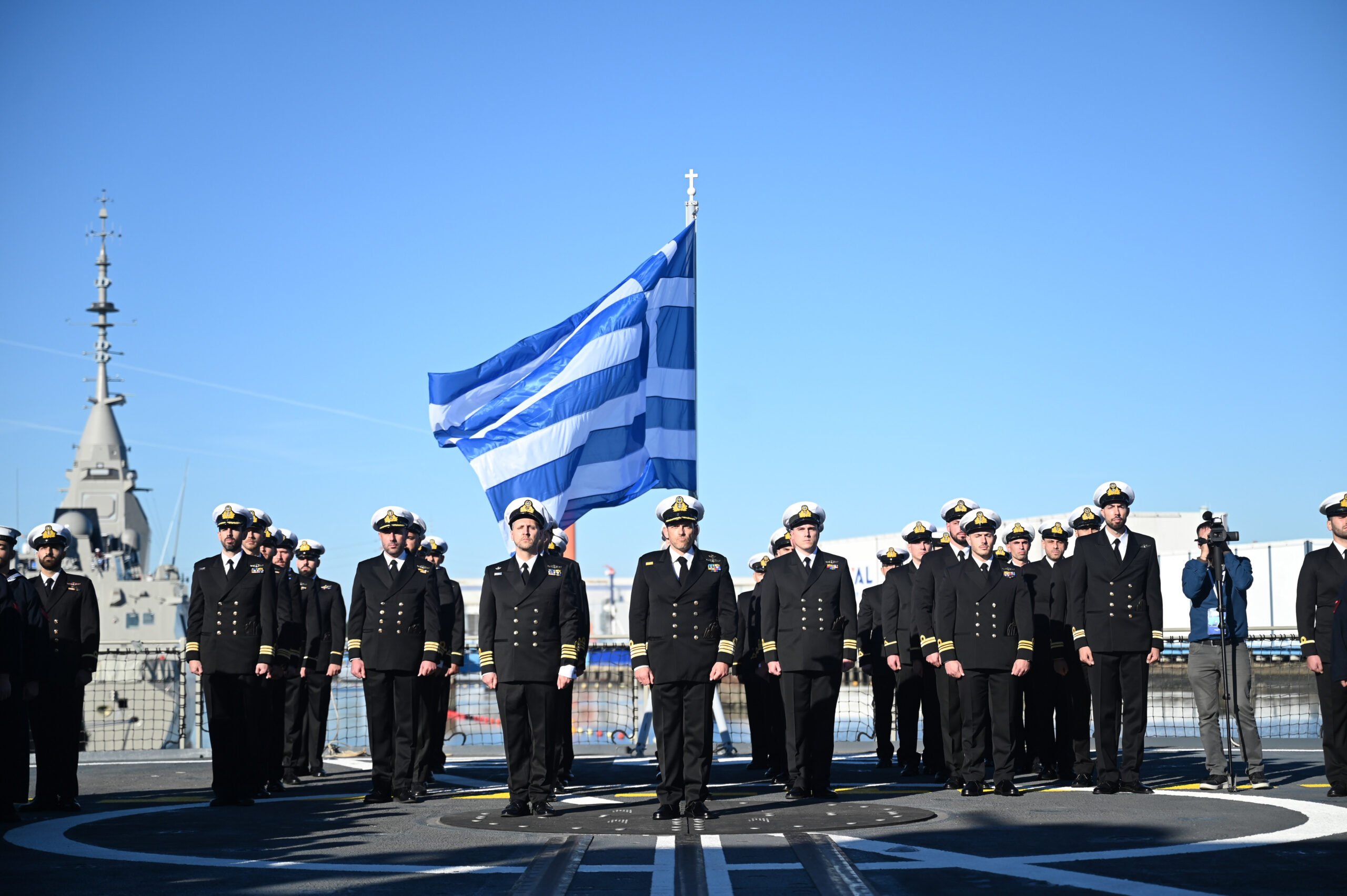
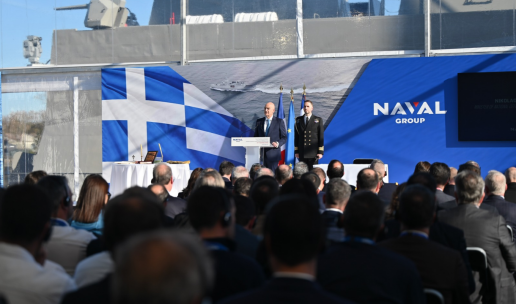
The ceremony took place in Lorient, France, at the Naval Group shipyards, in the presence of Greece’s Minister of National Defence Nikos Dendias, the military leadership of the Hellenic Armed Forces, French Minister of Armed Forces Catherine Vautrin, Naval Group executives, and other distinguished guests. “It is the best ship in its class on the planet, and we expect it in Salamis in early December,” stated Nikos Dendias, adding meaningfully that “together with France, we are building the defence capabilities of our European family.” These remarks from the Defence Minister are directly linked to the ongoing competition over maritime zones — one of the most critical fronts in contemporary geopolitics — which has been complicated by a series of unilateral boundary claims from Ankara, including the Turkey-Libya maritime memorandum and the “Blue Homeland” doctrine.
At the same time, his words highlight the role Athens intends to play in the Eastern Mediterranean. These frigates are open-sea vessels, while the Aegean can be effectively covered by missile boats, which perform exceptionally well in enclosed sea areas. “Part of the FDI frigates is being built in Greece,” Dendias emphasised, noting that “the frigate carries Greek hands and a Greek soul.” “The programme brings new capabilities to our country’s Armed Forces. I am genuinely happy about this, and I look forward to welcoming ‘Nearhos’ in Piraeus, at the Salamis naval base, in early December,” the Defence Minister added. It is worth noting that “Nearhos” is the second of four FDI frigates destined for the Hellenic Navy, following “Kimon.” The third FDI frigate, “Formion,” is expected to follow later this year, with the fourth, “Themistocles,” scheduled for 2028. The key feature distinguishing “Nearhos” from the first ship of the class (“Kimon”) is that it is delivered directly in the full Standard 2 operational configuration, incorporating twice the firepower from day one.
Frigate “Nearhos”: 32 missiles and twice the firepower compared to “Kimon”
Specifically, the key upgrades of the frigate “Nearhos” concern its anti-aircraft capabilities. The vessel will have all 32 cells of its Sylver A50 VLS launchers connected and activated — twice the number compared to frigate “Kimon,” which is expected to receive the same number of active cells in approximately one year. In addition, the ship comes with the RAM close-in defence system fully activated and integrated into the SETIS combat management system, providing interception of threats at short range, while the Standard 2 configuration also includes additional countermeasure launchers for enhanced self-defence. Its weapons and combat systems arsenal includes anti-ship missiles, specifically Exocet MM40 Block 3c missiles for engaging surface targets at long range. The new frigate also carries a formidable anti-submarine warfare shield, equipped with MU90 advanced torpedo tubes, while the ship’s stern features a flight deck capable of hosting an MH-60R Romeo anti-submarine helicopter. Regarding its electronic systems and sensors, a particularly significant asset is the Thales SeaFire active electronically scanned array (AESA) digital radar, which provides simultaneous tracking of hundreds of airborne and surface targets with top-tier precision. The frigate is further equipped with leading-edge submarine detection systems, including the hull-mounted Kingklip sonar and the CAPTAS-4 variable-depth towed array sonar. Completing the picture is the SETIS combat management system — the digital brain and operational heart of the vessel — which processes all sensor data in real time.
Originally published in Apogeumatini