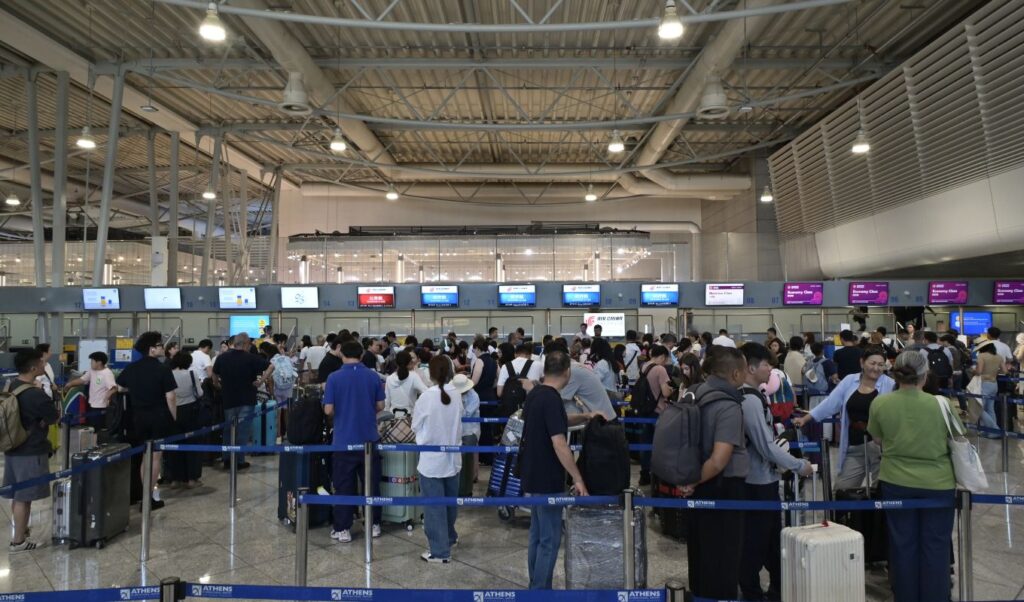
With the cost of transportation and accommodation under pressure, planning a winter getaway is becoming increasingly demanding on family budgets. Warnings from airlines and travel agencies indicate that 2027 could bring fresh price hikes that will affect the overall cost of tourism packages. For this year’s Christmas season, however, the picture has yet to be finalized, as organized holiday programs are expected to be announced in November.
The question now concerns the entire travel bill: airline tickets, accommodation, food, and services at the destination. Even when one of these expenses remains stable, increases in the others can significantly limit a traveler’s options. The market, however, is moving at different speeds, with hotel prices showing — according to travel agencies — greater resistance to increases this year.
The most striking warning came from Ryanair CEO Michael O’Leary, who suggested that Europe could face the largest increase in airfares in its history. Speaking in Brussels, he projected potential price hikes of up to 20% by 2027, linking them to rising aviation fuel costs and limited seat availability. This forecast reflects growing concern about the coming year, though it does not represent a uniform pricing decision across all airlines or routes.
Its significance lies in the combination of two pressures: higher operating costs and restrained flight capacity. If demand remains strong, this environment could support higher fares for passengers. The warning carries particular weight for countries like Greece, where air access is a critical link in the tourism chain. A rise in ticket prices affects both Greeks planning trips abroad and foreign visitors calculating the total cost of a holiday in the country.
Similar concerns had been voiced by Aegean Airlines chairman Eftychios Vassilakis during the September conference call presenting first-half results. Based on the data available at the time, he had outlined a conservative approach for 2027, with no increase in available seat kilometers and leaving open the possibility of reducing flight frequencies on certain domestic and international routes. In those remarks, capacity management was linked to the need to adjust fares in line with rising costs. At the same time, planning remained dependent on demand trends and competitive dynamics.
When asked to comment on O’Leary’s statements and the possibility of fare increases on its own routes, Aegean declined to respond and referred to the chairman’s earlier remarks. As a result, there is no announcement of specific price hikes, percentage increases, or implementation dates. There is, however, an open possibility of adjustments, in a market trying to strike a balance between cost pressures and competitiveness.
Rising costs
The link between airfare costs and the overall price of organized travel packages is underscored by HATTA president Nikos Kelaiditis, speaking to MoneyPro. As he explains, agreements on aviation fuel are made with a forward-looking horizon, and cost pressures taking shape today can influence planning for the following year.
In his assessment, expected increases in airfares will feed through into travel packages. The extent of the impact will, of course, depend on the destination, the length of the trip, and the individual agreements made by tour operators. There is currently no single percentage that can be applied uniformly across all travel packages.
For this year’s Christmas programs, the announcement of packages in November will provide a clearer picture of final prices. Until then, forecasts of more expensive travel in 2027 should be read separately from the cost of the upcoming holiday season. On the accommodation side, the picture conveyed by Mr. Kelaiditis is more restrained. According to him, hoteliers kept prices broadly in line with last year, wary of competitive pressure. This reflects the general market impression he has gathered, rather than a uniform pricing policy across all hotels.
For 2027, however, he believes that the margins for absorbing rising costs are narrowing. Energy, higher labor costs — partly driven by minimum wage increases — and supply expenses are putting pressure on business operations. He also factors in potential price rises for fresh produce, beverages, and other goods.
The outcome will depend on how much cost businesses can absorb and how much travelers are willing to pay. For the traveler, the most meaningful comparison will be the final price for the same number of days and services, including taxes, baggage fees, meals, and any other mandatory charges. For the industry, the challenge is to sustain demand without exhausting its financial headroom.
Published in MoneyPro by Parapolitika