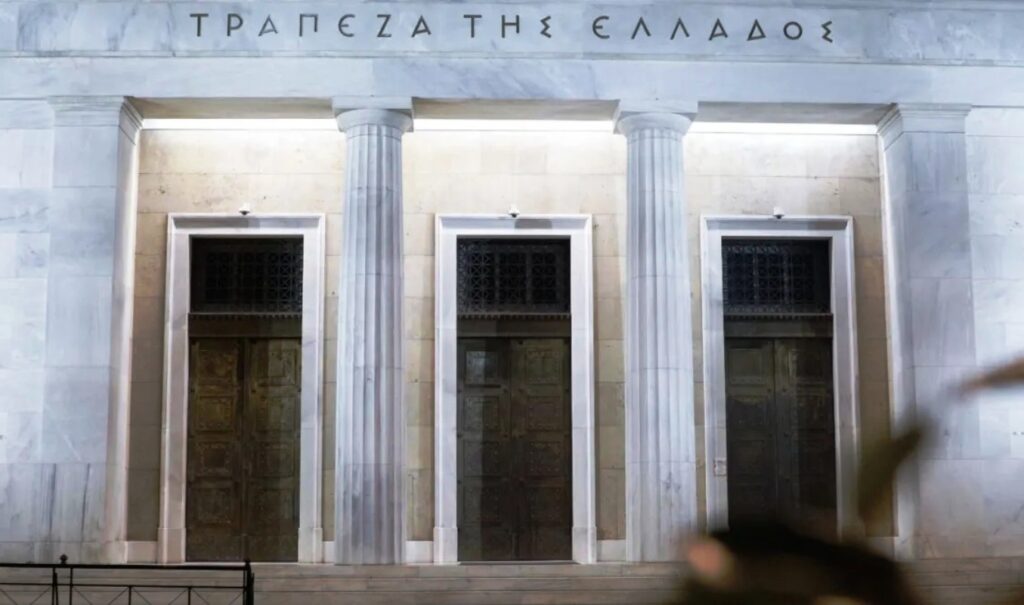
The Greek economy is expected to maintain higher growth rates than the eurozone average through 2028, according to a new analysis by the Bank of Greece. Forecasts point to GDP growth of close to 2% over the next three years, driven by private consumption, investment, and exports. However, a fresh surge in inflation — which reached 5.1% in September — is putting additional pressure on household budgets, as rising energy prices and service costs continue to erode purchasing power.
Read also: Agricultural diesel: How myDiesel will work from November 1st — the process in four steps
Greek economy: Growth close to 2% through 2028
According to Eurosystem projections from September, Greek GDP is expected to grow by 2% in 2026, 1.9% in 2027, and 2% in 2028. These estimates are set against a backdrop of international uncertainty and elevated energy costs, with Greece continuing to outperform the broader eurozone. In the second quarter of 2026, domestic economic activity expanded by 1.9% year-on-year, compared to just 1.2% growth recorded across the eurozone over the same period.
The Bank of Greece analysis highlights the contribution of consumption, investment, and exports in sustaining this growth momentum. During the second quarter, household consumption rose by 1.7%, investment surged by 6.1%, and exports of goods and services grew by 2.2%. At the same time, imports grew faster than exports, partially offsetting the positive contribution of the external sector and underscoring the need to strengthen domestic production capacity.
Investment, industry, and employment
Particular attention is drawn to the upward revision of the investment share of GDP for 2025, which now stands at 18%, up from a previous estimate of 16.9%. This development signals a greater role for investment in expanding the productive base of the economy. Manufacturing data also remains encouraging, with the PMI index holding at 54 points in September, while industrial output rose by 5.8% year-on-year in August.
On the labour market front, employment strengthened and unemployment fell to 7.4% in August. Public investment activity and funding from the Recovery and Resilience Facility are expected to continue supporting demand, while fiscal measures planned for 2026 aim to boost disposable income for households.
Inflation at 5.1% and pressure on purchasing power
The most significant near-term threat to the positive outlook remains the cost-of-living crisis. Harmonised inflation climbed to 5.1% in September, up from 3.7% in August, while the average for the January–September period came in at 3.8%. The acceleration is driven primarily by rising energy prices, compounded by persistent price increases across the services sector.
For the full year 2026, inflation is forecast at 3.5%, with a gradual decline to 2.7% in 2027 and 2.2% in 2028, provided that global energy prices ease. The Bank of Greece cautions that new geopolitical tensions or a prolonged rise in energy costs could weigh negatively on these projections. The key challenge ahead remains converting investment gains and domestic demand into sustainable productivity growth, without further erosion of household incomes.