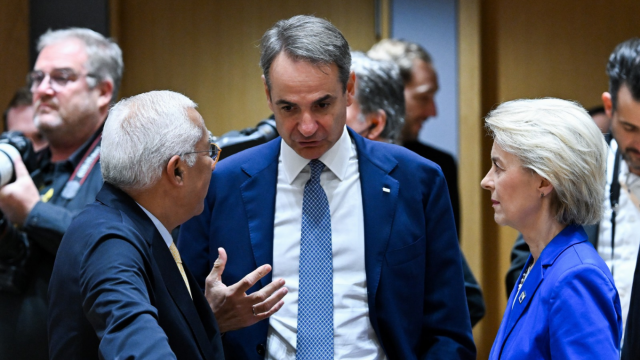
The EU Summit in Brussels concluded in an atmosphere of division, following hours of grueling sessions that left European leaders facing multiple deadlocks on critical issues — including the energy crisis and soaring cost of living, as well as the new seven-year European budget (Multiannual Financial Framework 2028–2034).
Read also: Energy & the EU Summit: Winter anxiety, fiscal flexibility disputes, and cost containment — MEPs weigh in at parapolitika.gr
EU Summit: A divided Europe on energy costs and support measures
The overriding image to emerge from the Summit is one of a deeply divided Europe, with the clash between the frugal nations of the North and the countries of the South and Eastern Europe making it exceptionally difficult to reach immediate decisions. All of this comes at a time when soaring energy costs represent a slow-burning fuse threatening the social cohesion of European societies ahead of what promises to be an extremely difficult winter. On the energy front, European leaders discussed the impact of the current geopolitical landscape on global supply chains and on fuel and heating oil prices, including the knock-on effects on citizens — particularly the most vulnerable — as well as on industry and the broader economy.
The European Council conclusions, approved in the early hours of Friday following four separate rounds of negotiations and a marathon series of meetings, moved in a direction that partially satisfies Athens — yet key issues remain unresolved. Despite intense pressure from the Greek side, and personally from Greek Prime Minister Kyriakos Mitsotakis, as well as from other leaders such as Italian Prime Minister Giorgia Meloni, the final text is limited to broad-brush references, calling on the European Commission to submit additional proposals without delivering any concrete, tangible results. It is worth recalling that Greece has been pushing for member states to be granted the ability to temporarily exceed spending ceilings in order to finance additional interventions in support of their citizens.
Energy costs: What Greece achieved — and what Athens is demanding on ETS
Greece, together with 17 other countries, ultimately succeeded in having the final text reflect the need to examine additional, targeted, and temporary measures to curb high energy costs, taking into account the differing national circumstances of member states. In this context, government sources in Athens attached particular importance to this specific reference, as well as to securing assurances that a further postponement in the implementation of the new Emissions Trading System (ETS) would be examined — in order to prevent yet another dramatic increase in fuel and heating costs. In any case, it is considered significant that even the hardliners of the North and the champions of the green transition have come to recognize that a further delay in the rollout of the new European carbon reduction scheme matters. “Of particular importance is also the reference to the different conditions prevailing across member states, as it acknowledges the need to take individual national circumstances into account,” government sources in Athens noted.
Nevertheless, the broader sense remains one of real solutions being kicked down the road — with all the delays that entails. Prime Minister Kyriakos Mitsotakis stressed from Brussels the urgent need for immediate action, warning that “prolonged high prices are eroding citizens’ trust in institutions and fueling populism.” The European Commission’s proposals on the matter are now awaited.
A further postponement of the ETS will be examined — Athens draws “red lines” on the budget
EU budget 2028–2034: The North-South clash over €2 trillion
A fierce battle is also playing out over the Multiannual Financial Framework for the 2028–2034 period. The northern bloc of “frugal” states, led by Germany, is demanding strict fiscal discipline and an overall cap on spending, rejecting the European Commission’s initial proposal for a budget approaching €2 trillion. The northern bloc is pushing for drastic cuts of between 8% and 11% to traditional pillars such as the Common Agricultural Policy (CAP) and Cohesion Policy (structural funds), so that resources can be redirected as a priority toward new needs — including European defense, border security, innovation, and competitiveness. In this tug-of-war, France is adopting a nuanced stance, aligning with the South to protect agricultural subsidies, while simultaneously pushing for European participation in SAFE to be restricted exclusively to EU member states and not third countries — a position clearly designed to shield the interests of its powerful defense industry.
Greece’s “red lines” on the CAP and cohesion funds
Against this broader backdrop, Greece and the “Friends of Cohesion” are drawing firm, non-negotiable red lines. Athens is categorically rejecting both the across-the-board cuts in the Irish presidency’s compromise proposal of €1.62 trillion and the extreme demands of the “frugal” bloc for cuts to the CAP and the Cohesion Fund. Greece continues to argue consistently that if Europe wishes to meet today’s geopolitical challenges and the demands of the green transition without sacrificing regional development and the agricultural sector, it must draw up a budget close to €2 trillion. The final outcome remains open, with definitive decisions inevitably deferred to upcoming summits — and with no one at this stage expressing any certainty that an agreement will be reached, meaning all outstanding issues could well be pushed toward a resolution in early 2027.
The Mitsotakis–Meimarakis meeting
Meanwhile, on the sidelines of the summit, Kyriakos Mitsotakis met in Brussels with MEP and former New Democracy party leader Vangelis Meimarakis. The meeting between the two took place in a warm atmosphere, dispelling the speculation that had been circulating about a chill in their relationship following Meimarakis’s absence from the party’s anniversary event. Mitsotakis and Meimarakis discussed issues currently before the European Parliament and the European People’s Party, as well as matters relating to the current European political agenda.
Published in Apogeumatini